
I know women teaching men is a controversial topic, so I set out to study what Scripture actually says and learned this is a prime example of why we must study Scripture in context.
Many Christians firmly believe Scripture forbids women from teaching men or holding certain roles in the church. That conviction often rests on a few key verses, usually read in isolation.
But what happens when we examine those passages in their full context—and then pay attention to what Scripture actually shows us about women teaching throughout history? A different picture emerges, one that also highlights what the church loses when it silences women’s voices and gifts.
Even in everyday life we recognize that God has gifted women to teach. Women fill most teaching roles in schools—including Catholic schools where nuns teach boys of all ages. Mothers homeschool their sons. No one questions whether this is appropriate; we live in that reality every day. Yet somehow that same gift is supposed to vanish the moment a boy becomes a man.
Now, some will point to a couple of passages in Paul’s letters (1 Corinthians 14:34–35 and 1 Timothy 2:12) as proof that women shouldn’t teach men. Those verses are often quoted without their context, and that context changes everything. Before we examine those passages closely, we need to pay attention to what Scripture actually shows us about women’s roles throughout biblical history.
From Genesis to Revelation, God repeatedly calls, gifts, and endorses women who speak His word and teach men with real authority among His people. Let’s look at some examples of women teaching men in the Bible.
Old Testament Examples of Women Who Publicly Speak God’s Word
From Genesis to Revelation, God repeatedly calls and gifts women to proclaim His truth. While not every example involves formal teaching, each demonstrates that God entrusts women to speak His word publicly, often to audiences that included men.
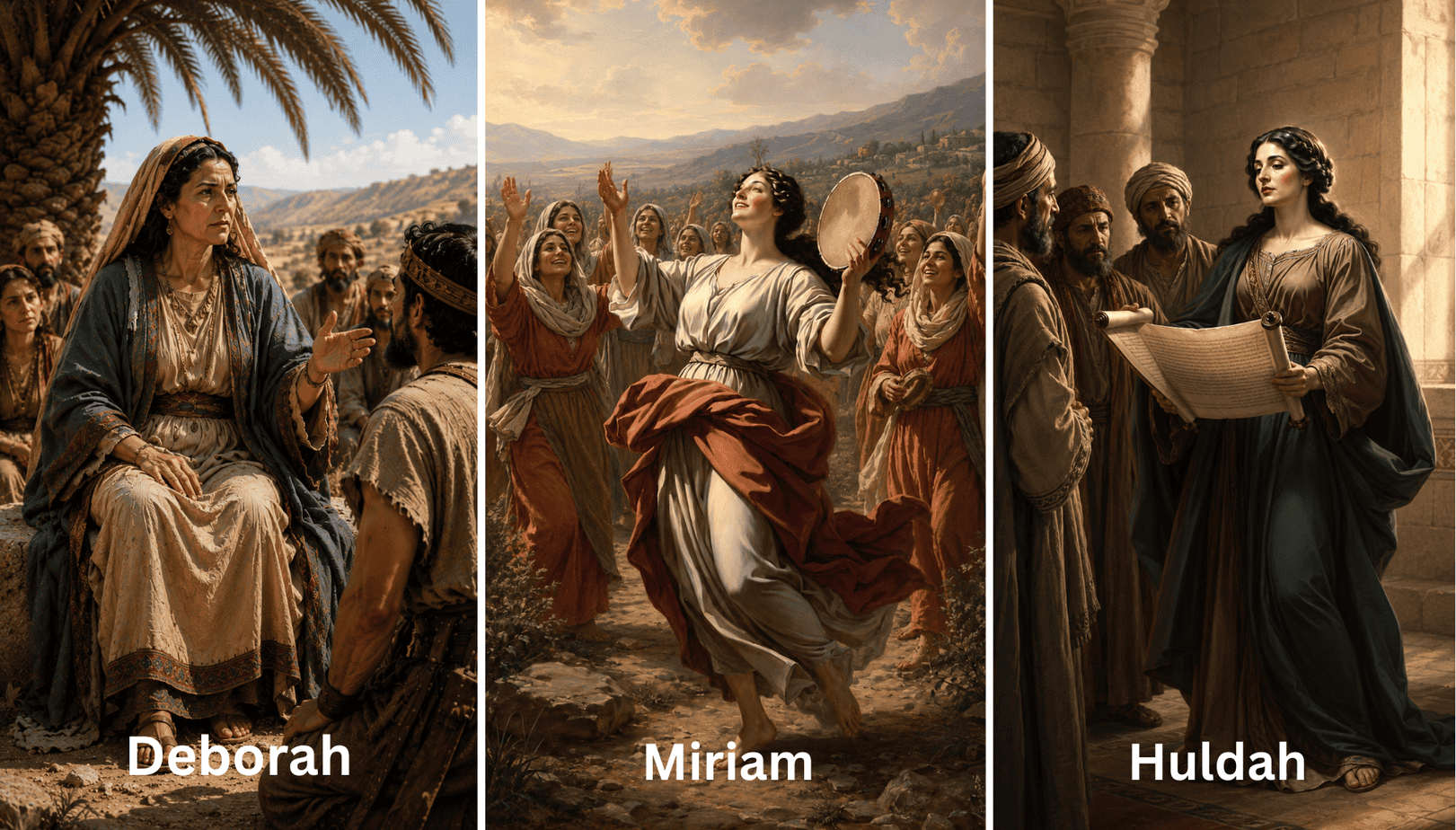
Miriam is called a prophetess and is named alongside Moses and Aaron as one of the key figures God used to lead Israel. She leads the people—men included—in sung praise after the Exodus (Exodus 15:20–21; Micah 6:4).
Deborah serves as both prophet and judge over Israel. Men come to her for decisions, and she delivers God’s commands to Barak and the army (Judges 4–5). Israel’s obedience to her words brings victory.
Huldah is the prophet consulted when the Book of the Law is found. King Josiah and his male officials seek her word, and her prophetic message shapes a national reform (2 Kings 22:11–20; 2 Chronicles 34:22–28).
Together, these examples show a consistent pattern: God is not reluctant to reveal His truth through women, and He expects His people—including men—to listen.
Examples of Women in the Early Church Entrusted with God’s Message
Anna is a prophet who worships in the temple and speaks about the child to all who were looking for the redemption of Jerusalem (Luke 2:36–38). Her audience included men.
Philip’s four daughters are described as prophets in the early church (Acts 21:8–9). Their ministry demonstrates that women publicly proclaimed God’s message among the gathered believers.
Mary, the mother of Jesus, proclaims God’s redemptive purposes in the Magnificat (Luke 1:46–55), a theological proclamation the church has treasured for centuries.
In 1 Corinthians 11:4–5, Paul assumes women will pray and prophesy in the gathered church. He gives instructions about how they do so—not forbidding them from speaking.
Together, these examples show that God repeatedly entrusted women to proclaim His truth in mixed company.
Women Who Teach and Correct Men
The question many people wrestle with is not whether women can speak at all, but whether they can teach or correct men. Scripture gives several striking examples where they do exactly that.
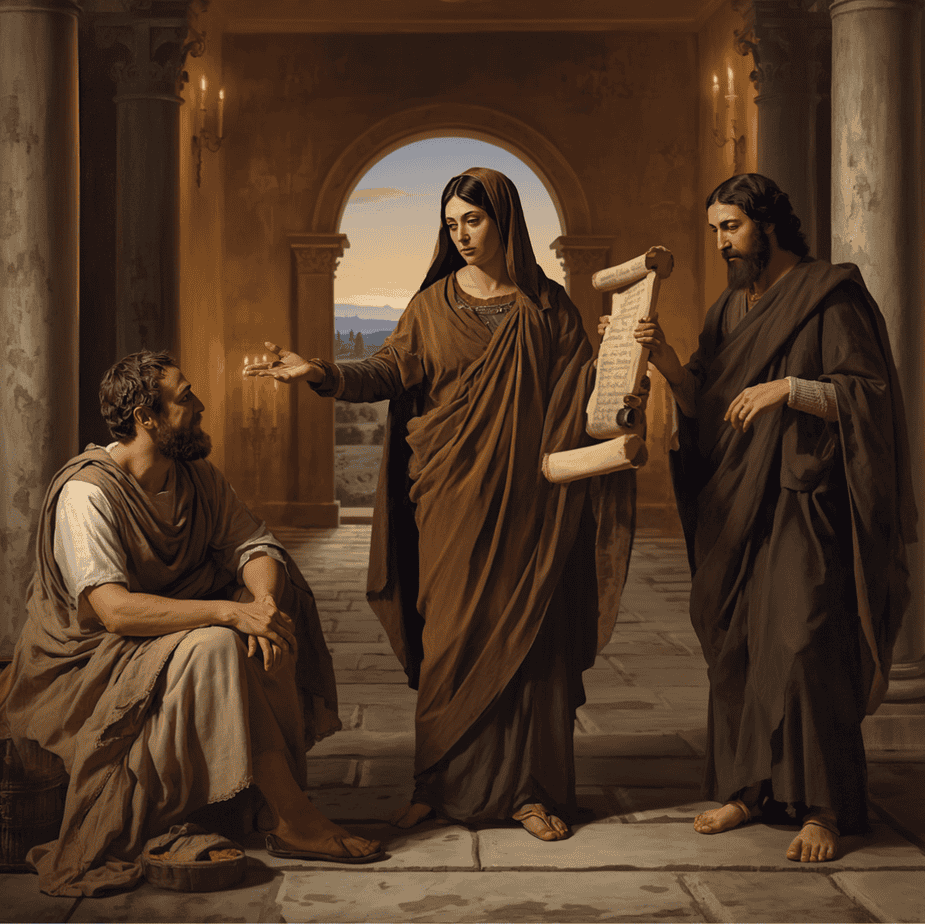
Priscilla and Aquila Instructs Apollos
In Acts 18, Priscilla and Aquila encounter Apollos, an eloquent, learned teacher who knows only John’s baptism. Together they pull him aside and explain God’s way more accurately to him (Acts 18:24–26).
Priscilla is often named before her husband in the New Testament (Acts 18:18–19, 26; Romans 16:3; 2 Timothy 4:19), which many scholars see as a clue that she played a prominent role in their ministry partnership. Regardless, the text clearly portrays a woman participating in instructing a male teacher—and doing so in a way Scripture commends.
Abigail’s Wise Counsel to David
In 1 Samuel 25, Abigail intercepts David on his way to avenge himself on Nabal’s household. She approaches with humility but also with bold, theologically rich instruction, warning him not to shed blood and reminding him of God’s promises (1 Samuel 25:23–31).
David’s response is telling. He blesses God for sending her, affirms her discernment, and explicitly says she has kept him from sinning (1 Samuel 25:32–35). A future king of Israel receives correction from a woman and recognizes God’s hand in it.
In the resurrection narratives, women are the first witnesses. They encounter the risen Christ and are commissioned to tell the male disciples that He is risen (Matthew 28:1–10; John 20:11–18). Their testimony became the first proclamation of the resurrection that the apostles would later carry to the world.

In a patriarchal culture where women’s testimony held no legal weight in court, God chose women to proclaim the central truth of Christianity to men who would lead the church. It’s difficult to argue that God opposes women bringing life-changing truth to men when He orchestrates this moment.
But Scripture Specifically Forbids Women Teaching Men
Despite all of these examples, some still object because of the passages that seem to tell women to be silent or not to teach men. To take Scripture seriously, we can’t ignore what 1 Corinthians 14:34–35 or 1 Timothy 2:12 say about women teaching men—but we also cannot read them in a way that erases everything we’ve just seen.
So, before we draw sweeping conclusions from a couple of sentences, let’s look carefully at what those verses actually say, the situations Paul was addressing, and how his words fit with the wider biblical pattern of women teaching and leading.
1 Corinthians 14: Women Should Keep Silent in Church
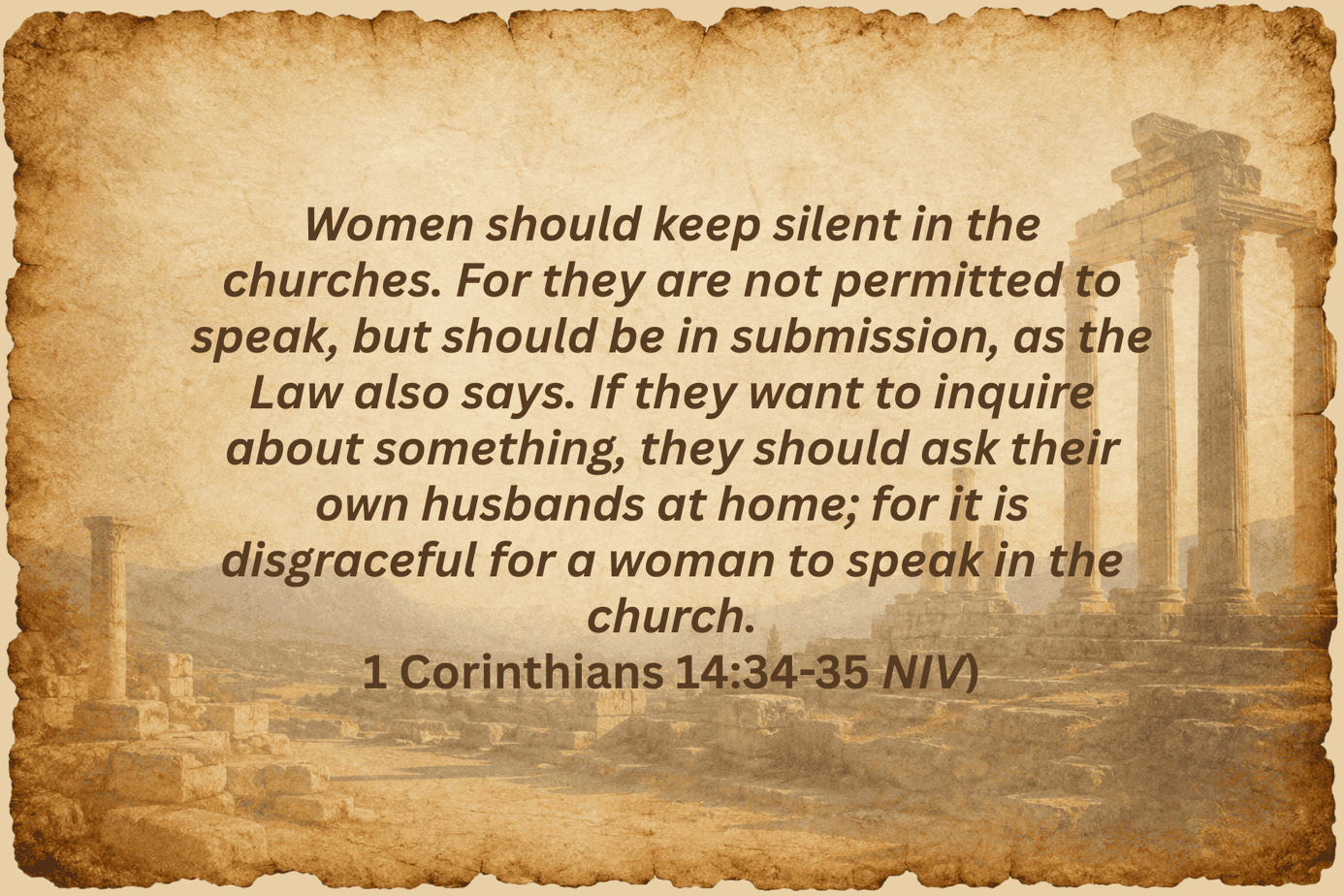
In 1 Corinthians 14:34–35 (NIV), Paul writes that women should keep quiet in the churches and ask questions of their husbands at home instead of at church.
If we isolate these verses, they sound like a blanket ban. But in the same letter, just chapters earlier, Paul assumes women are already praying and prophesying aloud in the gathered church (1 Corinthians 11:5). Thus, whatever “keep silent” means, it cannot mean “never speak at all,” or Paul would contradict himself.
Instead, notice the context. Chapter 14 is about orderly worship. Paul tells three groups to keep silent at certain points:
-
- Tongue‑speakers when there is no interpreter (verse 28)
- Prophets when another receives a revelation (verses 29-30)
- And then these particular women.
The issue in every case is disorderly speech—people talking over one another, derailing what’s happening, or refusing to yield the floor.
Paul’s mention of women “wanting to inquire,” suggests a pattern of public questioning, comments, or challenges that were disrupting the gathering. In a culture where most women had less education than men, it’s plausible some were asking basic or confused questions aloud, interrupting, or pushing back in ways that undermined the recognized leadership.
Paul’s solution is not, “Women must never speak,” but rather “These questions and debates belong at home, not in the middle of the service.”
Read this way, 1 Corinthians 14:34–35 addresses a specific disorder, not all female speech. It applies the same principle to everyone: speech in worship should be orderly, edifying, and submitted to the common good.
1 Timothy 2:12: “I do not permit a woman to teach”
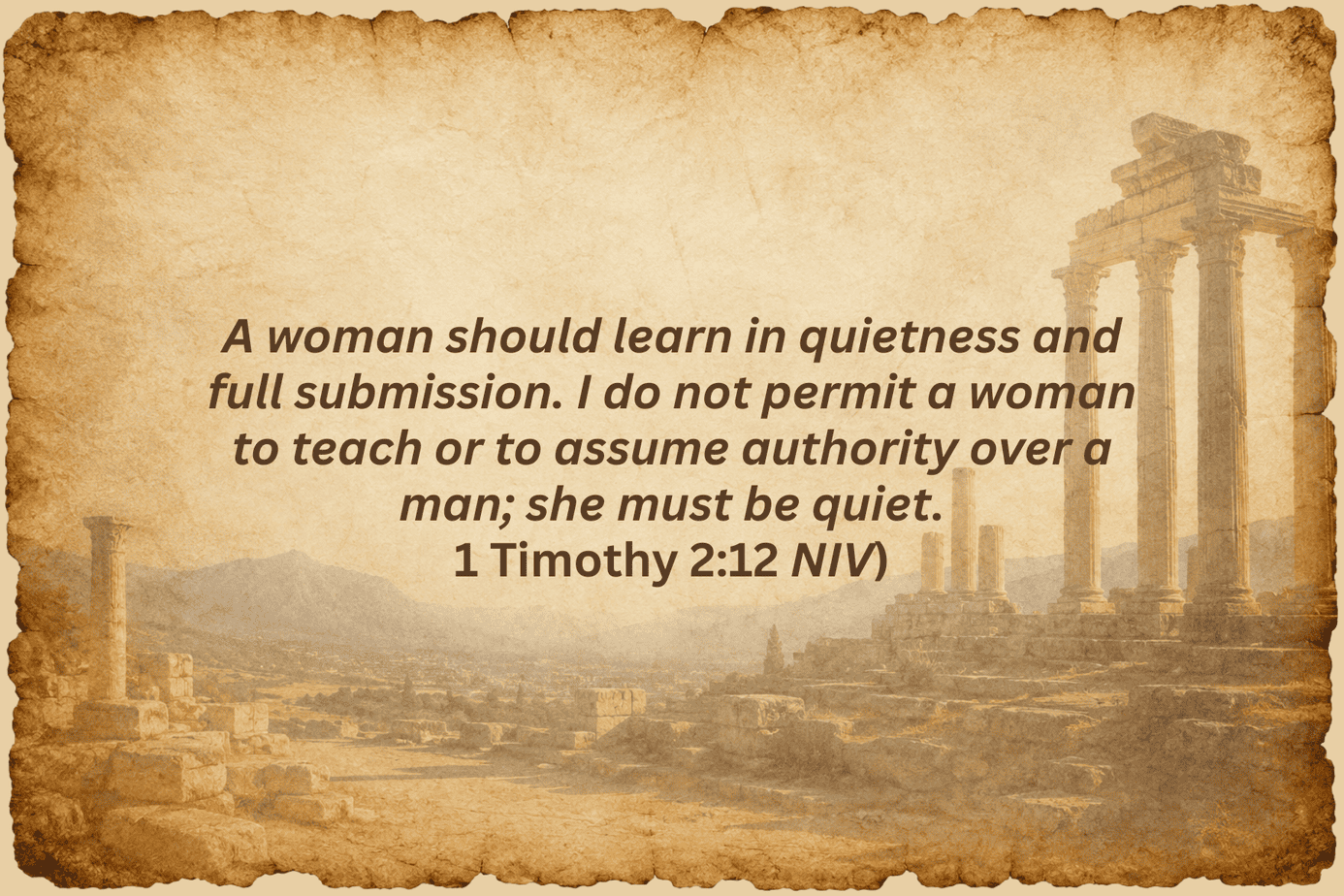
In 1 Timothy 2:11–12 (NIV), Paul writes that he does not permit a woman to teach or assume authority over a man—that she must be quiet.
Again, pulled from context, this sounds absolute. But the details matter.
First, commends Phoebe as a deacon and benefactor of many (Romans 16:1–2), partners with Priscilla, who instructs Apollos alongside her husband (Acts 18:26), and greets Junia, whom he describes as “outstanding among the apostles” (Romans 16:7). While scholars debate whether this means she was herself an apostle or simply well known to the apostles, either reading reflects the significant ministry of a woman Paul publicly commends. If Paul forbade all women teaching men, his own ministry becomes difficult to explain.
Second, the context is crisis. 1 Timothy addresses a church in Ephesus plagued by false teaching and dangerous speculation. Much of the letter focuses on stopping false doctrine and restoring order. In that setting, Paul restricts who is permitted to teach—a temporary measure responding to a specific problem.
Paul’s Choice of Words
Third, Paul’s verb choice matters. The Greek word authentein translates “exercise authority over,” which can mean domineer, usurp, or abuse authority—not simply “hold authority.” Because the word appears only once in the New Testament and is rare in ancient literature, scholars continue to debate its precise nuance. Paul could have used more common or neutral words for authority that he uses elsewhere. He didn’t. This suggests he may be addressing unhealthy control or false teaching, not every instance of women teaching men.
Notice too that Paul insists women must learn. In the first century, women often had less access to formal religious instruction. Thus, this call is radical for its time. Further, learning quietly is the same posture expected of any student.
A reasonable reading, consistent with the rest of Scripture, is this: In a church influenced by false teaching, Paul appears to restrict certain women (likely newly converted or poorly instructed) from teaching or seizing authority. Yet, his long-term desire is that women, like men, learn well and use their gifts appropriately.
What the Church Loses without Women Teaching Men
When we silence women teachers, we don’t protect the church. We impoverish it.
The church loses the fullness of what the Holy Spirit is doing. Paul tells us that God distributes gifts as He chooses, giving each person what He determines (1 Corinthians 12:11). When we restrict women’s gifts, we’re essentially telling God His distribution was a mistake.
Men lose access to valuable insight that often comes through a woman’s experience and perspective. And the church loses prophetic voices we desperately need — voices that frequently see injustice, spiritual compromise, or false teaching long before others do.
“It’s time churches stop choosing tradition over truth.”
It’s time churches stop choosing tradition over truth, gatekeeping over gifts, and control over conviction.
If God has called you to teach, I encourage you to study these passages diligently in context and faithfully use what He has given you. The church — including the men in it — needs your voice.

If you’re hungry for thoughtful, Christ‑centered teaching, specifically on how God designed our bodies and health, sign up for my newsletter, Wednesday’s Wisdom and Wellness. You’ll get Scripture inspiration, health news, and biblically rooted guidance on stewarding your body, along with healthy recipes and practical tools to make stewardship easier for everyone.
Subscribe below.
No spam. Unsubscribe anytime.
0 Comments