
Why warm baths for gut health work (and it’s not what you think)

There are things you learn about your body the hard way. And then there are things your downstairs neighbors learn about your body—unintentionally.
When I was working for a large international accounting firm, I came home most evenings wound tight, stressed out, and with a gut that had been in open rebellion all day. I had what my doctor called IBS, though as I would later understand, that label was more of a shrug than a diagnosis. There was a lot more going on beneath the surface. But what I knew then was that a warm bath helped. I couldn’t have told you why. I just knew that sliding into a hot tub after a brutal day at work made something in my gut finally let go.
Let go being the operative phrase.
As it turned out, the reverberation properties of a bathtub are considerable. My downstairs neighbors eventually mentioned to my children that they could hear someone farting in the bathtub every night, and my children, bless their hearts, were only too happy to identify the source.
It’s funny now, but it wasn’t then.
Why Warm Baths for Gut Health Work
What I didn’t know then, and what most people still don’t know, is that my body was doing something physiologically intelligent every time I got in that tub. It wasn’t just comfort. It was biology.
Your nervous system operates in two primary modes. The sympathetic mode is your fight-or-flight state: the one that gets you through a brutal deadline, a difficult client, or a traffic jam. It is essential. It is also, when chronically activated, deeply destructive to your gut.
When your sympathetic nervous system is running the show, digestion is deprioritized. Blood flow is redirected away from the digestive tract. Gut motility slows. The communication between your brain and your gut (a bidirectional highway running largely through the vagus nerve) gets disrupted. Your gut, in the language of the nervous system, is told to wait.
The parasympathetic nervous system is the counterpart: rest and digest mode. This is where healing happens and digestion resumes. It’s where the vagus nerve, that remarkable cranial nerve running from your brainstem all the way through your chest and abdomen, can do its job of regulating gut function, reducing inflammation, and keeping the gut-brain axis humming.
Warm water immersion activates the parasympathetic nervous system. Research confirms that soaking in warm water shifts autonomic balance toward parasympathetic dominance, slowing heart rate, lowering blood pressure, reducing cortisol, and (critically for anyone with gut issues) promoting digestion and smooth muscle relaxation throughout the digestive tract.
My gut was waiting for permission to relax. The bath gave it that permission.
Your nervous system state determines your digestive state. You cannot eat your way out of a chronically activated sympathetic nervous system. Supplements help. Diet matters enormously. But if your nervous system never shifts out of fight-or-flight, your gut never fully heals.
The Tub Worth Sitting in Cockleburs For
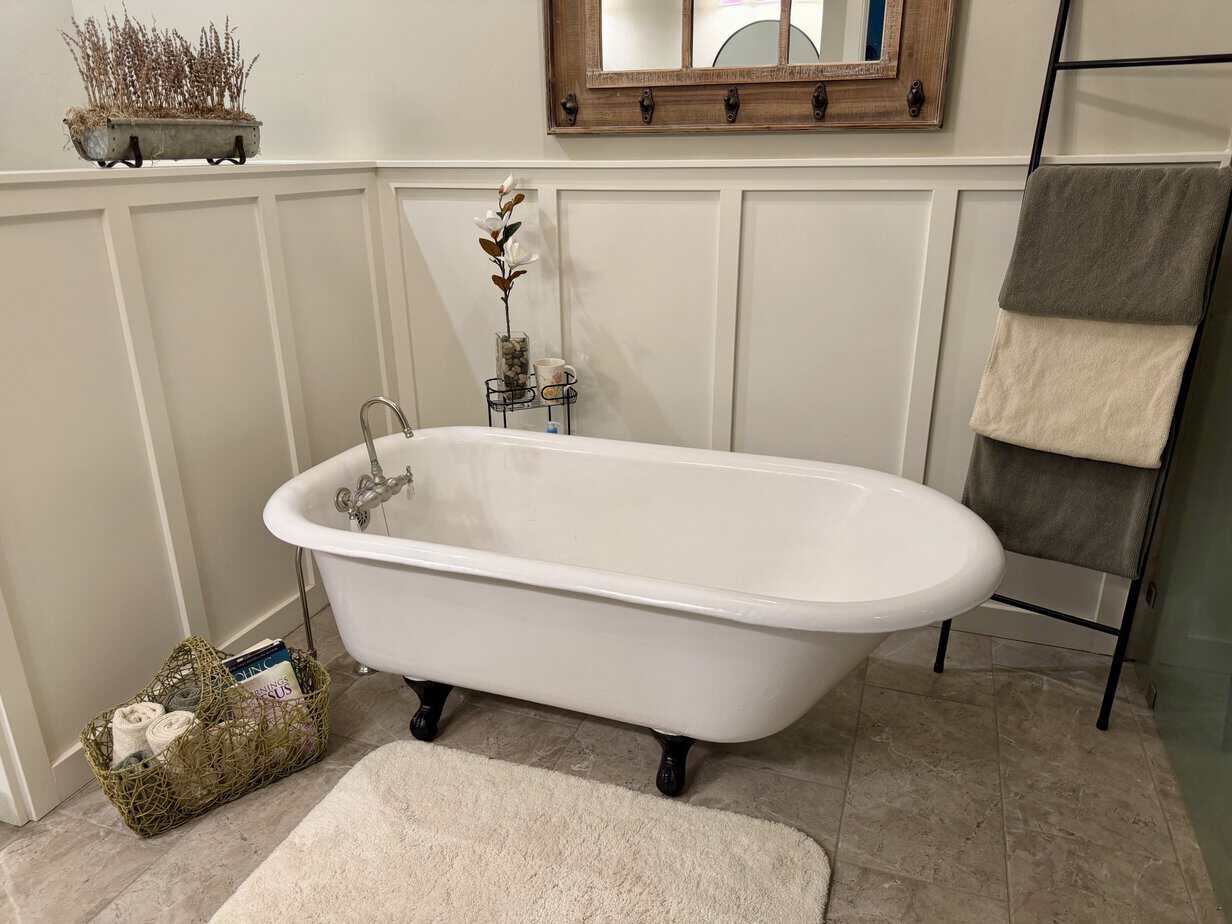
When my husband and I had our. home built, our dear friend, knowing I loved my baths, invited us out to her farm. Her mother had left her a collection of cast iron claw-foot tubs and sinks in a field, and she was determined that I find one that fit me properly before we finalized our bathroom plans.
It was getting dark by the time we got to it. The truck headlights were on us. As our husbands turned them right-side up, I climbed in and out of cast iron tubs, assessing the fit, and emerged thoroughly covered in cockleburs.
It was entirely worth it.
That tub now sits in our master bathroom. It is heavy, beautiful, and one of the best things to ever come out of a field full of cockleburs. We also found a gorgeous cast iron wall-mount farmhouse sink for our laundry room that day. I am eternally grateful for her generosity because she insisted that we only pay for the prep and painting.
That is the kind of friend everyone should have.
What I Lost When I Lost My Baths
For a period of time, I stopped taking baths. The EPA’s maximum contaminant level for uranium is 30 parts per billion. Our well water tested at 43 parts per billion for uranium because we live in an area with naturally occurring deposits that was heavily farmed before it was developed. Once I learned that, I wasn’t comfortable soaking in it until we got our filtration system sorted out and verified. I still showered, but the long, restorative soaks that had been part of my routine for decades were gone.
I felt it. Unwinding was harder. My nervous system had fewer opportunities to shift gears. It was a quiet but real loss, and it reinforced for me just how much that simple practice had been doing beneath the surface all those years.
Our water recently tested clean with uranium below detectable limits and nitrates well within safe range. My bathtub is back in regular rotation, and my gut knows the difference. Now I just have to focus on getting the uranium out of my body.
Why Removing Bathtubs Is a Wellness Decision Nobody Is Talking About

It has become fashionable in home renovation to rip out bathtubs in favor of larger walk-in showers. The logic is aesthetic and practical. Showers are faster, easier to clean, and photograph beautifully for real estate listings.
But nobody is framing this as a health decision. And it is one.
A shower has its place. But it does not do what a bath does. Immersion is the key variable. Surrounding the body in warm water for an extended period is what triggers the parasympathetic shift, activates vagal tone, relaxes smooth muscle, and gives the nervous system the sustained signal it needs to shift out of fight-or-flight. A five-minute shower, however hot, is not the same physiological experience.
This isn’t a woman’s issue. Calgon commercials and bubble bath imagery have made baths seem like a feminine luxury and somehow less masculine. But men struggle with gut problems, autoimmunity, and chronic stress too. And they have the same nervous system and the same vagus nerve.
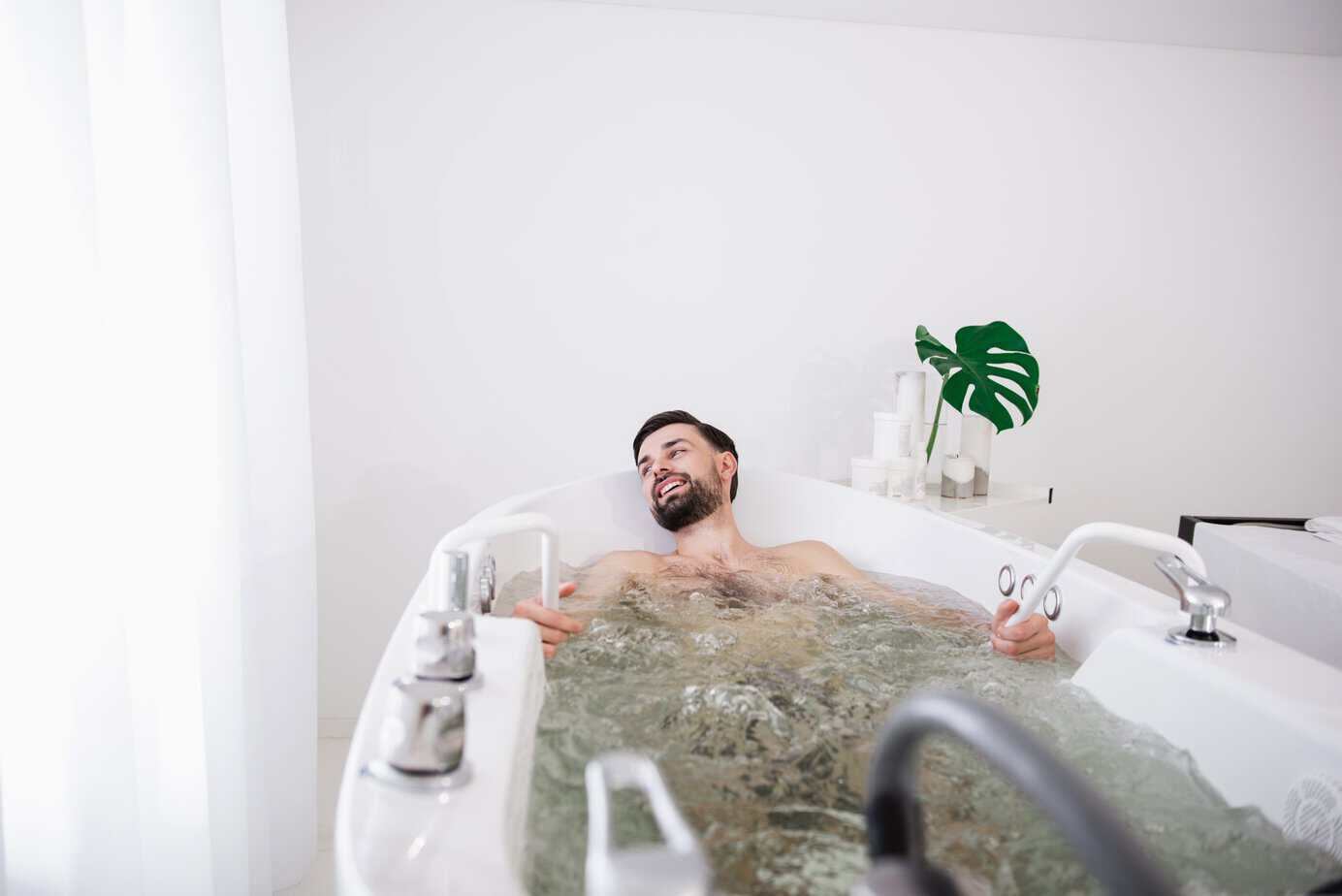
A bathtub is not a luxury. It is a tool for gut health. And a lot of homes are losing it without anyone counting the cost.
God Built Rest Into the Body
God did not build a body that runs indefinitely on stress hormones. He built a body that requires rest—genuine, physiological rest—to digest, repair, absorb nutrients, and heal.
The vagus nerve is central to that design. This remarkable nerve is the longest cranial nerve in your body. It runs from your brainstem down through your neck, chest, and abdomen, touching your heart, lungs, digestive tract, and most major organs along the way.
Its job is enormous. It regulates heart rate, controls inflammation, supports immune function, and maintains the gut-brain connection that determines how well you digest, absorb nutrients, and respond to stress. When vagal tone is strong, your body can shift into healing mode. When it is weak or suppressed by chronic stress, healing stalls.
A warm bath activates the vagus nerve. Immersion in warm water stimulates vagal activity, shifting your entire system toward rest, repair, and digestive function. If you already have a bathtub, this costs you nothing. It’s a free, accessible way to engage one of your body’s most powerful healing pathways.
That is not self-indulgence. That is stewardship.

Quiet waters. Rest. Restoration. The Psalmist knew something the home renovation industry and our culture have apparently forgotten.
How to Take Therapeutic Warm Baths for Gut Health
If you still have a bathtub, use it. If you are remodeling, keep it.
Water temperature around 100 to 102 degrees Fahrenheit is the sweet spot. That’s warm enough to trigger the parasympathetic response without taxing the cardiovascular system. Twenty minutes is generally sufficient. Epsom salts provide magnesium absorption through the skin and enhance muscle relaxation. Avoid harsh synthetic bath products because your skin is absorbing what you put in the water, and discussed in my book God’s Prescription and in Inactive Ingredients in Medications.
If Your Gut Needs More Than a Bath
A warm bath is a powerful and underutilized tool. It is not, on its own, a complete gut healing protocol. If you are dealing with persistent gut issues, food sensitivities, autoimmunity, or chronic inflammation, the nervous system piece is one part of a larger picture that includes what you eat, what you avoid, how your gut microbiome is functioning, and what might be driving the underlying dysfunction.
If you would like help putting that picture together, schedule a free 15-minute chat here to see if we’re a good fit to work together.

Want weekly Scripture, wellness tips, and anti-inflammatory recipes?
Subscribe to the newsletter below.
No spam. Unsubscribe anytime.
0 Comments