

Is breathwork biblical? It’s a question that started with a post on Facebook. A practitioner asked his community whether it was un-Christian to incorporate breathwork into his practice. The responses ranged from cautious to alarmed. Then I saw another post—and another. A share from a well-known functional medicine physician on hand-to-heart breathing and oxytocin release. Each one met with some version of the same concern: “Is this too woo-woo?”
Years ago, I was called a new-age Christian. A friend said it affectionately because I was open to things like breathwork, nervous system regulation, and the gut-brain connection while still holding my faith as the anchor for everything. Some would say that’s dancing with the devil hoping not to get bit. I’d say it’s something far simpler: chewing the meat and spitting out the bone.
After all, the Christmas tree was a pagan tradition. Christians have always been selective about what they adopt from surrounding culture—keeping what is good, rejecting what contradicts Scripture. That discernment is not a compromise. It is wisdom.
So. let’s talk about breathwork honestly. Not the version borrowed from Eastern religion. The version God designed into your body before you took your first breath. And let’s look at what happens when modern life pulls us away from it.
It Starts in Genesis
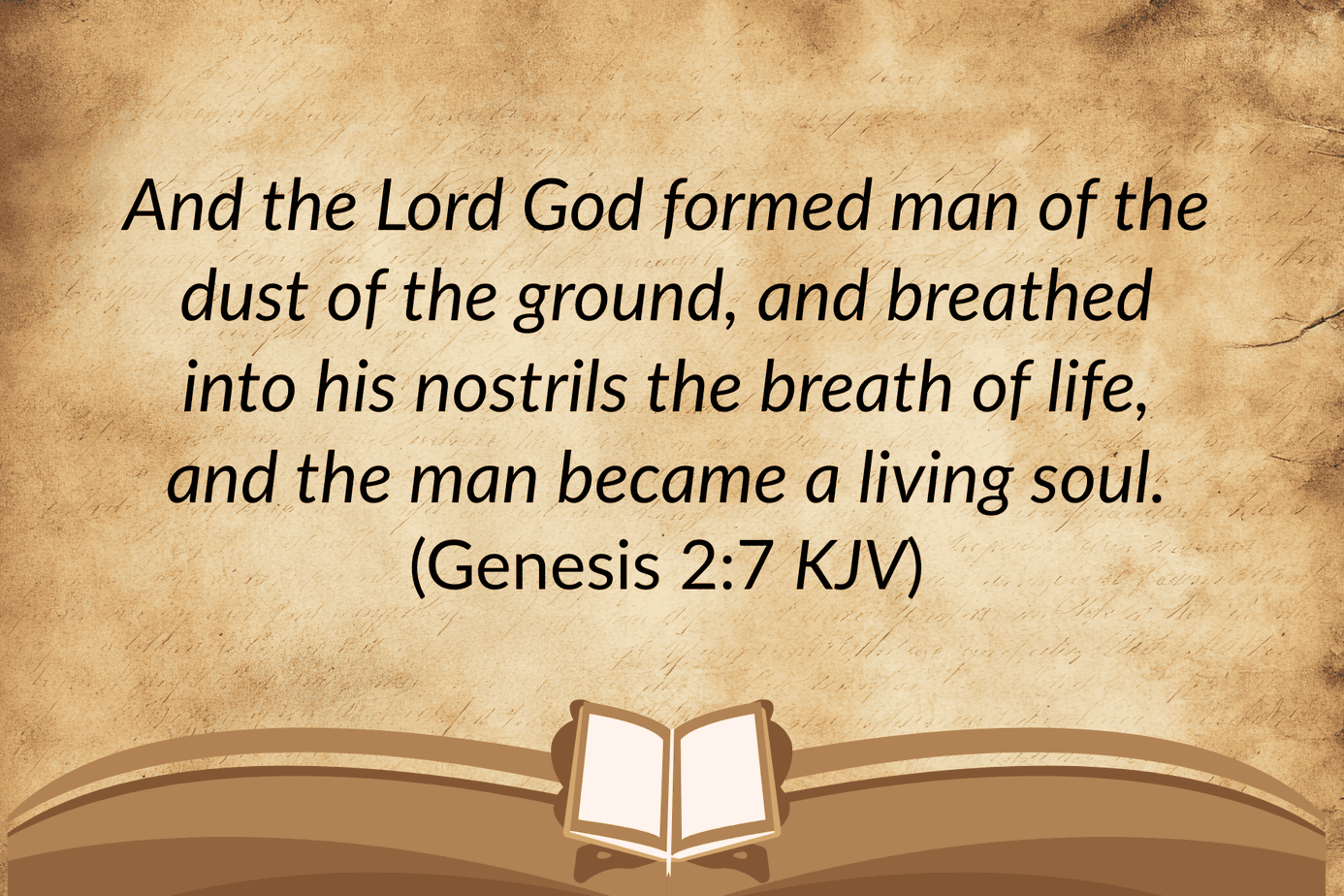
Breath is not incidental to the biblical narrative. It is the act by which God imparted life. The Hebrew word used here is “neshamah” — the breath of God. Throughout Scripture, breath is consistently associated with life, the Spirit, and the presence of God.
While it began in Genesis 2:7, it is reinforced throughout the Old Testament:
-
- Job 12:10 – “The life of every living thing is in His hand, as well as the breath of all mankind.”
- Job 27:3 – “as long as I have life within me, the breath of God in my nostrils”
- Job 33:4 –“the breath of the Almighty gives me life.”
- Ezekiel 37:5 – “I will make breath enter you, and you will come to life.”
Then, the thread continues in the New Testament, where breath remains inseparable from both physical life and the work of the Spirit:
-
- Acts 17:25 – “He gives to all life, breath, and all things.”
- John 20:22 – “After saying this, He breathed on them and said, ‘Receive the Holy Spirit.’”
Breath has always been sacred in this framework. Treating it as such is not new age. It is deeply biblical.
Consequently, what modern life has done to our breathing is worth paying attention to.
How Modern Life Has Damaged the Way We Breathe
Journalist James Nestor spent years researching the science of breathing for his book Breath: The New Science of a Lost Art, and what he found is both fascinating and sobering. We have become, in his words, dysfunctional breathers. And it did not happen by accident.
Chronic stress, sedentary work, screen time, poor posture, processed food, and sleep deprivation have collectively rewired the way most people breathe. The average person takes 17,000 to 23,000 breaths per day—and for many, most of those are shallow chest breaths that keep the nervous system in a low‑grade state of fight‑or‑flight.
This matters because your autonomic nervous system has two primary modes: sympathetic (fight‑or‑flight) and parasympathetic (rest‑and‑digest). Modern life has most people chronically tilted toward sympathetic dominance. That means elevated cortisol, impaired digestion, disrupted sleep, suppressed immune function, and increased inflammation.

Romans 12:2 calls us to “be transformed by the renewing of your mind.” 1 Corinthians 6:19–20 reminds us that our bodies are temples of the Holy Spirit and that we are to honor God with them. If chronic shallow breathing is degrading the temple—and the research says it is—then learning to breathe the way we were designed to is not spiritual compromise. It is stewardship.
There is a character in the television series Stranger Things—a sharp‑tongued girl named Eleven—who uses “mouth‑breather” as her go‑to insult for anyone she considers clueless. If you’ve never watched it, just know that in her world, being a mouth‑breather is not a compliment. She was onto something. Turns out, neither your lungs nor your brain are big fans of it either.
Shallow, rapid, stress‑driven breathing is the deviation from God’s design. It is not the baseline. It is the symptom.
God Designed Us to Breathe Through Our Noses
The nose is not just a passageway. It is a sophisticated filtration, warming, and humidification system. It prepares incoming air for the lungs in ways the mouth simply cannot replicate. Nasal breathing supports better oxygen uptake, filters out pathogens and particles, and produces nitric oxide, a molecule that dilates blood vessels and supports cardiovascular health. None of that happens when you breathe through your mouth.
Nestor demonstrated this in a remarkable self-experiment conducted at Stanford. He had his nostrils plugged for ten days, forcing himself to breathe exclusively through his mouth. Within days, his snoring skyrocketed, his blood pressure climbed, and his sleep deteriorated. When the plugs were removed, his blood pressure dropped and his heart rate variability (a key marker of nervous system resilience) improved.
Psalm 139:14 says we are “fearfully and wonderfully made.” The nose is part of that wonder. The fact that God gave us a nose was not arbitrary. Its design has a purpose. Honoring it is stewardship.
Slow, Gentle Breathing and the Body God Gave Us
Beyond nasal breathing, the rate and depth of breath matters too. Research shows that lung capacity correlates strongly with lifespan. In fact, it’s a more reliable predictor than weight, cholesterol, or exercise habits alone. How we breathe may be one of the most overlooked factors in long-term health.
Researchers use the term coherent breathing to describe roughly five to six breaths per minute with 5.5-second inhales and exhales. At that pace, the heart, lungs, and nervous system fall into synchrony. Heart rate variability improves. The parasympathetic nervous system activates, shifting the body into the rest-and-digest state it was designed to spend far more time in.
Importantly, this slow pattern is diaphragmatic—a quiet “belly breath” where the lower ribs and abdomen gently expand instead of the upper chest doing all the work. That pattern lets the lungs use more of their capacity and supports the healthy CO₂ levels that help oxygen actually reach your tissues.
By contrast, the average stressed modern adult takes fifteen to twenty breaths per minute. We are rushing even our breath.
Thus, slowing down enough to breathe the way we were designed to is not woo-woo. It is an act of honoring the temple.

Why Fewer Breaths (and More CO₂) Can Actually Be Better
Often, it’s assumed that breathing more is better because it brings in more oxygen. However, the science says otherwise.
Over‑breathing (fast, shallow, mouth‑driven breathing) blows off too much carbon dioxide. Although carbon dioxide (CO₂) is a waste product of breathing, it also plays a critical role in how oxygen reaches your tissues. The Bohr effect explains the mechanism: hemoglobin releases oxygen to cells more readily in the presence of carbon dioxide. Therefore, if we chronically over‑breathe and deplete CO₂, the blood carries plenty of oxygen but doesn’t release it efficiently into the tissues, robbing them of the oxygen they need.
Training the body to tolerate CO₂ better—through slower and lighter diaphragmatic breathing and occasional gentle breath holds—through slower and lighter breathing and occasional gentle breath holds—can calm the nervous system and improve endurance and conditions like asthma and chronic hyperventilation. Less frantic breathing means the body can actually use what it takes in.
It is a counterintuitive but elegant design: the body does not just need oxygen. It needs the conditions that allow oxygen to do its job. God built those conditions into the chemistry of breath itself.
Food, Posture, and Other Habits That Shape Our Breath

Breathing does not happen in isolation. The way we eat, sit, and move all shape the mechanics of how air moves through the body. Most modern habits are working against us.
Processed food that requires little chewing isn’t just a metabolic problem. It is a structural one. Chewing hard, fibrous food develops the jaw and promotes the wide palate and open airway that nasal breathing requires. When that mechanical stimulus disappears, jaw development suffers across generations. Narrower jaws mean narrower airways, and narrower airways mean more obstructed breathing, especially during sleep.
Sedentary posture compounds the problem. Slouching compresses the diaphragm and restricts its range of motion. The diaphragm is the primary breathing muscle. When it cannot move freely, the body recruits muscles in the neck and chest instead. The result is the shallow, tense breathing that keeps the nervous system on low-grade alert.
Poor indoor air quality adds another layer. We spend the majority of our time in sealed, climate-controlled environments breathing recirculated air, which means the nose’s filtration system is working harder with fewer opportunities to do its job well.
We haven’t just changed what we eat and how we move. We’ve changed how we breathe. And our bodies are paying for it.
So, Is Breathwork Biblical?
I believe it is.
From the very beginning, God breathed life into man through the nostrils. He designed the nose, the diaphragm, the vagus nerve, and the parasympathetic nervous system to work together in a way that supports calm, resilience, and health. What modern science is uncovering is not something new. It is a rediscovery of something we have drifted away from.
Practicing intentional breathwork—slowing down, breathing through the nose, allowing the breath to move deep into the belly, and lengthening the exhale—is not spiritual compromise. It’s the body functioning the way it was designed to. It’s stewardship.
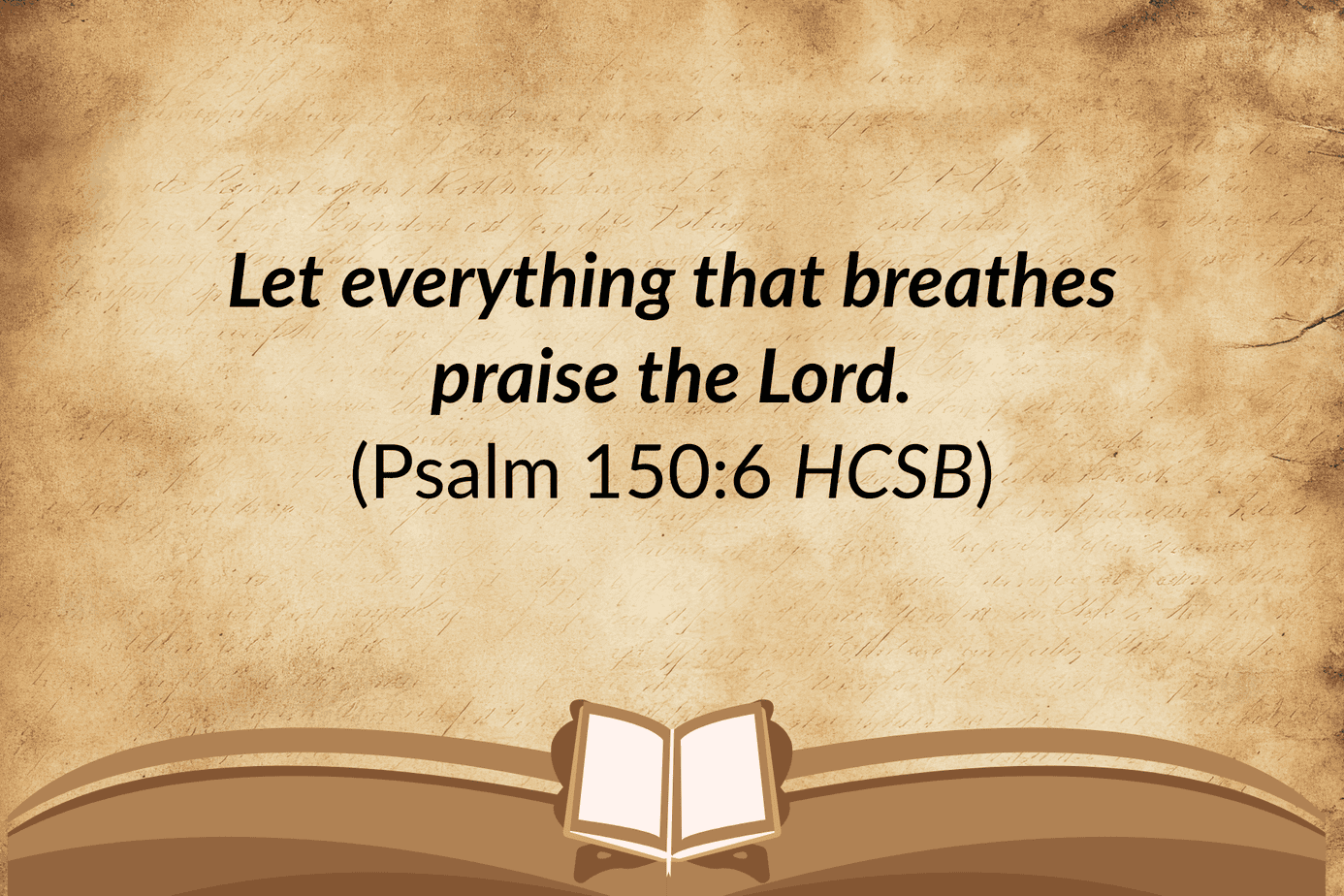
That praise might look like this:
Five slow, quiet breaths through your nose, into your belly, and out through a relaxed chest.
Inhale for four. Pause for four. Exhale for four. Pause for four.
Not as a ritual. Not as a technique. But as a return to God’s design.
If you’d like more simple, science‑backed practices and tips that honor God’s design for your body, join email community where I share practical, Christ‑centered tools for everyday health.
And if you have my book God’s Prescription, don’t miss chapter 11 for more practices backed by science and Scripture you can start today.

Want weekly Scripture, wellness tips, and anti-inflammatory recipes?
Subscribe to the newsletter below.
No spam. Unsubscribe anytime.