
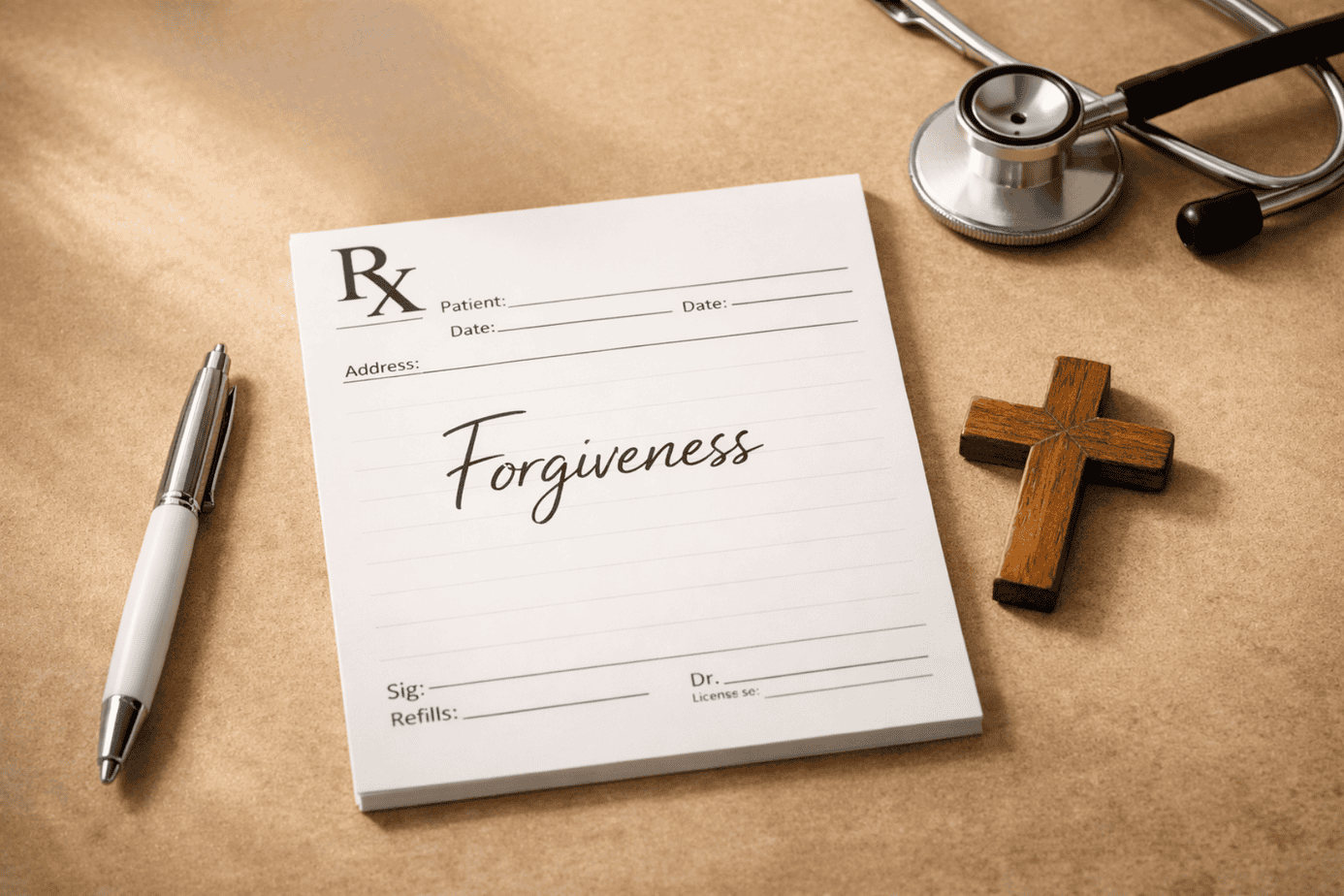
Forgiveness is medicine—not just a metaphor. It’s a biological reality woven into the way God designed the human body. When He commands us to forgive—not seven times, but seventy times seven—He is not setting an impossible standard. He is describing how He built us to function. And when we live outside of that design, our bodies tell the story.
Physical symptoms often have unexpected roots. Elevated cortisol. Chronic inflammation. Gut dysfunction. Autoimmune flares that don’t respond to protocol. And sometimes, underneath all of it, an unhealed wound. A relationship that fractured and never mended. A hurt that got buried but never resolved.
Science is now confirming what Scripture has always taught: what we carry emotionally, we carry physically. And unforgiveness may be one of the most underestimated drivers of chronic illness today.
Your Body Is Listening to Your Beliefs
In my book God’s Prescription, I wrote about the profound connection between belief, faith, and physical health. Research shows that belief, whether positive or negative, can dramatically impact health outcomes. The placebo effect demonstrates that when the body recalls a state of health, it can trigger natural healing mechanisms. The nocebo effect shows the reverse: negative expectations can produce negative outcomes.
Your body listens to your beliefs. And when those beliefs are rooted in unresolved hurt, resentment, or unforgiveness, your body responds accordingly.

The science is striking. Research shows that faith-based practices like prayer, gratitude, and forgiveness aren’t just spiritual disciplines. They can physically change the brain and body, lower cortisol, improve immune function, and promote healing. Regular participation in faith-based community is associated with greater longevity, lower rates of depression and anxiety, stronger immune function, and better cardiovascular health.
Faith isn’t just a spiritual comfort. It’s a biological advantage.
3 Powerful Ways Forgiveness is Medicine for Your Body, Mind, and Spirit
1. Forgiveness Restores Your Power
Hurt and unforgiveness make us victims, which comes at a steep physiological price. Every time we mentally replay a wound, the brain and body respond as though it is happening again in real time. Cortisol surges, the nervous system fires, inflammation rises. We may be reliving an event from years ago, but our cells don’t know the difference.
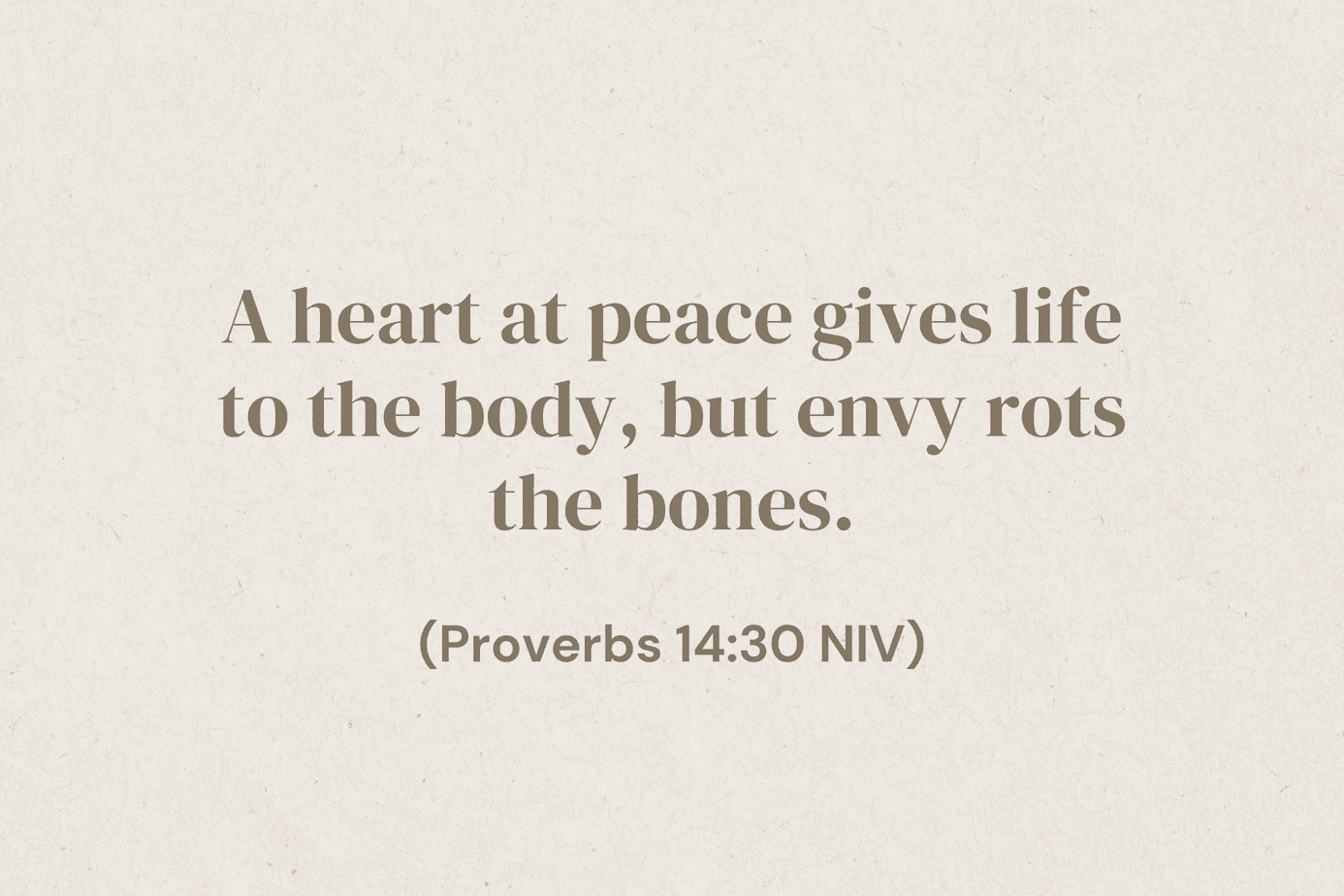
Scripture diagnosed this condition long before modern medicine had a name for it. Proverbs 14:30 tells us plainly: “A heart at peace gives life to the body, but envy rots the bones.” That phrase—rots the bones—is not poetic exaggeration. It is a remarkably accurate description of what chronic stress and unresolved bitterness do to the body at a cellular level.
And Hebrews 12:15 (NIV) warns us further: “See to it that no one falls short of the grace of God and that no bitter root grows up to cause trouble and defile many.” Bitterness doesn’t stay contained. It takes root, spreads, and corrupts, first internally, then outward into every relationship and system it touches.
Forgiveness doesn’t minimize what happened or excuse the person who caused the harm. What it does is return the power to you. When you forgive, you decide that someone else’s actions no longer get to govern your health, your peace, or your future. That is not weakness. That is one of the most powerful health decisions you can make—one more way forgiveness is medicine for your nervous system, hormones, and heart.
2. Forgiveness Frees You from the Past
Dr. Bessel van der Kolk’s research shows us that the body doesn’t forget what the mind tries to suppress. Trauma and unresolved hurt rewire the brain, dysregulate the nervous system, and lock us into patterns of chronic hypervigilance and stress. Holding a grudge isn’t neutral. It actively keeps those stress pathways firing long after the original wound occurred.
A saying often attributed to Confucius puts it plainly: the person who seeks revenge should prepare two graves. Unforgiveness punishes the one who holds it far more than the one it’s directed at. God designed us for something better. When Jesus commands us to forgive not seven times, but seventy times seven (Matthew 18:22), He isn’t setting an unreasonable standard. He is pointing us toward freedom. His commands are never arbitrary. They are always architectural, designed for our flourishing.
When we choose to release a grievance—not because the other person deserves it, but because we deserve to heal—we break the physiological loop. Cortisol can drop. Inflammation may resolve. The nervous system begins to calm. Freedom isn’t just a spiritual metaphor. It’s a measurable biological state.

3. Forgiveness Breaks Generational Chains
Perhaps the most remarkable thing about forgiveness is that its presence and its absence both ripple outward.
When we extend forgiveness, we don’t just free ourselves. We create the conditions for others to heal as well. The person who receives your forgiveness is changed by it. Relationships that seemed irreparably broken find room to breathe. Families fractured by old wounds discover they can move forward. This is the economy of grace: it multiplies outward in ways we can’t always predict or measure.
But the ripple runs deeper than our immediate relationships. Scripture warned us of this long before modern science had language for it. In Exodus 20:5, God speaks of “the sins of the fathers being visited upon the children to the third and fourth generation.” For centuries this was read as divine punishment. But emerging epigenetic research suggests something far more biological may also be at work.
Epigenetics is the study of how our environment and experiences alter gene expression. This doesn’t involve changing DNA itself, but rather influencing which genes are switched on or off. Groundbreaking research, including studies on Holocaust survivors and their descendants, has shown that chronic stress and unresolved trauma can produce heritable changes in stress hormone regulation.
In other words, the physiological imprint of unresolved wounds can be passed down to our children and grandchildren without them ever experiencing the original event. The “sins of the father”—the unhealed wounds, the chronic stress responses, the patterns of unforgiveness—may literally be written into the next generation’s biology.

But here is the hope: if trauma can be inherited, so can healing. Choosing forgiveness doesn’t just liberate you from your past. It may help rewrite the biological legacy you pass forward. Luke 6:37 promises that when we forgive, we will be forgiven. Romans 12:18 calls us to live at peace with everyone, as far as it depends on us. When we do the hard work of releasing what we’ve carried, we don’t just heal ourselves. We change what our children and grandchildren inherit.
Forgiveness is not just a personal health decision. It is a generational one.
FAQs About Why Forgiveness is Medicine
What if the person who hurt me never apologizes or asks for forgiveness? Do I still need to forgive?
Yes—forgiveness is primarily for your own healing. It is not dependent on the other person’s response or apology, nor does it require reconciliation. Jesus commands us to forgive “seventy times seven” as a way of life, not a transaction. You can release the offense in your heart before God while still maintaining healthy boundaries or limiting contact if needed for safety. This is why forgiveness is medicine—it allows your body to release what it was never meant to carry long-term.
Does forgiving mean I have to forget what happened or pretend the hurt didn’t matter?
No. True forgiveness does not mean forgetting the event or minimizing the pain. It means releasing the ongoing emotional and physiological grip the offense has on your body and mind. Forgiveness acknowledges the wrong without letting it continue to “rot the bones,” as Proverbs 14:30 describes.
How do I actually start forgiving when the pain feels too deep?
Start with honesty before God. Bring the specific wound to Him and cast your anxiety on Him, because He cares for you (1 Peter 5:7). Many people begin by praying something simple: “Lord, I choose to forgive [name] not because they deserve it, but because I want the freedom and healing You designed for me.” It often helps to journal what you’re releasing or talk through it with a trusted counselor or mentor. Remember, forgiveness is usually a process, not a single event—each step you take is another dose of the medicine God built into your body, mind, and spirit.
True Healing: Why Forgiveness is Medicine
As a functional nutritionist, I will always address what’s on your plate, what’s in your labs, and what’s disrupting your gut. But true healing isn’t just physical. It’s the integration of body, mind, and spirit — which is exactly what God designed.
Cast all your anxiety on him because he cares for you. (1 Peter 5:7 NIV)
If you’re carrying an unhealed wound today, I want to gently encourage you: forgiveness is medicine, and it may be the most powerful prescription you have not filled yet. Not because it’s easy. Not because the other person deserves it. But because you deserve to heal.
If you’re not sure where to begin, start here:
- Who comes to mind when you think of unresolved hurt?
- What are you still holding onto?
- What would it look like to release it—not for them, but for your healing?
If this resonates, God’s Prescription goes deeper into why forgiveness is medicine and how God designed your mind, body, and spirit to heal together. And if you’re ready to address what chronic stress and inflammation are doing to your body, schedule a complimentary 15-minute call here.

Want weekly Scripture, wellness tips, and anti-inflammatory recipes?
Subscribe to the newsletter below.
No spam. Unsubscribe anytime.
Sources:
- Intergenerational transmission of trauma effects: putative role of epigenetic mechanisms
https://onlinelibrary.wiley.com/doi/10.1002/wps.20568 - Forgiveness in the HPA axis: The roles of cumulative genetic effects and cortisol reactivity in trait and situational forgiveness
https://www.sciencedirect.com/science/article/abs/pii/S0306453025001301?via%3Dihub - Holocaust Exposure Induced Intergenerational Effects on FKBP5 Methylation
https://www.biologicalpsychiatryjournal.com/article/S0006-3223(15)00652-6/fulltext - The body keeps the score: memory and the evolving psychobiology of posttraumatic stress
https://pubmed.ncbi.nlm.nih.gov/9384857/ - The Nocebo Effect
https://www.annualreviews.org/docserver/fulltext/pharmtox/64/1/annurev-pharmtox-022723-112425.pdf?expires=1774948400&id=id&accname=guest&checksum=8B190659443787932A4B0BF5A5DA59BB - Meta-analytic connections between forgiveness and health: the moderating effects of forgiveness-related distinctions
https://pubmed.ncbi.nlm.nih.gov/30632797/