
A few years ago, I slammed my hip hard into our kitchen island. It hurt for weeks. Eventually I mentioned it to my nurse practitioner, who did some fascia release work on it. The pain was significant enough that I was surprised and curious. Why would pressing on connective tissue hurt that much? And why did releasing it help?
That curiosity led me down a research rabbit hole that changed how I think about the body. It also led me to a fascia therapist at a recent conference who confirmed what I was learning: A lot of people have never heard of fascia, and fewer understand what it does. Yet fascia may be one of the most important tissues in the human body—and one of the clearest examples of God’s design for integrated, whole-body function.
What Is Fascia? The Hidden Web God Wove Through Your Body
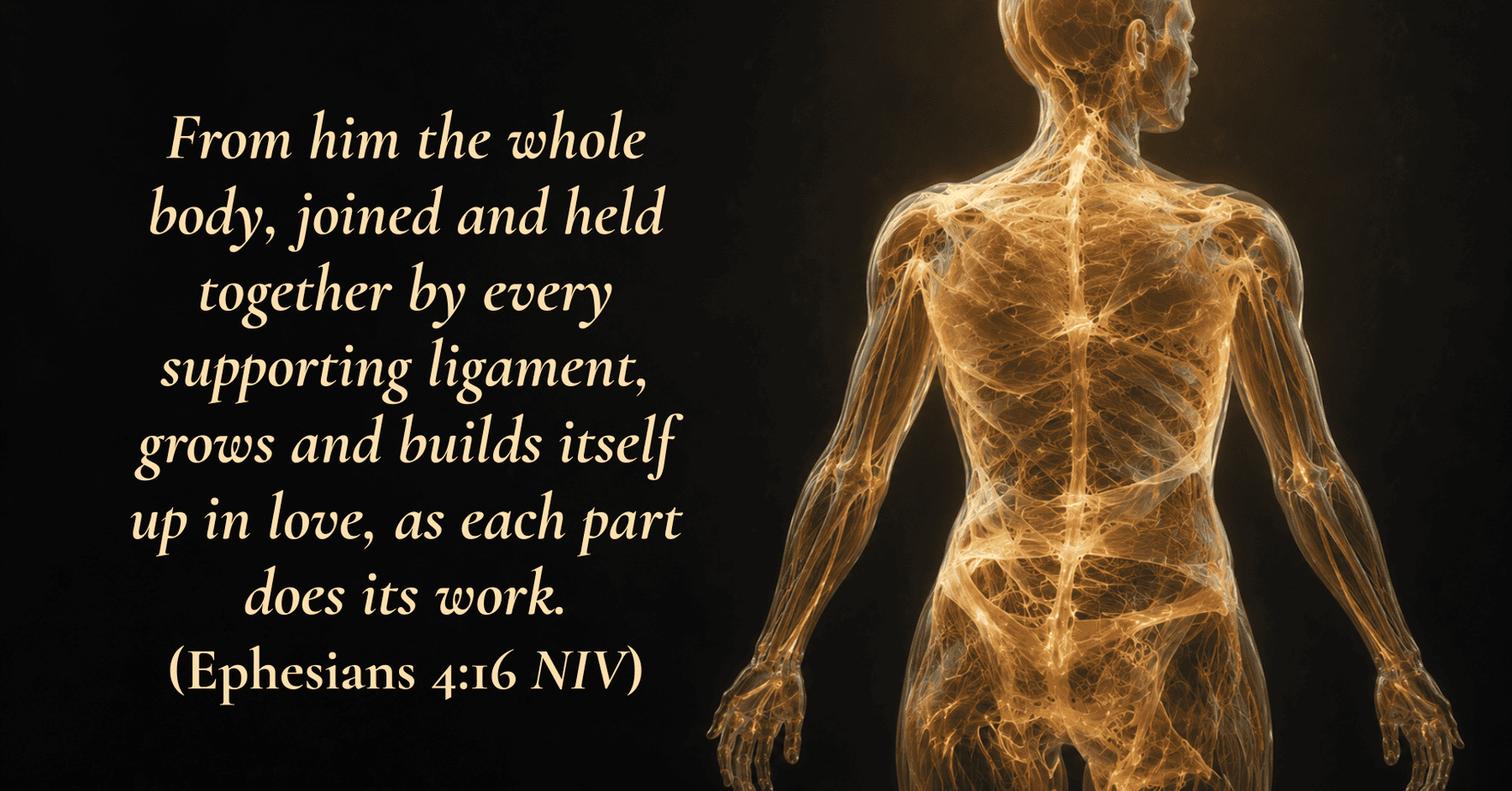
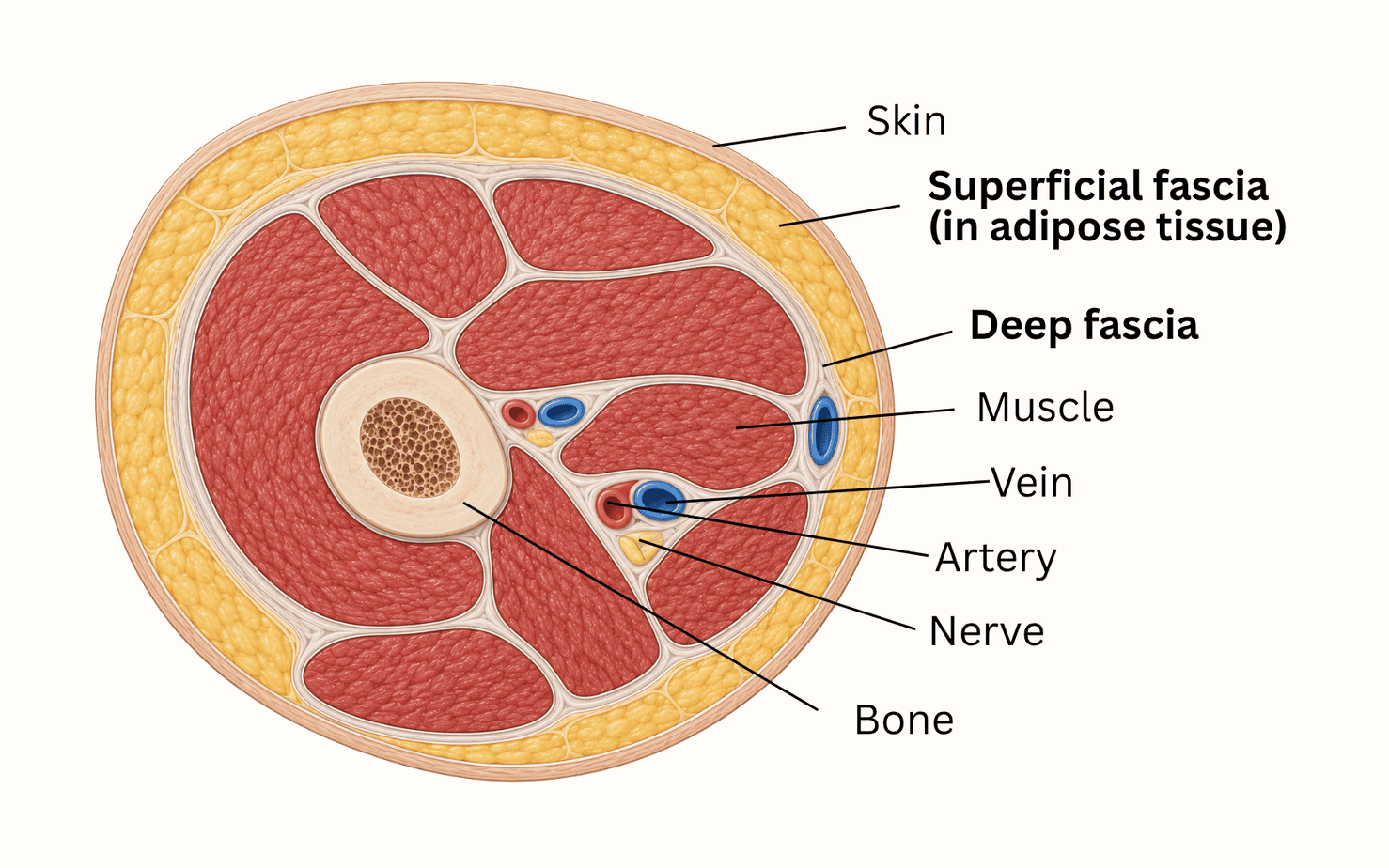
Fascia is a continuous, three-dimensional web of connective tissue that runs throughout your entire body—from head to toes, from skin to bone. It surrounds and weaves through every muscle, organ, nerve, and blood vessel. It gives the body a functional structure, and provides an environment that enables all body systems to operate in an integrated manner.
In God’s Prescription, I titled Section Two “Rooted in Connections” because it truly is all connected. Nothing in our bodies operates in isolation.
For decades, anatomy students cut fascia away in the lab. It was treated as background material or filler between the “important” structures. Researchers now realize that shaped a generation of medical understanding, leaving patients underserved, particularly those with chronic pain and autoimmune conditions.
Fascia is far from inert. It houses an estimated 250 million nerve endings—more than skin, and vastly more than muscle. It regulates posture, immune response, hormone production, lymphatic flow, and wound healing through every movement you make. Researchers describe it as a potential “watchman,” receiving and processing information about whole-body health in real time.
Psalm 139:13–14 (NIV) captures it beautifully: You knit me together in my mother’s womb. I praise you because I am fearfully and wonderfully made.
How Fascia and Gut Health Influence Inflammation and Autoimmunity
When the gut barrier breaks down, it becomes leaky, allowing bacteria, toxins, and undigested particles to enter the bloodstream. The immune system responds with a low-grade, chronic inflammatory state that doesn’t stay in the gut. It circulates and contributes to joint pain, impaired healing, and tissue breakdown throughout the body.
Check out this post for more info on leaky gut:
Intestinal Permeability: What Leaky Gut Really Is (and Isn’t)
Fascia is where much of that inflammation lands first. Over time, even low-level chronic inflammation breaks down fascia’s gel-like inner matrix, causing it to harden, thicken, and lose the flexibility it needs to do its job. Movement becomes restricted. Communication between body systems breaks down.
Many people with autoimmune conditions describe symptoms that travel, including pain that shows up in unexpected places, flares that seem disconnected from any obvious trigger, and a body that feels like it’s working against itself. Fascia may be the missing explanation.
Conditions like lupus, rheumatoid arthritis, and psoriatic arthritis all show measurable fascial involvement. In fact, researchers are now asking a provocative question: what if joint and muscle damage in these conditions isn’t the starting point? What if fascia takes the hit first and everything else follows?
That question reframes everything. If fascia is where inflammation does its early damage, then healing the gut, calming dysbiosis, identifying food sensitivities, and managing chronic stress isn’t just gut care. It’s whole-body care.
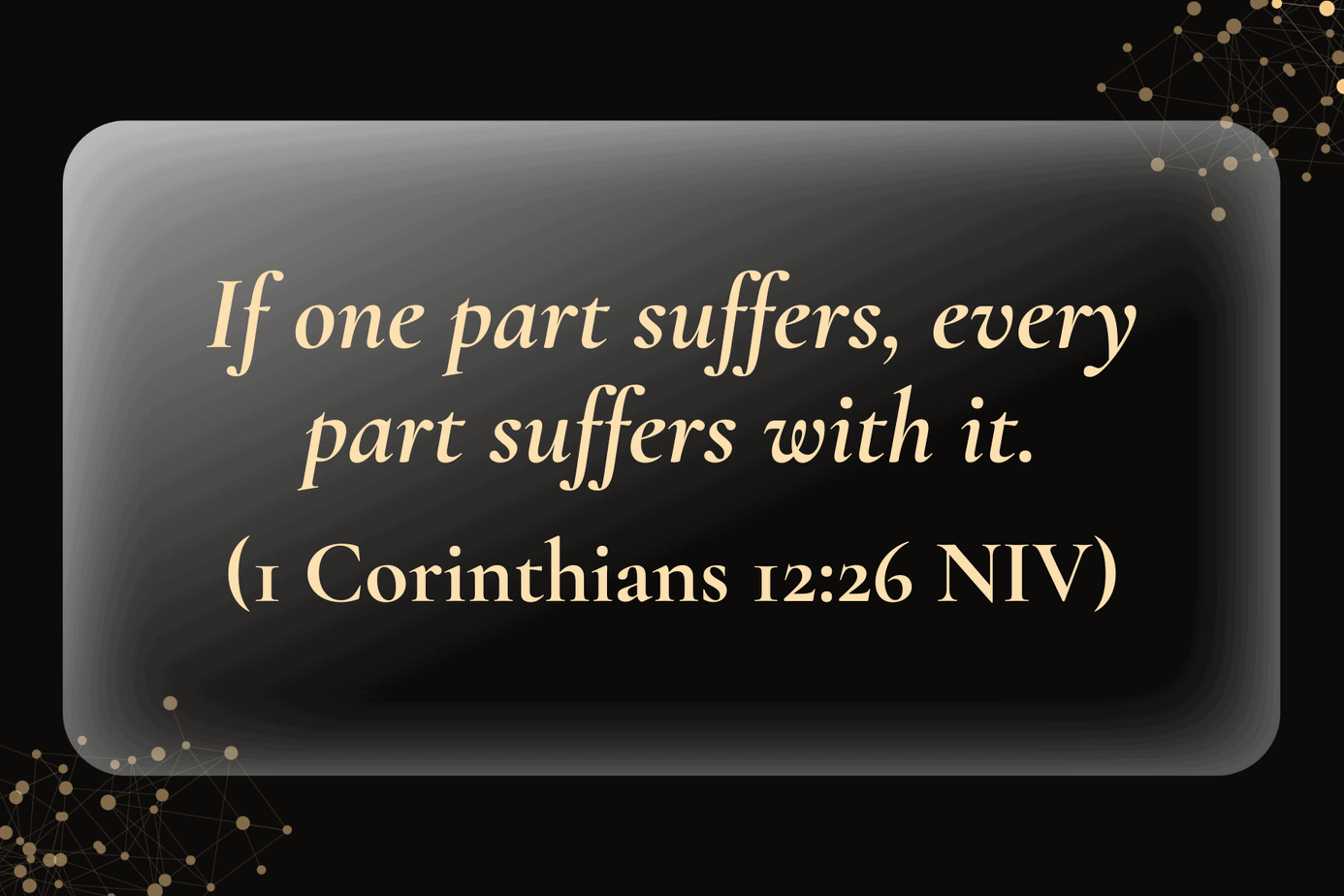
Paul wrote 1 Corinthians 12:26 about the church, but he used God’s wiring of human physiology to illustrate his point. The gut, the fascia, the nervous system, and the immune system are not separate systems. They are one integrated web. What happens in the gut does not stay in the gut.
Holding Fast to the Head: Colossians 2:19 and Whole-Body Wellness
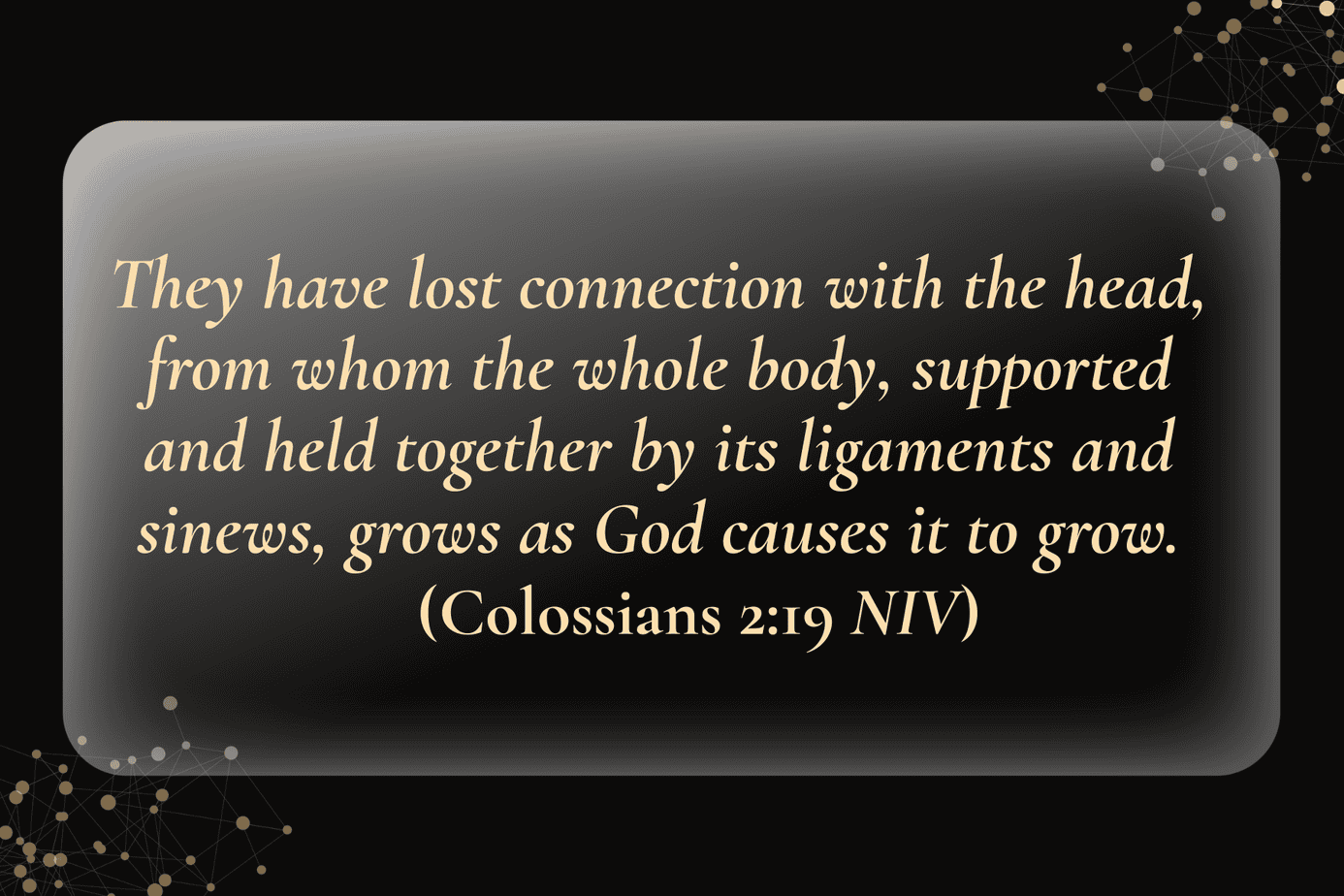
In Colossians 2:19, Paul used the Greek words haphē (‘joint/ligament’) and sundesmos (‘ligament, bond’) for the structures that hold the body together. Today we might compare them to fascia and other connective tissues.
Paul’s point was spiritual. He was writing about Christ as the Head of the church, but the physical design He built into our bodies tells the same story. A body cut off from its Head cannot grow as God designed. Yet the physical parallel is just as precise.
When fascia is healthy, all the systems it connects function as designed. When it is inflamed, restricted, or degraded, however, the effects can ripple outward to joints, muscles, organs, the nervous system, and even mood and cognition.
Disconnected living accelerates that process. Chronic stress floods the body with cortisol, which over time can make fascia stiff and less flexible. Sedentary habits allow hyaluronic acid (fascia’s natural lubricant) to thicken and accumulate, so nearby tissues stick together and movement becomes restricted. Meanwhile, ultra-processed foods and gut dysbiosis drive the systemic inflammation that fascia tends to bear and transmit.
Connected living, on the other hand, supports and restores it.
- Movement keeps fascia hydrated and supple.
- An anti-inflammatory diet lightens the inflammatory load fascia carries.
- Healing the gut reduces the toxins that drive fascial inflammation in the first place.
- Rest and stress management lower the cortisol that triggers hardening over time.
These are not separate health strategies. Together, they are one integrated response to the way God designed the body to function.

Paul reminds us to honor our bodies as temples. Stewarding fascia health is not vanity. It is stewardship of the body God knit together, the temple He inhabits, the design He called fearfully and wonderfully made.
God’s design still works. The body He knit together is capable of healing when we stop working against it and start working with it.

Want weekly Scripture, wellness tips, and anti-inflammatory recipes?
Subscribe to the newsletter below.
No spam. Unsubscribe anytime.
0 Comments