

Imagine a fire breaks out in your neighborhood. Firefighters rush in. They’re doing exactly what they were trained to do—containing the blaze, limiting the damage, protecting what can still be saved.
Now imagine someone blames the firefighters for the fire and starts shooting at them.
That’s absurd, right?
And yet, this is essentially what modern medicine does every day. Your body mounts a protective response—sending in its own version of firefighters to protect you. But the medical system identifies those responders as the problem and prescribes drugs or procedures to suppress or eliminate them.
In the real world, firefighters don’t stop at extinguishing flames; investigators work to determine what caused the fire so it doesn’t happen again. In conventional healthcare, that deeper investigation is often missing because symptom control is considered resolution.
As a functional nutritionist, I see this pattern everywhere. And as a believer, it grieves me because these responses are part of your body’s protective design. They aren’t flaws to be overridden. They’re signals to be listened to.
The Pattern Nobody Talks About
Once you see this pattern in conventional medicine, you can’t unsee it:
Something in the body goes wrong—usually because of diet, lifestyle, environmental toxins, or chronic stress. The body responds with a protective mechanism. Medicine identifies that protective response as the disease. Drugs are prescribed to suppress the response. New problems emerge from the suppression. And the original cause? It was never addressed.
This isn’t a conspiracy theory. It’s just what happens when a system is built to diagnose and treat symptoms instead of asking one simple question: Why?
Let me show you four examples of your body’s protective design being treated as the enemy.
Firefighter #1: Cholesterol
What Medicine Says
High cholesterol causes heart disease. The solution: statin drugs to lower cholesterol. In the U.S. alone, statin prescriptions increased from roughly 461 million to more than 800 million annual fills between 2008 and 2019.
What’s Actually Happening
Cholesterol is one of the most essential substances in your body. Every cell membrane needs it. Your body uses cholesterol to produce hormones like estrogen and testosterone, synthesize vitamin D, and create bile acids for fat digestion. Although your brain is only about 2% of your body weight, it contains roughly 25% of your body’s total cholesterol.
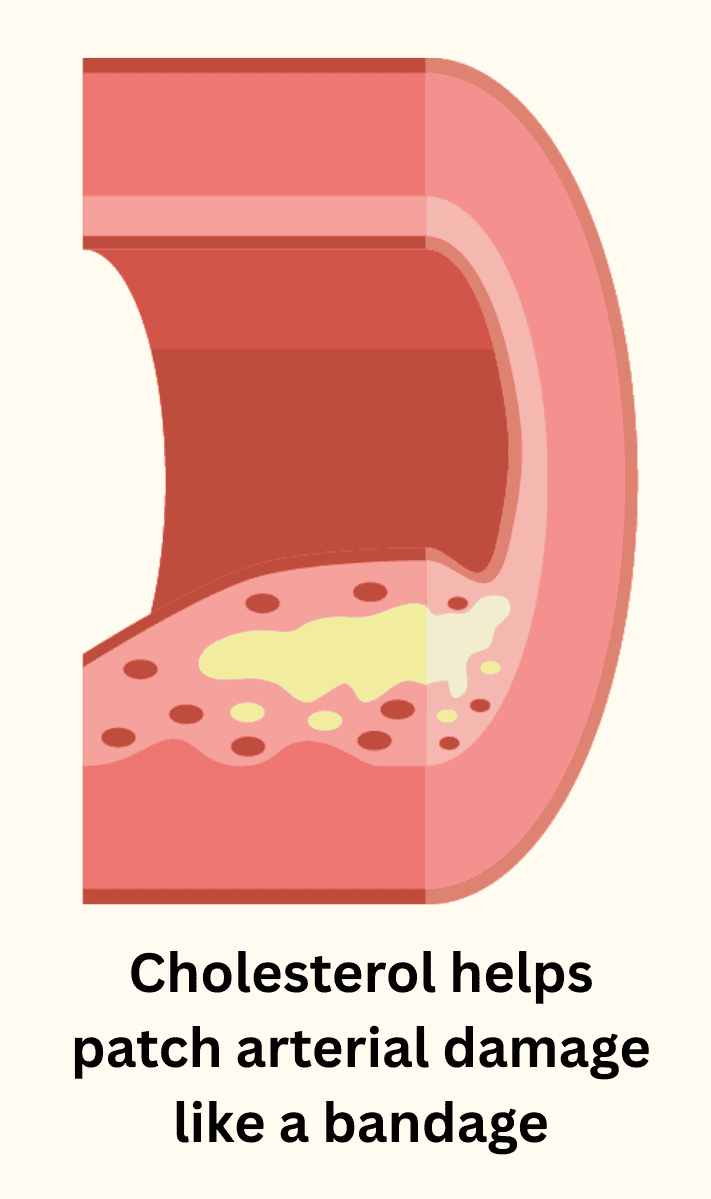
When ongoing inflammation from poor diet, oxidative stress, and uncontrolled blood sugar injures the lining of blood vessels, your body activates its repair response. It sends cholesterol to stabilize and protect the damaged area—like a bandage on a wound or firefighters containing a blaze. Cholesterol isn’t the fire; it’s part of the body’s protective design responding to the real problem: chronic inflammation.
Yet conventional medicine often targets the cholesterol at the scene with statin drugs instead of the underlying damage. Statins block an enzyme in the liver to reduce cholesterol production. However, this also depletes key compounds in the same pathway, including:
-
- Coenzyme Q10 (CoQ10) – vital for cellular energy, especially in the heart and muscles; lower levels are linked with fatigue and muscle pain.
- Vitamin K2-related activity – helps move calcium into bones and keep it out of arteries, supporting arterial health.
- Other protective compounds involved in antioxidant defense and cellular signaling.
As a result, shooting the firefighters weakens the broader repair system. This leads to side effects like muscle pain, fatigue, cognitive fog, and higher diabetes risk. Meanwhile, the real fire of chronic inflammation keeps burning unchecked.
Firefighter #2: Beta-Amyloid Plaque
What Medicine Says
Alzheimer’s disease is caused by the accumulation of beta-amyloid plaques in the brain. The conventional solution: drugs designed to clear the plaques.
What’s Actually Happening
For decades, billions of dollars have gone into developing drugs that target beta‑amyloid. The theory was simple: if plaques are the problem, then removing them should fix the disease. But trial after trial has failed to produce the dramatic turnarounds people hoped for. Clearing plaques has not reliably restored memory or function.
Why? Because beta‑amyloid may not be the original cause of the disease at all.
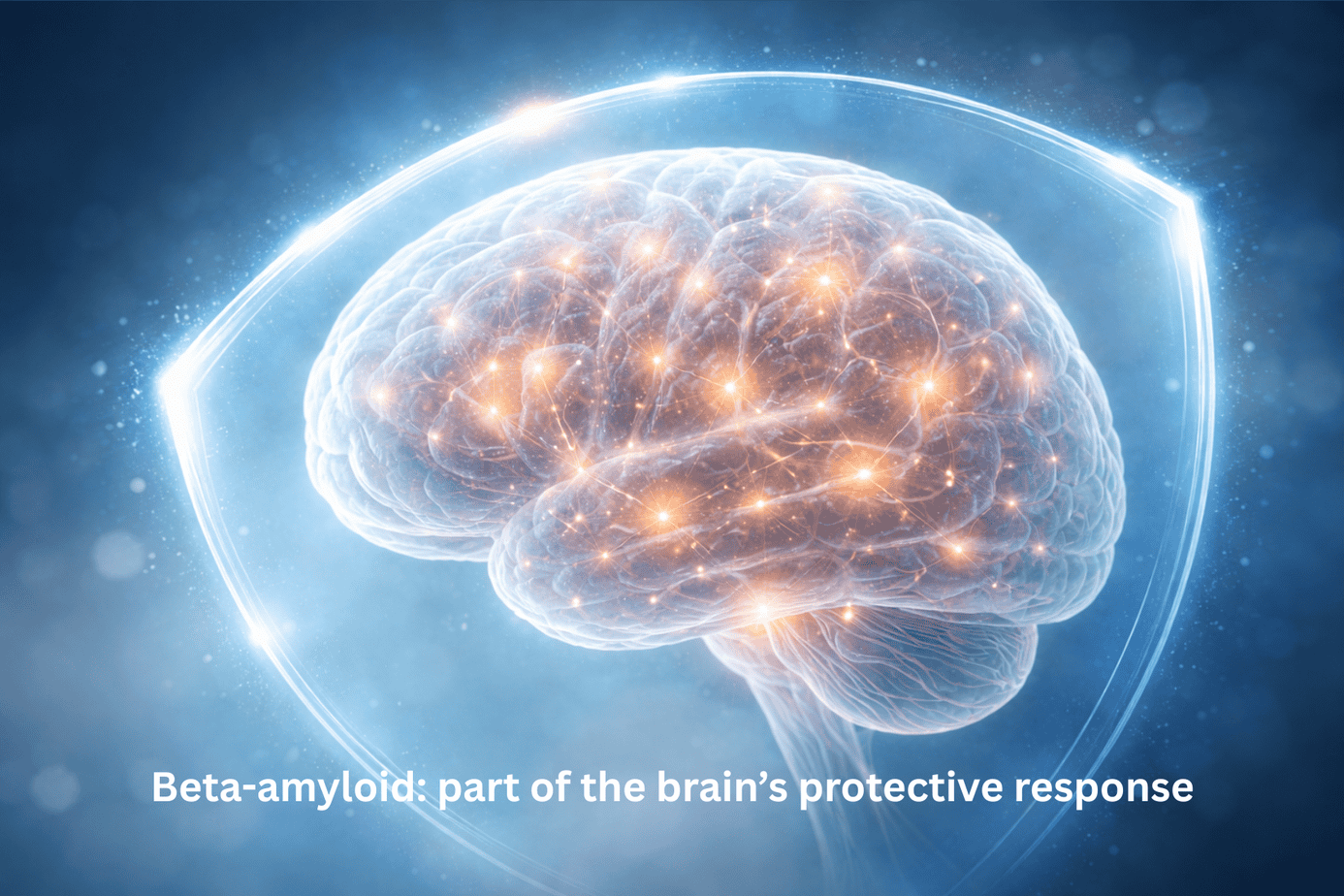
A growing body of research suggests beta‑amyloid is part of the brain’s innate immune system—part of your body’s protective design. Some lab and animal studies show that beta‑amyloid acts like an antimicrobial peptide—able to bind and trap microbes such as Salmonella bacteria, herpes viruses, and Candida yeast. In other words, it looks less like random “brain junk” and more like a defensive coating the brain lays down when it senses danger.
Thus, beta‑amyloid is another firefighter. When the brain perceives a threat—whether from microbial infection, metabolic stress, toxins, or chronic inflammation—it deploys beta‑amyloid as a protective response. The plaques are the response, not the original spark.
In fact, the real culprits are upstream issues. These include:
-
- Mitochondrial dysfunction (low cellular energy in brain cells)
- Insulin resistance in the brain (sometimes called “Type 3 diabetes”)
- Chronic neuroinflammation All of these are often driven by poor diet, blood sugar issues, toxins, and lifestyle factors.
All of these are often driven by poor diet, blood sugar issues, toxins, and lifestyle factors.
When energy production drops, insulin signaling breaks down, and inflammation persists, the brain’s protective systems go into overdrive. Beta‑amyloid builds up as it tries to contain the damage.
Clinical programs that focus on improving metabolism and reducing inflammation—rather than just attacking plaques—have shown that cognitive function can improve in some people with mild to moderate decline. The brain is designed to keep generating new neurons, especially in the hippocampus, when the environment is supportive.
Firefighter #3: Fever

What Medicine Says
Fever is a symptom to be controlled. Reach for acetaminophen (Tylenol) or ibuprofen (Motrin) when the body’s temperature rises.
What’s Actually Happening
However, fever is one of the oldest and clearest examples of your body’s protective design. When your immune system detects an invading pathogen—a virus, bacteria, or other microbe—it deliberately raises your core body temperature. This isn’t a malfunction. It’s a strategy.
An elevated body temperature:
-
- Speeds up immune cell activity
- Increases the production and effectiveness of infection-fighting white blood cells
- Creates an inhospitable environment for many pathogens that thrive at normal body temperature
So, by turning up the heat, your body is actively fighting the real fire.
Yet the reflex in our culture is to suppress the fever as quickly as possible. In particular, parents often panic at the sight of a fever in their children and reach for a fever reducer.
However, the problem is that suppressing a fever doesn’t eliminate the infection. Instead, we weaken the immune response that was designed to fight it. In effect, we’re pulling the firefighters off the scene while the fire is still burning.
This is not to say every fever should go unmanaged—dangerously high fevers require medical attention. But routinely medicating away a low-grade fever at the first sign of discomfort works against the body’s protective design rather than supporting it.
And once again, we rarely ask why the fever is happening. What is the body fighting? What conditions allowed the infection to take hold? What can we do to support the immune system instead of suppressing it?
Firefighter #4: Stomach Acid
What Medicine Says
Acid reflux means you have too much stomach acid. The solution: acid‑reducing drugs like proton pump inhibitors (PPIs) such as omeprazole, along with other prescription and over‑the‑counter medicines that block or neutralize stomach acid. PPIs are among the most prescribed medications in the world.
What’s Actually Happening
Here’s the twist: stomach acid itself is part of your body’s protective design. You need strong acid to break down protein, absorb minerals, and kill many microbes that come in with food.
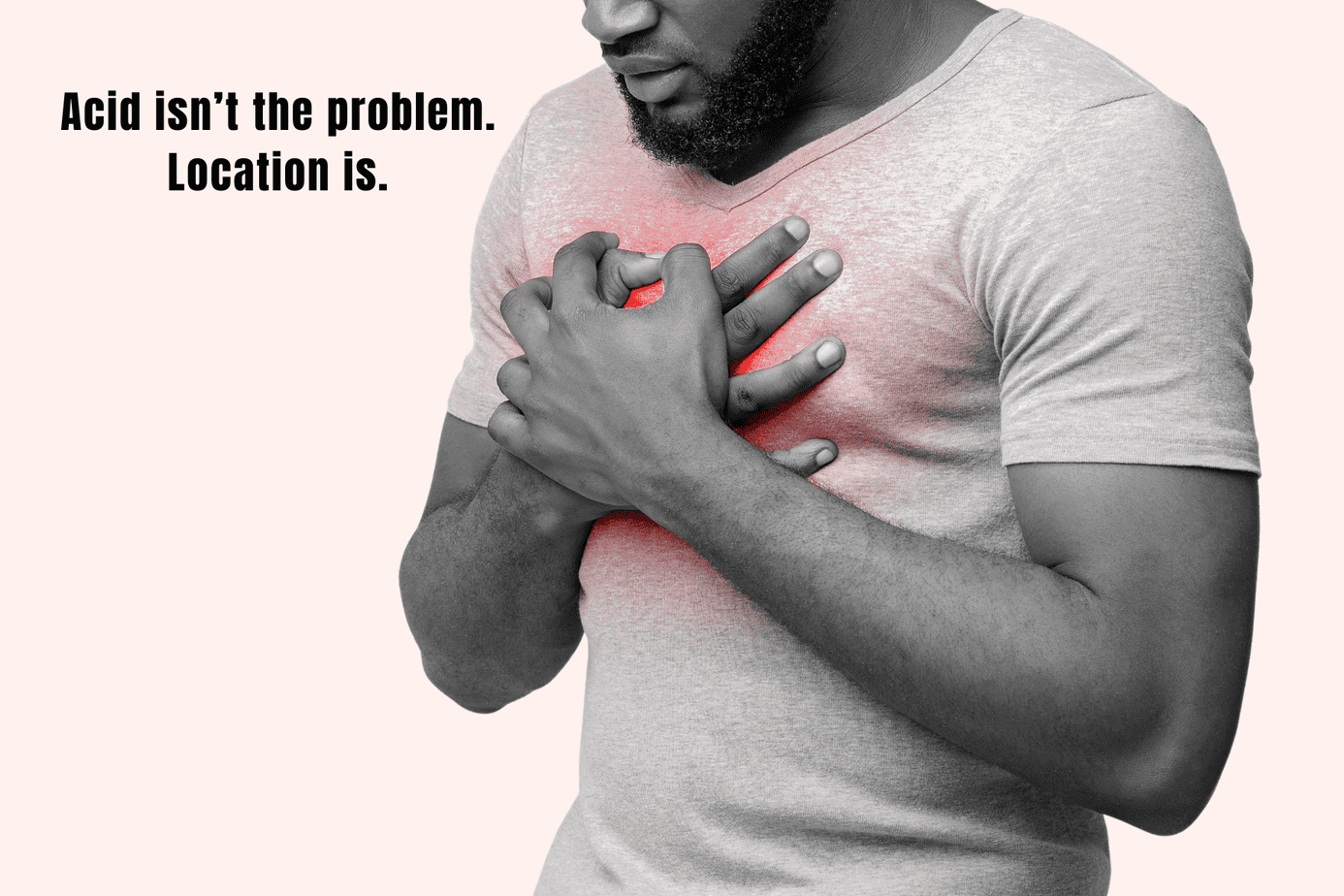
In many people, reflux isn’t about “too much acid” but about acid in the wrong place—often driven by too little acid and mechanical issues at the valve between the esophagus and stomach (the lower esophageal sphincter). A hiatal hernia can sometimes worsen the issue.
When there’s too little stomach acid (hypochlorhydria), food doesn’t break down properly. It sits in the stomach longer, fermenting and producing gas. That gas increases pressure against the lower esophageal sphincter, forcing it open and allowing what acid you have to splash upward. The burning leads to a diagnosis of “too much acid,” even though the problem started with weak digestion and a leaky valve, not an over‑strong defense.
The usual response? Suppress acid production even further with PPIs or other acid‑reducing drugs.
As a result, the body has even less stomach acid. Consequently:
-
- Protein digestion suffers.
- Mineral absorption—particularly calcium, magnesium, and iron—declines.
- The gut microbiome shifts. Stomach acid is your first line of defense against microbes. Without it, bacteria reach the intestines. This contributes to overgrowth, bloating, and infection risk.
PPIs were never meant for long‑term use, yet many people stay on them for years. Long‑term PPI use has been linked to a higher risk of bone fractures, kidney disease, infections, and nutrient deficiencies. We’re not just shooting the firefighter here—we’re dismantling the entire fire station.
The questions rarely asked are: Why is stomach acid low? Why is that valve leaking? Common contributors include:
-
- Chronic stress
- Aging
- Nutrient deficiencies (especially zinc and B vitamins)
- Long‑term use of acid‑suppressing meds
- Structural issues like hiatal hernia—sometimes helped by targeted manual work such as osteopathic or chiropractic techniques that address the diaphragm and gastroesophageal junction
So again, instead of asking why the system is misfiring and how to support the body’s protective design, we disable the protection and hope the symptoms stay quiet.
Want to better understand how your digestive system was actually designed to work? Chapter 6 of God’s Prescription walks you through the full process — and what to do when it breaks down.
Stop Spraying Water. Shut Off the Gasoline.

If gasoline were pouring through your window and your house were on fire, would you keep spraying water — or shut off the fuel?
Across all four examples — cholesterol, beta amyloid, fever, and stomach acid — the body’s protective design is doing exactly what it was built to do. The real question isn’t how to suppress the response, but why the body is responding in the first place.
Functional medicine asks different questions:
-
- What is driving inflammation in the arteries?
- What is triggering the immune response in the brain?
- Why is the immune system raising temperature?
- Why is digestion failing so acid ends up in the wrong place?
Again and again, the answers point back to the environment we create through diet, stress, sleep, movement, toxin exposure, and daily habits. Instead of fighting the body’s protective responses, we can reduce the fuel feeding the fire.
In other words, this isn’t just a medical issue — it’s a stewardship issue.
Stewardship, Not Suppression
Do you not know that your bodies are temples of the Holy Spirit, who is in you, whom you have received from God? You are not your own; you were bought at a price. Therefore honor God with your bodies.
(1 Corinthians 6:19–20 NIV)
If you believe in divine design, then these protective mechanisms are not accidents. They are features of that design.
-
- Cholesterol stabilizing damaged blood vessels
- Beta‑amyloid providing a defensive coating in response to threat
- Fever strengthening immune defense
- Stomach acid killing pathogens and helping digestion
The problem isn’t the design. The problem is the environment we’ve created around it.
When we ignore how our bodies were created to function, protective systems activate. And too often, we blame the response instead of addressing the cause.
Biblical stewardship means listening before suppressing, supporting rather than overriding, and asking whybefore reaching for control.
When you steward your body this way, you’re not just treating symptoms — you’re honoring the Designer.
Because God’s design still works.
Want more posts likes this delivered to your inbox along with weekly Scripture, health news, and anti-inflammatory recipes?

Subscribe to Wednesday’s Wisdom and Wellness newsletter below.
No spam. Unsubscribe anytime.