
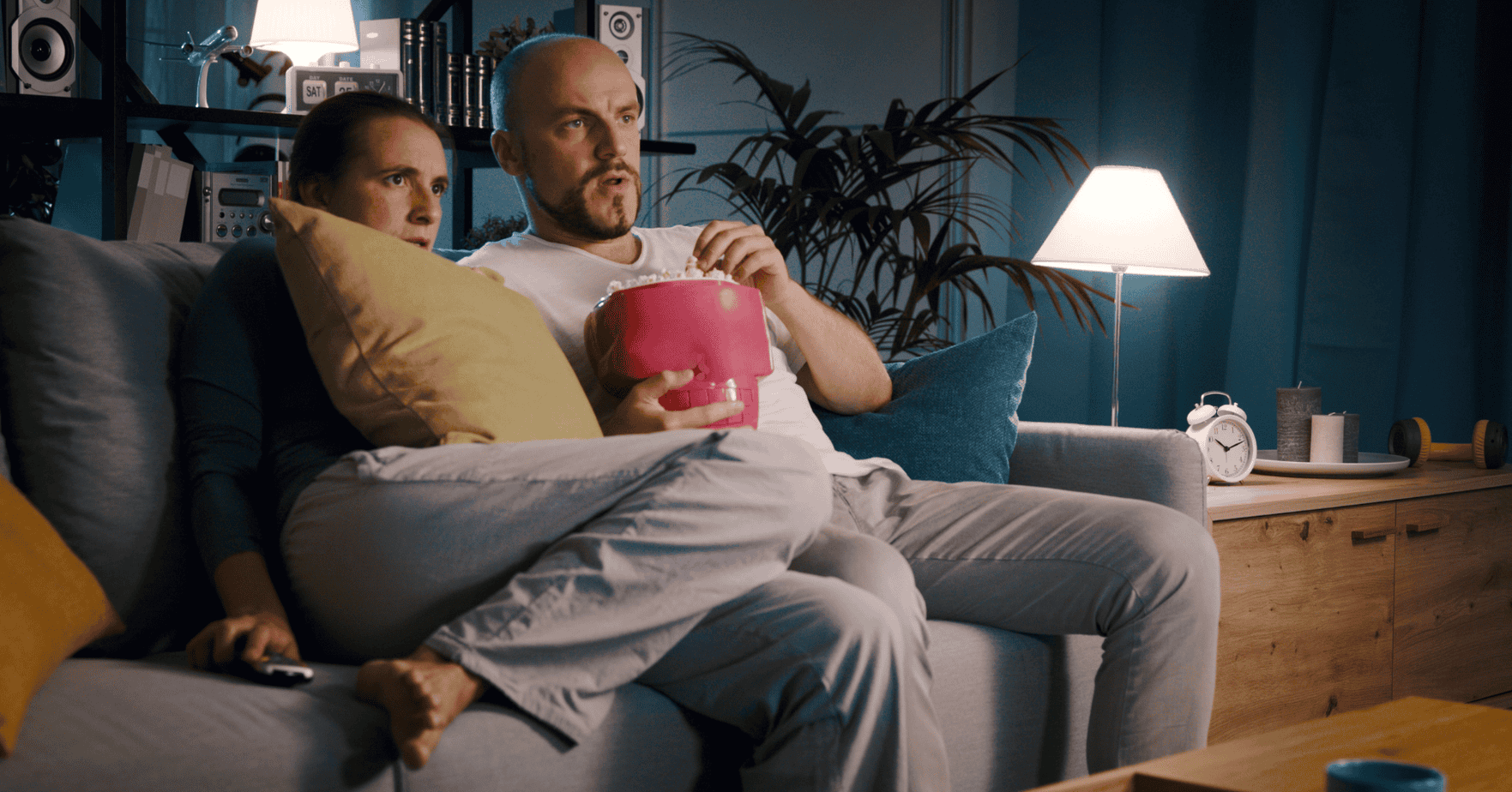
Most conversations about what’s up next on Netflix never mention binge-watching health effects, but they should. You’ve cleaned up your plate, you’re taking your supplements, and you’re managing stress. But every night you’re spending two or three hours flooding your nervous system with cortisol, and you may not realize it’s coming from your screen.
My husband calls himself the entertainment director and loves winding down in front of the TV before bed—together. TV isn’t really my thing, but I often join him anyway. However, because his taste runs toward action dramas that can leave me more wired than relaxed, I sometimes have to put my foot down. The tension doesn’t leave when the credits roll. I feel it in my body, and once I understood the science behind that feeling, I couldn’t unknow it.
Not Imagining It—Your Body Is Responding
When we watch intense, dramatic, or violent content, our brains process it as a real threat. The amygdala, the brain’s threat detection center, activates. The sympathetic nervous system fires. Cortisol and adrenaline surge, heart rate and blood pressure increase, and muscles tense — even though we’re just sitting on the couch. This is the fight-or-flight response, and over time, it initiates the binge-watching health effects.
Horror, true crime, and action dramas are designed to sustain this state. Screenwriters and directors understand that the body responds to fiction the same way it responds to reality. That’s what makes them compelling. It’s also what makes them costly to our health when consumed night after night.
Furthermore, the timing matters. Evening is when cortisol should be declining naturally to prepare the body for sleep and recovery. Instead, many of us are spending two to three hours in a low-grade stress response right before bed. Then, we wonder why we can’t wind down, sleep well, or wake up feeling rested.
Binge-Watching Health Effects and Your Gut
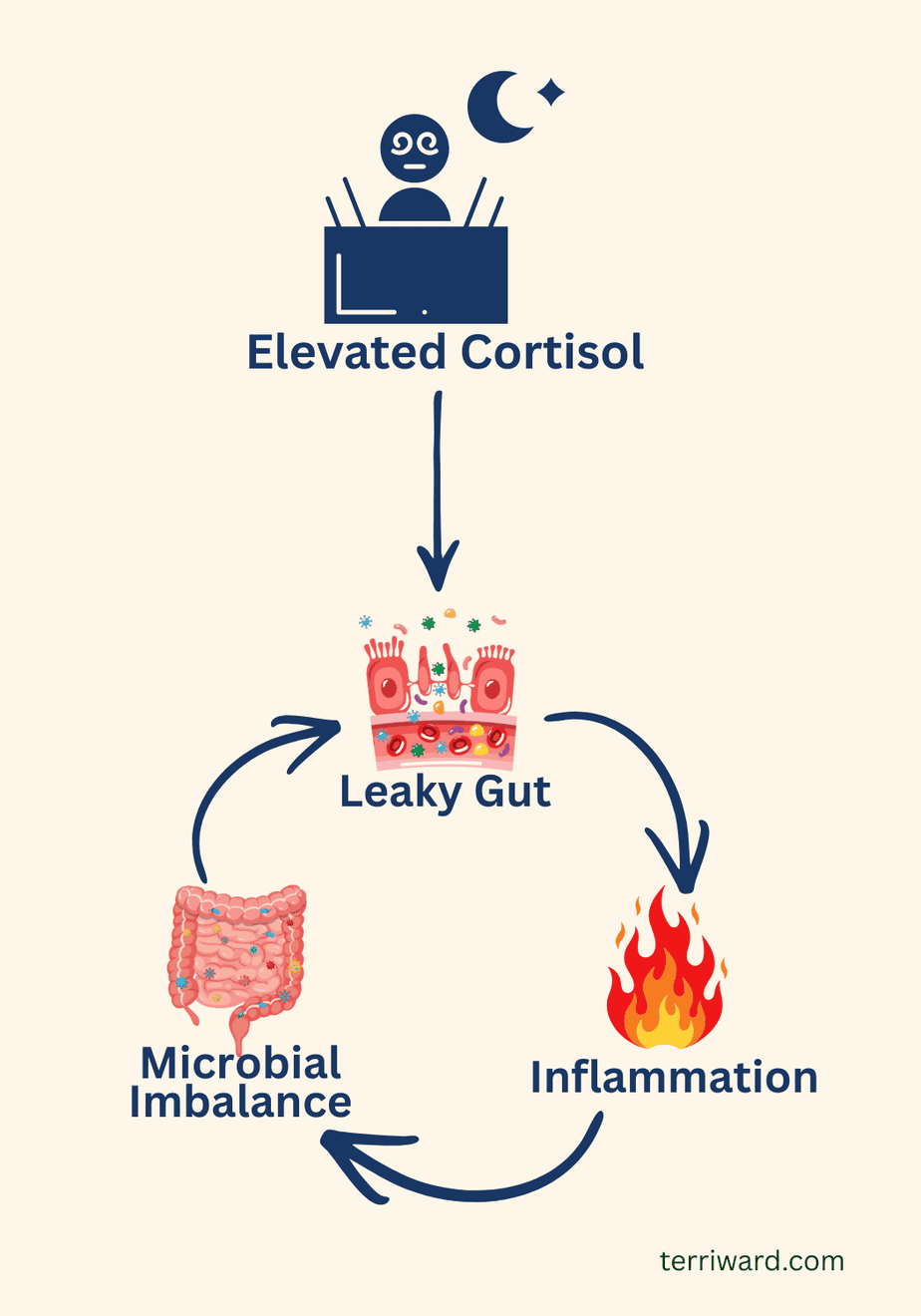
Cortisol isn’t just a stress hormone. It’s one of the primary drivers of intestinal permeability, commonly known as leaky gut. When cortisol stays elevated, the tight junctions holding your gut lining together begin to loosen. Undigested food particles and bacterial byproducts cross into the bloodstream, triggering an immune response. Over time, that immune response becomes chronic, systemic inflammation.
Additionally, chronic stress disrupts the gut microbiome. The beneficial bacteria your body depends on for digestion, immune regulation, vitamin and short-chain fatty acid production, and even mood are sensitive to cortisol. A stress-saturated environment favors harmful bacteria and suppresses the beneficial ones. For anyone managing autoimmunity, food sensitivities, or gut dysfunction, this is not a peripheral concern. It may be what’s driving your symptoms.
You also cannot digest well in a stress response or sympathetic nervous system state. In this state, the body prioritizes keeping you alive over digestion. Blood flow shifts away from the gut, digestive enzyme production slows, and motility changes. Eating dinner while watching an unsettling show compounds the problem.
What Scripture Says About What We Watch
God’s design for the mind was never passive consumption. Philippians 4:8 instructs us to dwell on whatever is true, honorable, pure, lovely, and admirable. That is not a suggestion for Sunday mornings. Rather, it is a daily filter for everything we allow into our minds, including what we watch for entertainment.
Romans 12:2 goes further: “Do not be conformed to the pattern of this world, but be transformed by the renewing of your mind.” The stories we consume shape us. They train our nervous systems what to fear, what to desire, and what to expect from the world. Night after night of crime, violence, and immorality is a pattern of this world, and it affects us whether we intend it to or not.
Proverbs 4:23 tells us to guard our hearts above all else, because everything we do flows from it. The Hebrew word for heart encompasses the mind, will, and emotions, the entire inner life. Guarding it is not legalism. Instead, it is stewardship of the body and mind God designed for flourishing.

We can’t eat inflammatory food every night and expect our gut to thrive. Similarly, what we feed our nervous systems matters. Furthermore, what we consume emotionally and mentally is not separate from our physical health. According to God’s design, they were never meant to be.
FAQs about Binge-Watching Health Effects
I fall asleep fine after watching TV. Does that mean it isn't affecting me?
I've watched violent shows for years and feel fine. Haven't I just gotten used to it?
Is all TV bad for my health?
What types of shows are safest to watch in the evening?
Your Screen Is Only Part of the Story
The good news is that what disrupts the nervous system can also restore it. Next week we’ll look at what God designed long before Netflix existed to calm the stress response, regulate cortisol, and bring the body back into a state of rest and digestion. It’s been in Scripture all along, and the science finally caught up.
Are you ready to find out what’s really driving your inflammation? Schedule a complimentary 15-minute call here.
0 Comments