
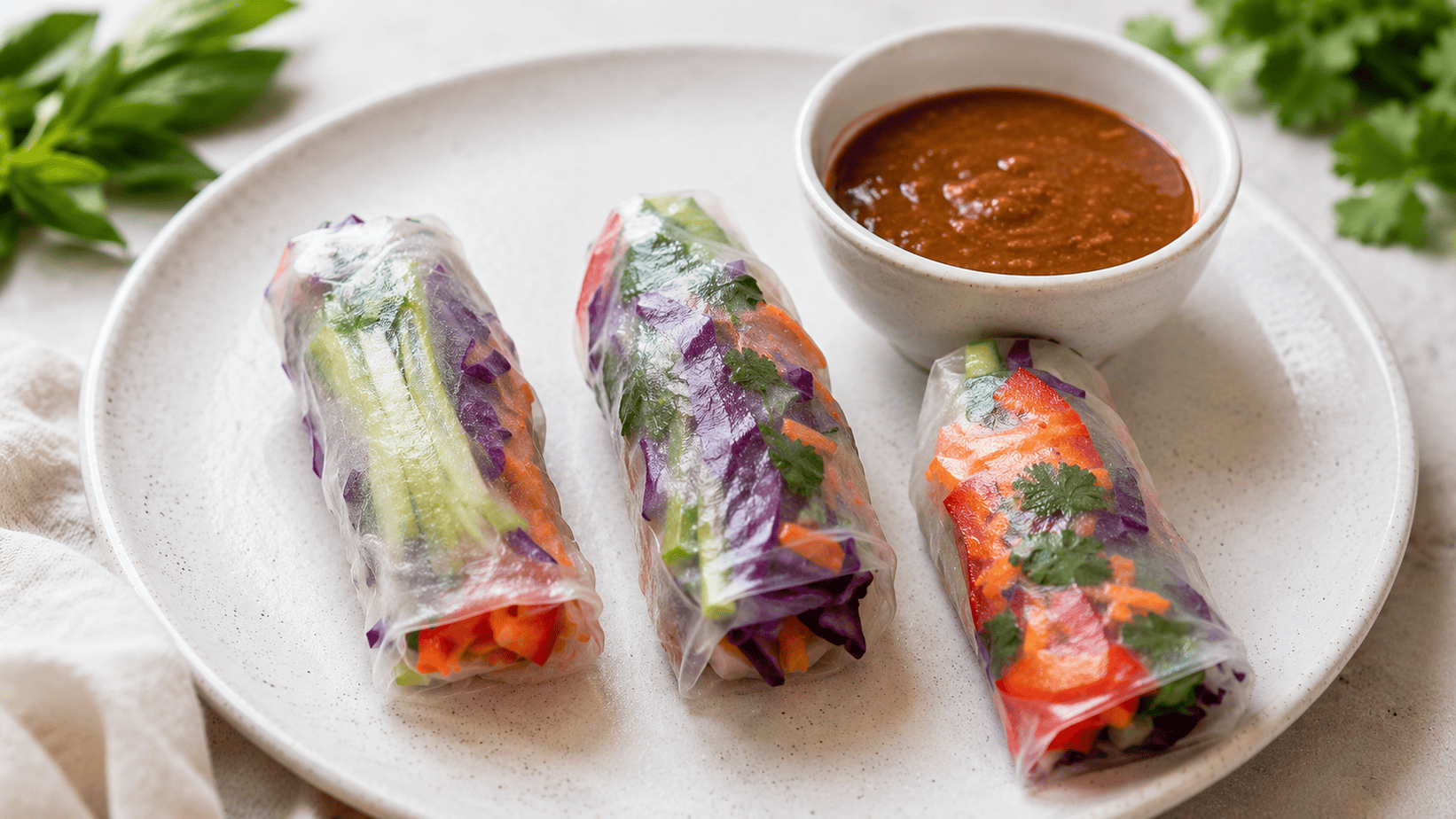
My husband took one bite of these rainbow salad rolls and said, “These are easier to make than tacos, and there’s no cooking.” He was right on both counts.
If you’ve never made salad rolls at home, I want to change that today. They look impressive, come together in about 25 minutes, and on a hot day, they’re one of the most refreshing meals you can put on the table—no oven, no stovetop, not even a microwave.
Why Don’t I Make These More Often?
I love salad rolls. I always have. But somewhere between moving to Idaho and life getting busy, it had been a long time since I’d eaten them. We haven’t found a restaurant nearby that serves them with gluten-free sauce, so I finally just made them myself.
I don’t know why I waited so long.
The moment I took my first bite, I remembered exactly why I love these so much. Fresh, crunchy, cool, and loaded with color: they’re the kind of meal that feels like a treat without a lot of effort. My husband’s reaction said it all.
I learned from my daughter to set everything out buffet-style so each person can put as much of whatever they want on and roll their own. That makes less work for the cook and more fun—especially for the kids.
The Secret Sauce for Rainbow Salad Rolls
The sauce is where the magic happens, and my husband told me not to change anything in that.
I usually use almond butter as my base because I’m cautious about aflatoxins — naturally occurring mold toxins found in peanuts that researchers have linked to liver damage and immune disruption. Commercial peanut butter can carry significant aflatoxin loads, so I generally opt for almond butter instead.
However, I was short on almond butter and had a jar of natural peanut butter in the pantry, so that’s what I used.
It was so good I almost didn’t tell you about the almond butter substitution. 😉 Almost.
Regardless, both work beautifully in this sauce. If aflatoxins or peanut allergies are a concern for you, use almond butter. If you’re not worried about it or you’re in a pinch, natural peanut butter gives the sauce a rich, slightly deeper flavor that my husband and I loved.
Health Benefits of the Key Ingredients
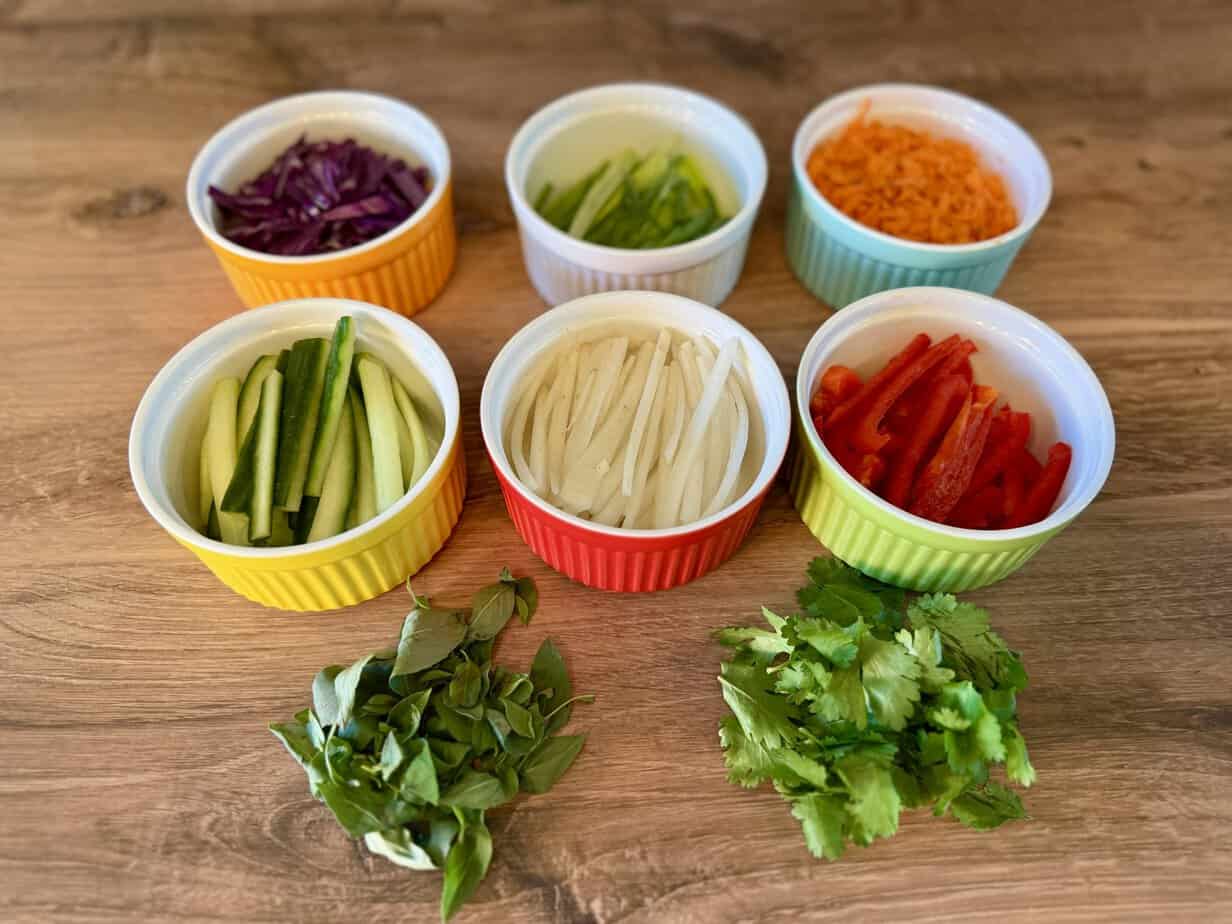
These rolls aren’t just pretty. Every color on that plate serves a purpose—and this is exactly the kind of eating that forms the foundation of my Anti-Inflammatory Rainbow Diet (AIRD), which I discuss in this post and in chapter 10 of my book God’s Prescription.
Each color in plant foods represents a different family of polyphenols—plant compounds that fight inflammation, feed beneficial gut bacteria, and protect your cells from damage. Red, orange, yellow, green, and purple plants each bring a distinct set of these compounds to the table. Eating across the color spectrum is one of the simplest ways to diversify your nutrient intake without overthinking it.
Here’s what each color in these rainbow salad rolls provides.
-
- Purple cabbage is rich in anthocyanins, the same antioxidants that give blueberries their color. Anthocyanins support gut lining integrity, reduce inflammation, and feed beneficial gut bacteria.
- Carrots deliver beta-carotene, which your body may convert to vitamin A, but this conversion varies significantly from person to person. Vitamin A is essential for gut mucosal health and immune function.
- Red bell pepper is one of the highest vitamin C foods you can eat, and unlike cooked peppers, you get every bit of it raw.
- Cucumber is mostly water, which makes it hydrating and cooling, and it contains small amounts of quercetin, a plant compound with anti-inflammatory properties.
- Daikon radish supports bile production and liver detoxification. It also contains digestive enzymes that help break down fats and proteins.
- Scallions provide prebiotic fiber and quercetin, and traditional medicine has used them for their antimicrobial properties.
- Cilantro is a potent antioxidant and anti-inflammatory herb with a long history of use in traditional medicine for digestive support.
- Thai basil contains eugenol, a compound with proven anti-inflammatory and antibacterial properties. It’s also rich in vitamin K.
How to Make Rainbow Salad Rolls
These are the simple steps. More details are in the recipe card below.
- Blend the sauce.
- Prep all the fillings: julienne and shred the vegetables and chop the herbs.
- Dip one rice paper wrapper at a time in a dish
of warm water for about 10 seconds until it’s pliable. Lay it flat,
add your fillings, and roll it up like a burrito.
Working with Rice Paper Wrappers
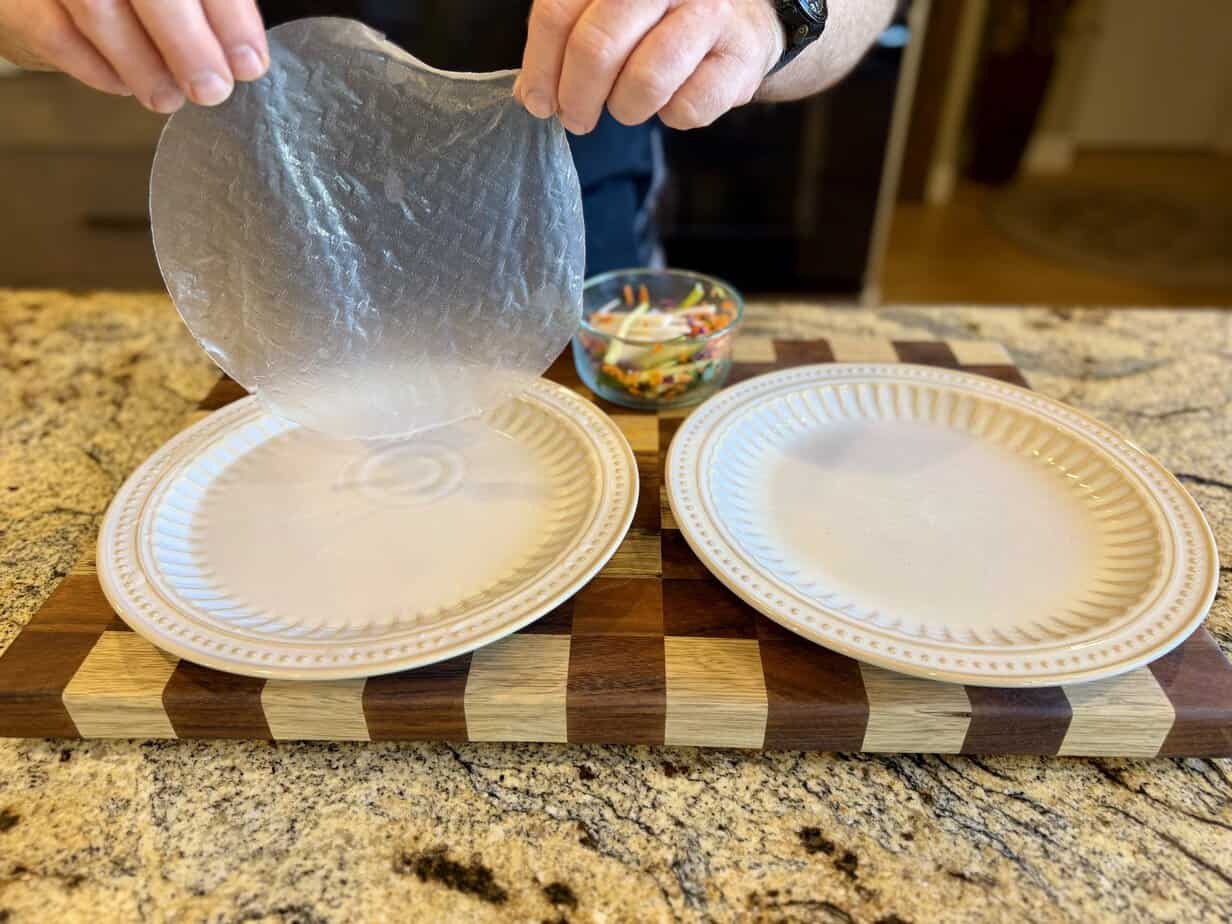
1. Dip and drip
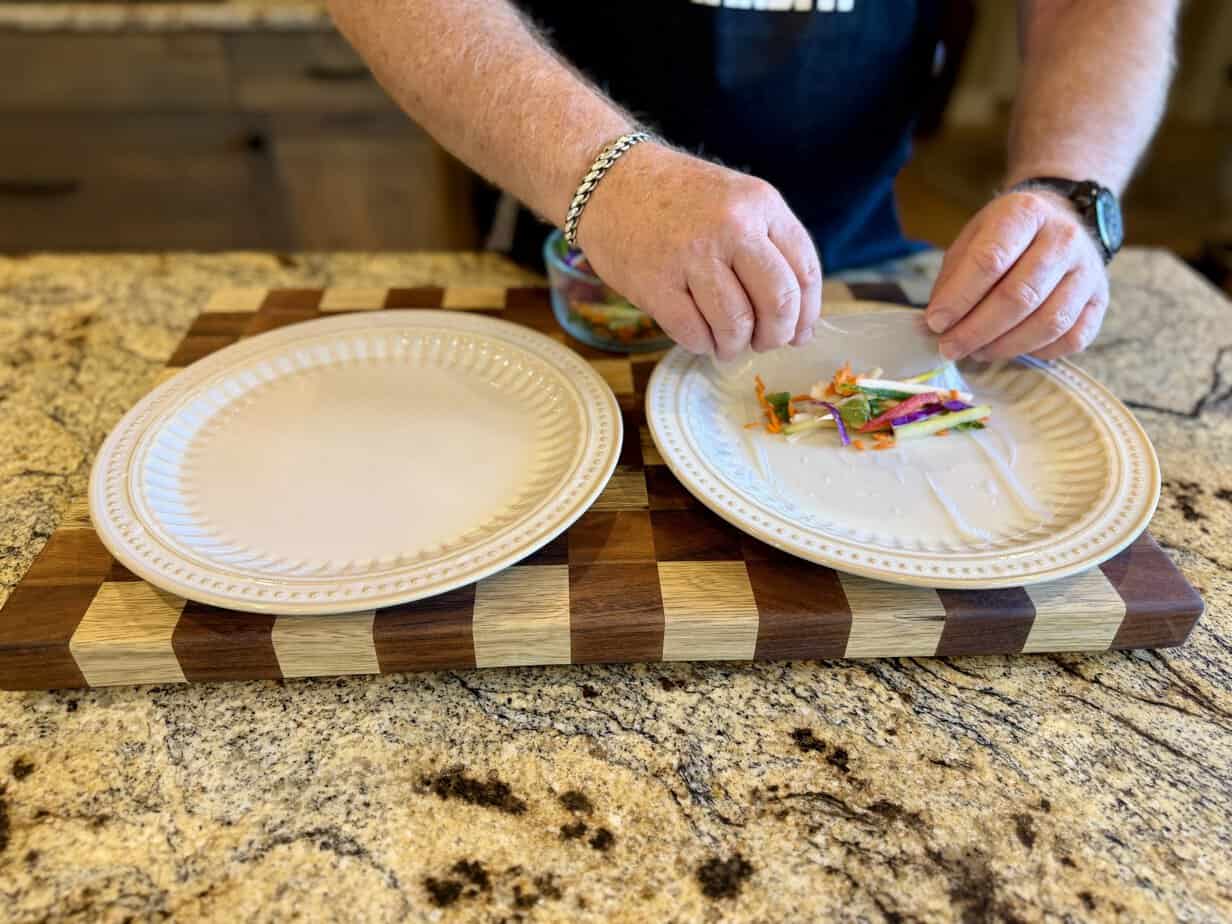
3. Fold over
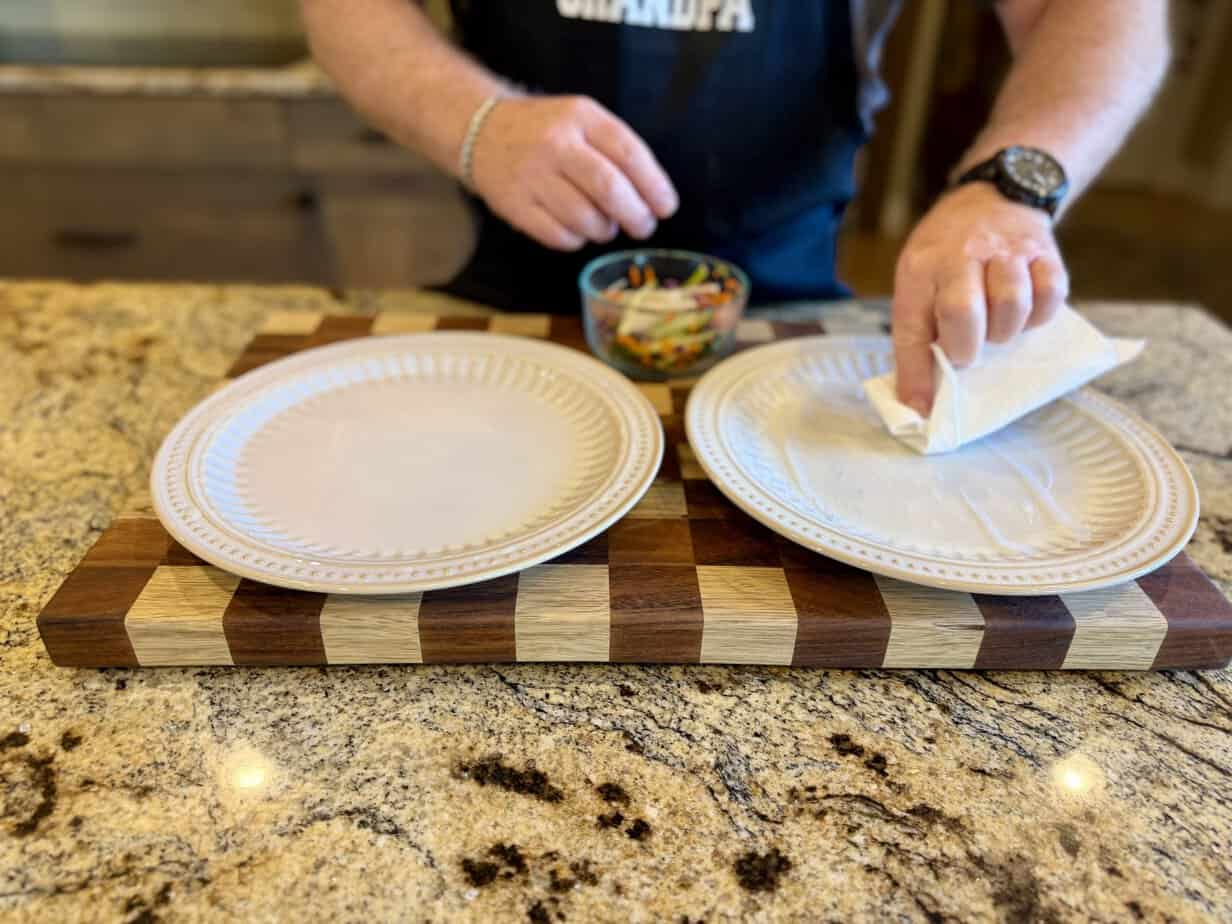
2. Blot excess water
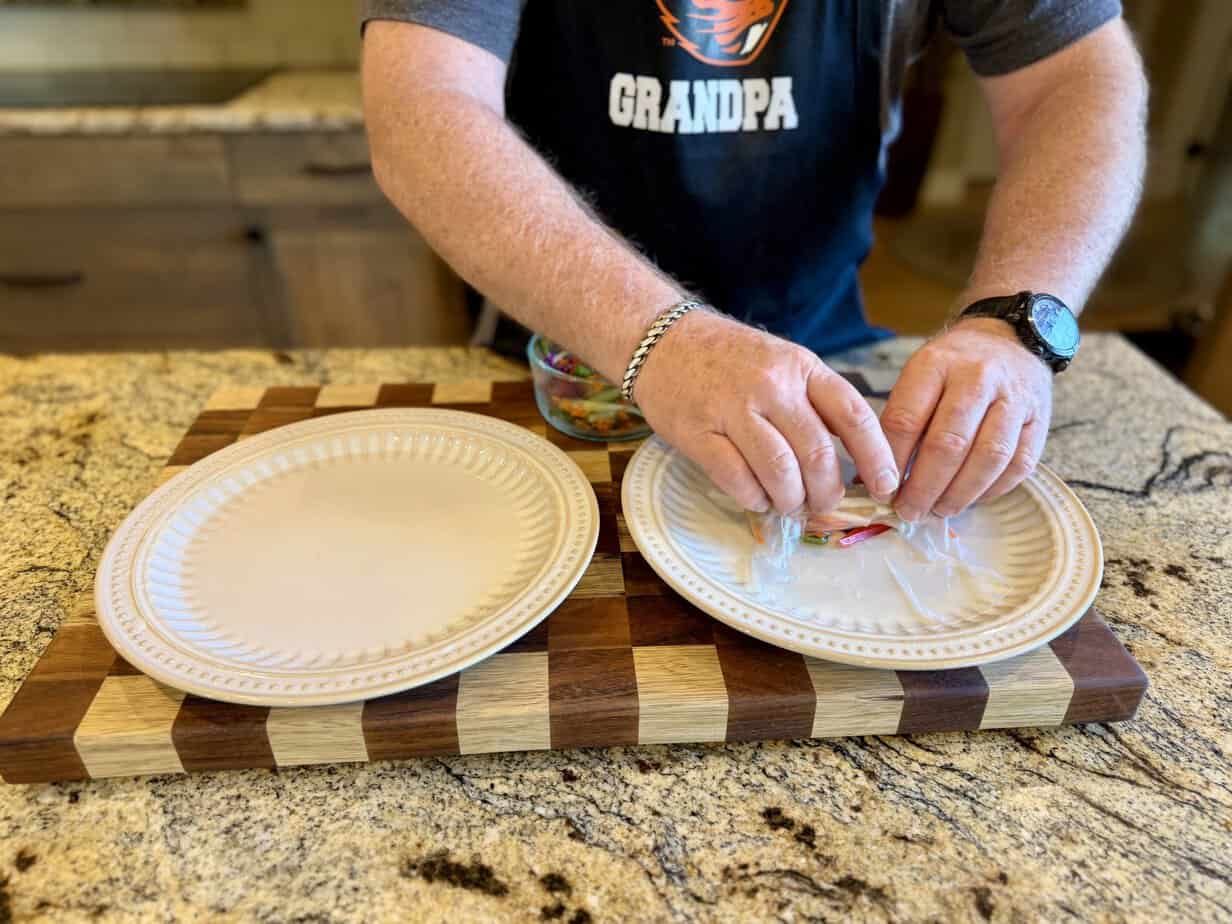
4. Tuck the sides
Frequently Asked Questions
Can I make these ahead of time?
Can I add protein?
Can I use something besides rice paper wrappers?
Is the sauce gluten-free?
Can I make the sauce nut-free?
How do I keep the rolls from sticking together?
Get In the Kitchen
Ready to make your own rainbow salad rolls? Let’s get started.
Let me know in the comments how yours turn out!

Want weekly Scripture, wellness tips, and anti-inflammatory recipes?
Subscribe to the newsletter below.
No spam. Unsubscribe anytime.
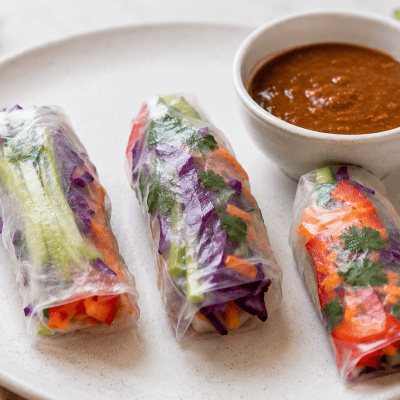
Rainbow Salad Rolls
Equipment
- Blender or food processor
Ingredients
Sauce
- 2 cloves garlic, peeled
- 1 inch piece fresh ginger, peeled
- 3 tablespoons coconut aminos
- 1 tablespoon rice vinegar
- 4 teaspoons toasted sesame oil
- 5 tablespoons extra-virgin olive oil
- 2/3 cup pure almond butter, (or peanut butter with no added ingredients)
- 1 pinch red pepper flakes, or to taste
Filling
- 3/4 cup red bell pepper, julienned
- 3/4 cup shredded purple cabbage
- 3/4 cup julienned daikon radish
- 3/4 cup shredded carrots
- 3/4 cup julienned cucumber
- 3 scallions, sliced diagonally
- 1/4 cup chopped cilantro
- 1/4 cup chopped Thai basil
Wrappers
- 8-10 rice paper rice paper wrappers, (see Note)
Instructions
Make the sauce:
- Blend the sauce ingredients in a food processor or blender until smooth. Set aside or refrigerate if not serving promptly.
Make the filling:
- Prepare the filling ingredients as indicated above. If making all the rolls ahead of serving time, mix the ingredients together in a large bowl. For a salad roll bar, set the fillings out in separate bowls with a stack of wrappers and a dish of warm water so guests can roll their own at the table.
Make the Rolls:
- Fill a 9″ round pie pan (or any dish large enough to accommodate the wrapper) with warm water. Place a wrapper in the water submerging it completely. Leave it submerged for about 10 seconds (or as directed on the package) until it becomes flexible but not mushy.
- Lift the wrapper out of the water carefully so as to not tear it, letting the excess water drip into the pan. Spread the wrapper out on a plate or work surface and blot the surface.
- Place desired fillings, or about 1/2 cup of mixed filling, in a horizontal line about 1 inch from the edge closest to you. Lift that edge over the filling, tuck snugly, and roll once away from you. Fold the sides inward and continue rolling tightly until sealed.
Serving and storing:
- Serve fresh with sauce or wrap each roll tightly in plastic wrap and refrigerate for up to 24 hours.
0 Comments