
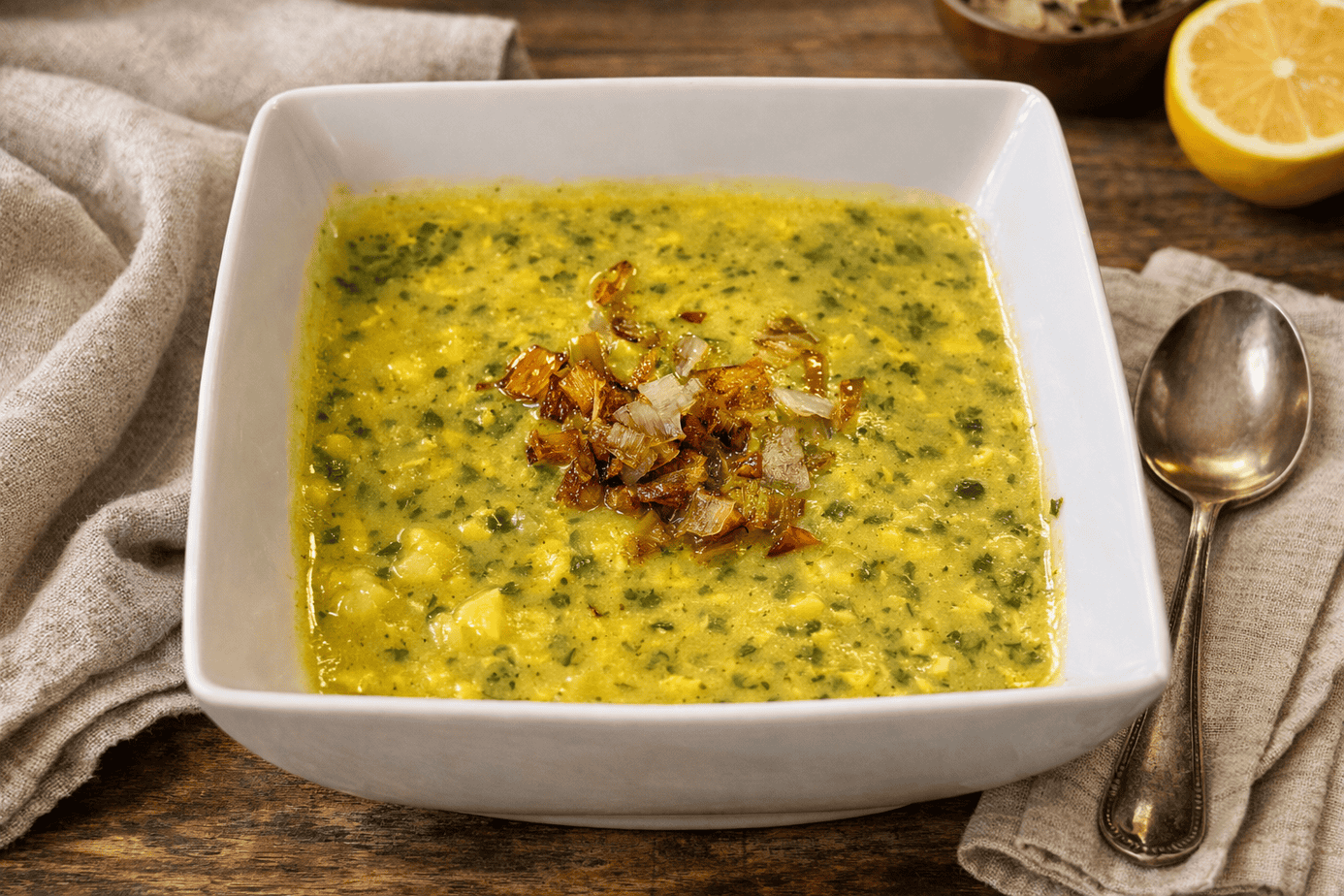
This easy Persian soup combines the aromatic depth of dried ghormeh sabzi herbs with creamy potatoes and silky egg ribbons. The result is a nourishing bowl that’s elegant enough for guests yet simple enough for a weekday breakfast. Additionally, it comes together in about 30 minutes.
In Farsi, the Persian language, sabzi means greens or herbs, and ghormeh refers to stewed meat or a braise. As a dish name, ghormeh sabzi traditionally means herb stew made with kidney beans and dried limes. But the herb blend is so delicious (and commercially available as Sabzi Ghormeh) that I’ve used it in other dishes, including scrambled eggs and this Persian soup.
Persian cooking is often an all-day affair, but using dried Sabzi Ghormeh provides concentrated herb essence without hours of prep. It’s an elegant shortcut that preserves authentic flavor while fitting modern schedules.
We first enjoyed this Persian soup for breakfast, and it quickly proved that soup is good food at any hour. Savory, protein-rich dishes like this are a better way to start the day than sugary, refined breakfast foods that spike and crash your blood sugar.
Our Love of Persian Food
My husband and I love Persian cuisine, and much of that affection comes from our friend Justin, whose family has shared their culinary traditions with us over the years. For them, it’s not just about the food itself. It’s about cooking together, lingering in the kitchen, and creating a space where people feel cared for. Nourishment comes first. Impressing is just a bonus.
Besides, many Persian dishes are naturally gluten- and dairy-free. That makes them very Terri-friendly and comforting. They build richness from herbs, legumes, and slow-cooked flavors rather than cream and cheese.
Some Persian dishes use kashk—tangy fermented whey—which adds brightness and complexity without heaviness. Occasionally, I make homemade goat cheese, which yields whey as a byproduct. However, I’ve never fermented it, so I simply used what I did have: cashew milk for the creamy base and lemon juice for the tang. The result is a sophisticated flavor profile without the need to hunt down specialty ingredients or plan weeks ahead for prep.
My husband loves taking traditionally long-cooking Persian dishes and finding ways to streamline them without sacrificing authenticity. For this easy Persian soup, I followed his lead on efficiency. Then, I layered in my focus on functional nutrition and honored Justin’s family’s love of Persian flavors—bringing all of those influences together in one bowl.
Breaking the Breakfast Rules
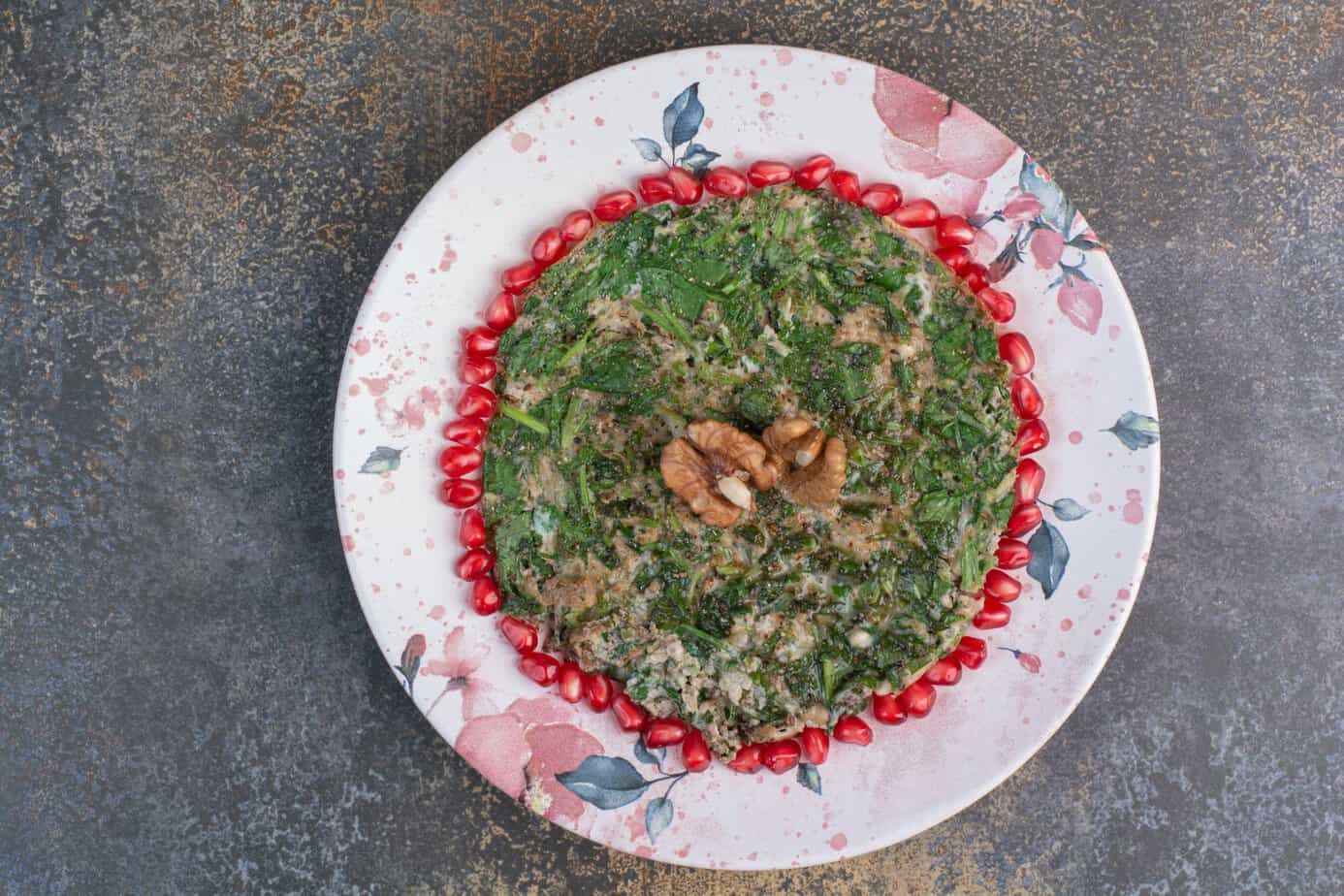
I encourage clients to let go of the idea of eating “breakfast food” to break their fast. Many traditional cultures don’t start the day with anything resembling American breakfast. Savory soups for breakfast are common in Persian, Turkish, Afghan, and many other cuisines. Further, there’s solid functional nutrition logic behind that.
For more on why how you break your fast matters, check out this post:
Cortisol Belly Fat: How Stress Changes Where Your Body Stores Fat
When you start your day with a warm, herb-forward soup like this instead of carb-heavy conventional breakfast foods, you’re:
-
- Stabilizing blood sugar: The protein from eggs and potassium-rich potatoes support a steadier glucose response and help prevent that mid-morning crash.
- Supporting digestion: Warm, gently cooked food is easier on your digestive system first thing in the morning than cold smoothies or raw, fibrous dishes.
- Triggering satiety: The amino acids from the egg ribbons help signal fullness hormones early, setting you up for more balanced eating throughout the day.
- Delivering anti-inflammatory support: Turmeric and the Sabzi Ghormeh herb mix offer compounds that support healthy inflammatory pathways, giving you an anti-inflammatory foundation from your first meal.
This is strategic eating that works with your physiology instead of against it, and this humble Persian soup happens to be a delicious way to do that.
The Nutrition in Your Persian Soup Bowl
This bowl is more than comfort food; it’s a carefully layered, gut-loving, anti-inflammatory meal in a bowl.
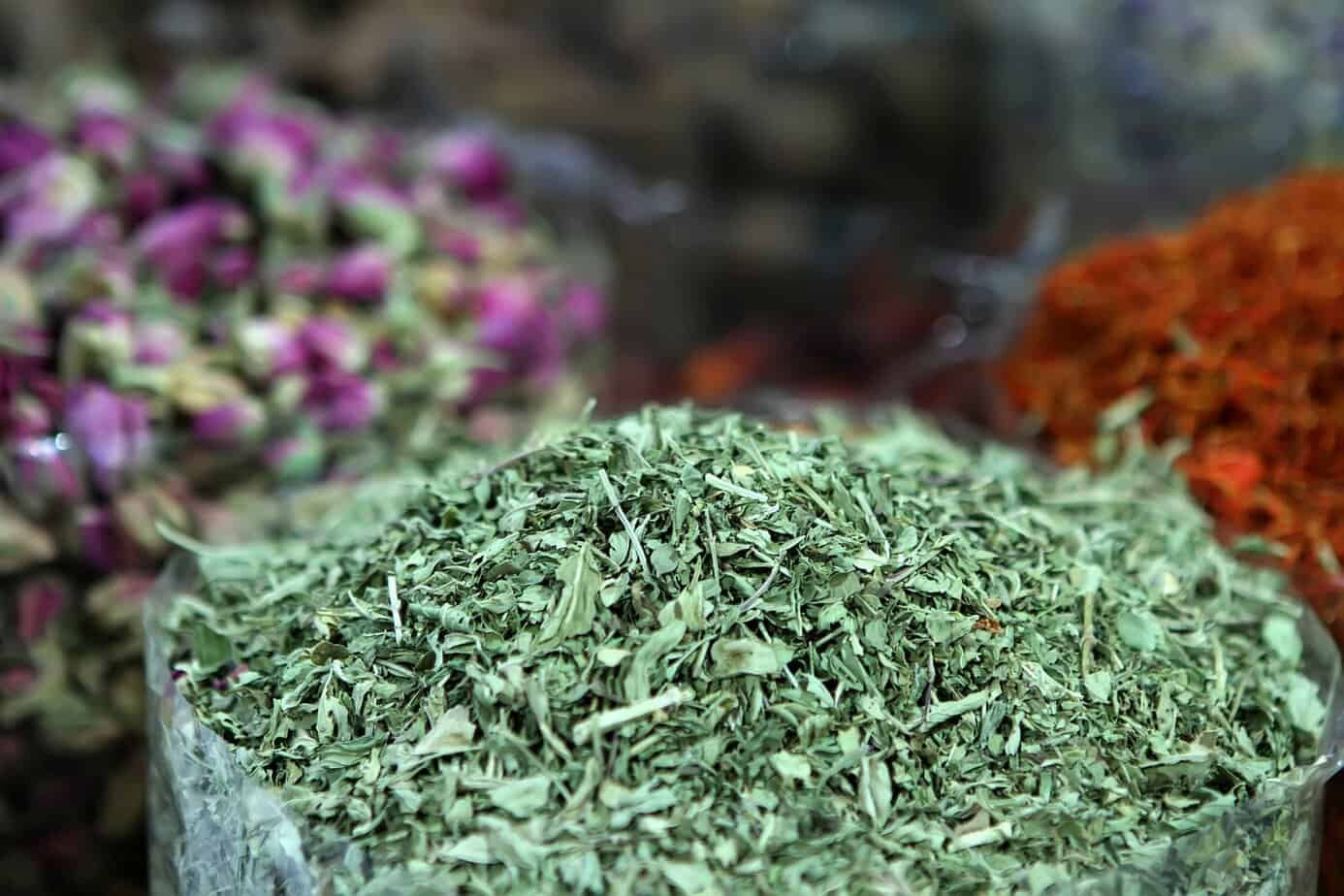
Sabzi Ghormeh (the dried herb blend) is doing the heavy lifting here. This combination of parsley, leek, and fenugreek isn’t just flavor. It’s nutrient density in concentrated form. Dried herbs retain their phytochemical compounds and, in some cases, become more bioavailable when simmered into a broth. You’re getting the benefit of herbs traditionally used for digestive support and calming inflammatory pathways.
Potatoes get a bad rap in nutrition circles, and I get it. Commonly, it’s due to how they’re cooked or due to their high glycemic load. Additionally, conventionally grown potatoes are often high in pesticide residues. I always buy organic, and when I have time, I chill my potatoes first to boost their resistant starch. This step reduces the glycemic impact and feeds beneficial gut microbes. Thus, I don’t miss out on the rich nutrients in Yukon gold potatoes, including potassium for electrolyte balance and B vitamins for cellular energy.
Turmeric is a well-researched plant known for its anti-inflammatory and antioxidant properties, largely due to its active compound, curcumin. When gently cooked in fat and paired with pepper and other spices, its beneficial compounds become more available to the body and help support overall resilience. In this soup, it adds a golden color and subtle warmth without overpowering the flavor.
Rice flour thickens without gluten, creating a creamy texture that’s easier on sensitive digestion. It also helps suspend the herbs and egg ribbons so every spoonful feels cohesive and satisfying.
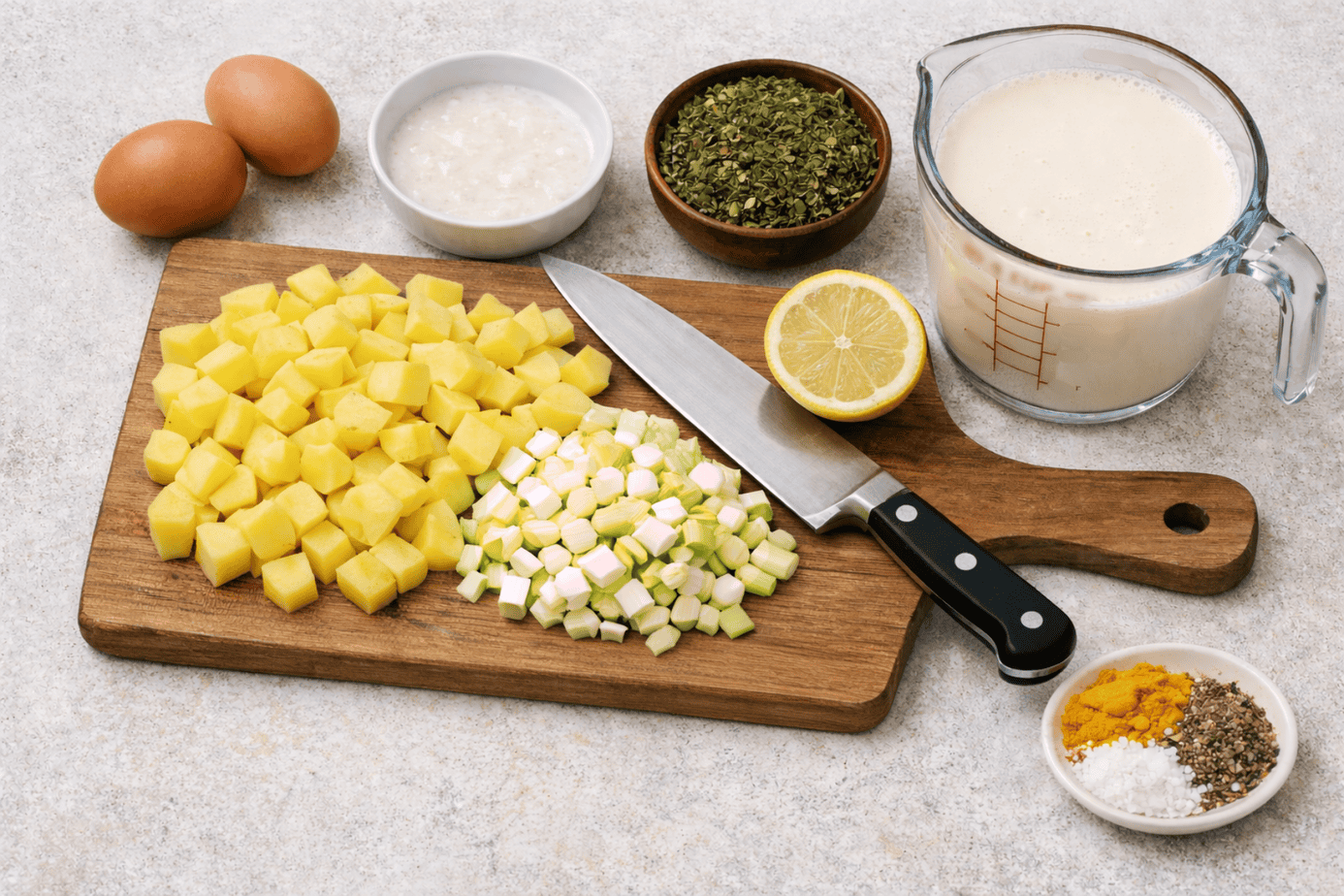
Eggs (those silky ribbons) add choline for cognitive function, lutein for eye health, and complete protein with all essential amino acids so your body can repair and build tissues. The way they’re slowly drizzled in creates silken strands that make eating this soup feel almost luxurious while subtly increasing satiety.
Collagen peptides are my addition for gut and skin support. They dissolve invisibly and tastelessly into the broth, contributing amino acids like glycine and proline. If you prefer to skip them, the soup is still deeply nourishing. Including them just amplifies this soup’s restorative, gut-supportive qualities.
Cashew milk creates dairy-free creaminess while maintaining digestibility. The fat in the cashew milk helps with absorption of fat-soluble compounds like curcumin from turmeric and certain carotenoids from the herbs.
Lemon juice does two things: it brightens the flavor (replacing the tang of kashk) and it enhances mineral absorption from the potassium-rich potatoes and the iron in the herbs. It’s a small squeeze that showcases how traditional cuisines intuitively practiced nutrient synergy long before we had the science to explain it.
How-To Make This Easy Persian Soup
- Start the aromatics: Sauté the leek until caramelized.
- Build the base: Gently boil the potatoes with the Sabzi Ghormeh herb mix, collagen peptides, salt, turmeric, and black pepper until the potatoes are soft.
- Thicken: Whisk rice flour and water into a slurry, then slowly stir it into the simmering potatoes.
- Add creaminess: Add the cashew milk and lemon juice to the potatoes and herbs and return to a gentle boil.
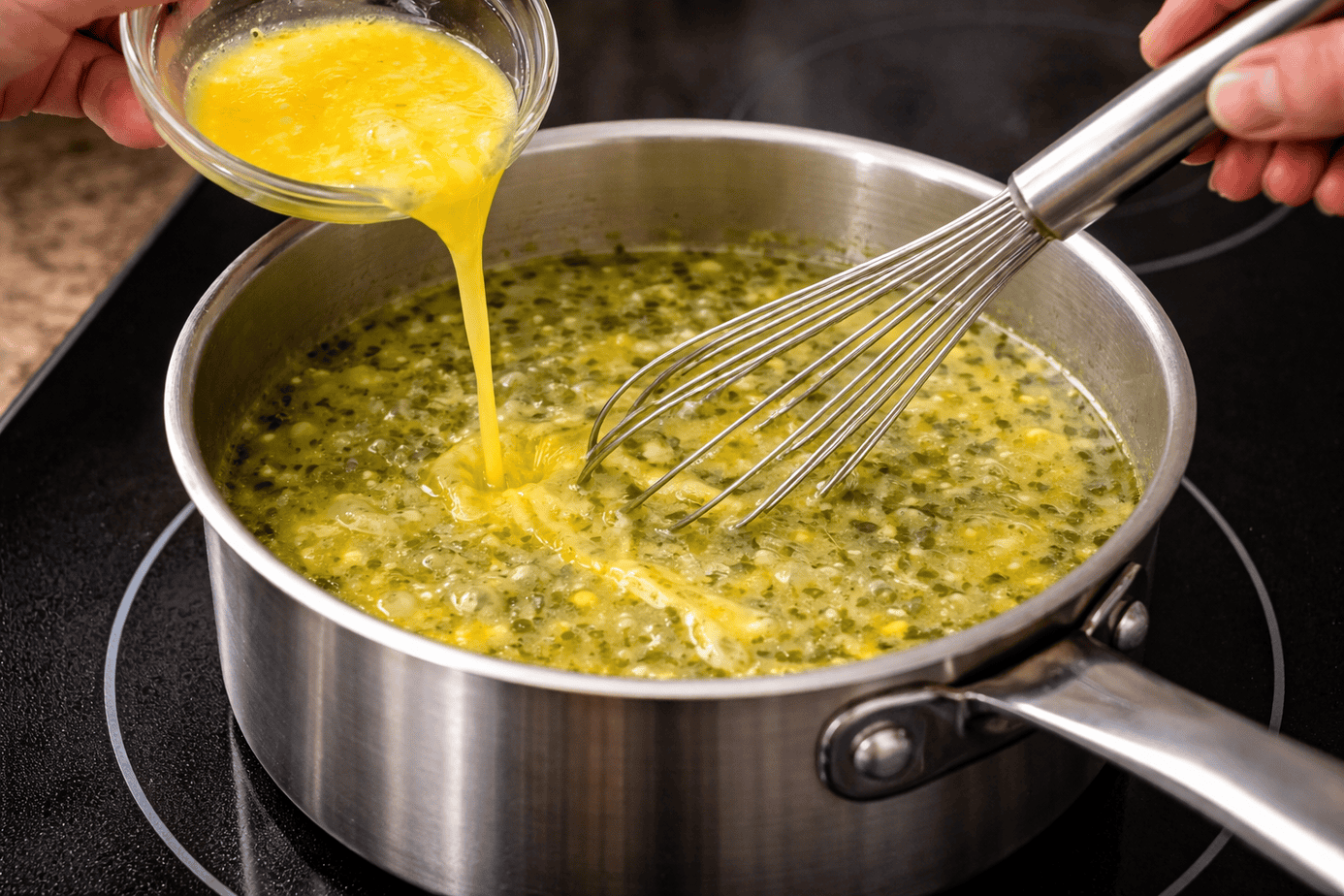
- Create the egg ribbons: While stirring, slowly drizzle beaten eggs into the soup in a thin stream to create silken strands.
- Rest and serve: Remove from heat, ladle into bowls, and garnish with the caramelized leek.
Frequently Asked Questions
Can I make this ahead?
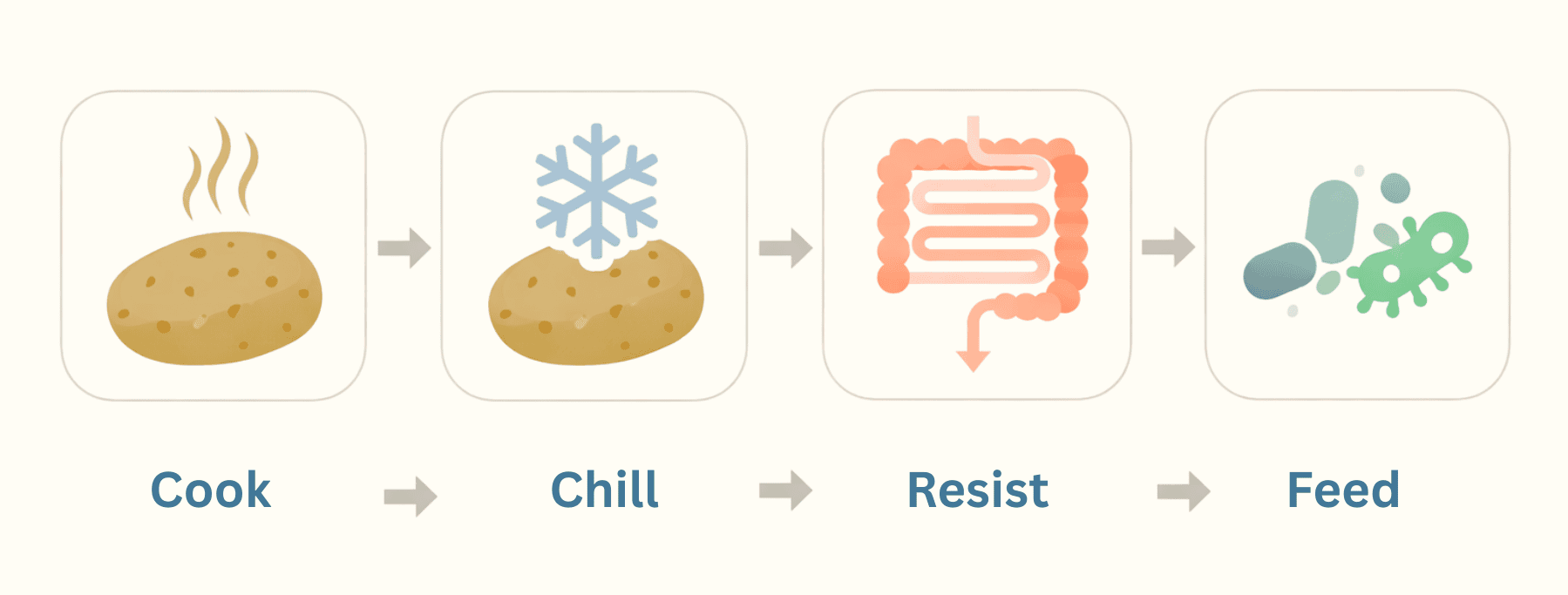
This is perfect for meal prep: make a batch Sunday night and enjoy it for several meals throughout the week. In fact, I recommend cooking at least the potatoes and herbs in advance and cooling them in the refrigerator to create resistant starch. Resistant starch resists digestion in the small intestine, so it isn’t absorbed as glucose that would spike blood sugar. Instead, it advances to the colon where it feeds beneficial gut microbes. Plus, this soup tastes better the next day as the flavors deepen. Store it in the refrigerator for up to 4 days. When cold, the texture will be slightly thicker, so add a splash of water when reheating if necessary.
What if I can't find ghormeh sabzi?
Dried Sabzi Ghormeh is available in Middle Eastern markets and online. Alternatively, you can use 1/2 cup finely chopped fresh parsley, 1/4 cup finely chopped leek greens, and 1/2 teaspoon dried fenugreek leaves. Without the fenugreek, it won’t be authentically Persian. Add them to the simmering potatoes at the same time you would the dried Sabzi Ghormeh so the flavors infuse throughout the soup.
Do I have to use cashew milk?
Cashew milk is my preferred choice for its neutral flavor and natural richness. I make my own in less than 30 seconds with my Almond Cow machine using only raw cashews and filtered water. Goat milk should also work well if you tolerate it, and plain, unsweetened almond milk can be used, though it may need a bit more thickening. You can experiment with coconut milk if you like, but its stronger, slightly sweet notes might compete with the delicate Persian herb profile rather than complement it.
Can I make this without eggs?
Yes. Simply omit the egg ribbons and you’ll have a creamy herb soup that’s equally nourishing—you’ll just lose the silken texture, protein, and choline boost eggs provide.
What if I want to skip the collagen peptides?
The soup is still nutritious without them. The potatoes, eggs, and herb blend already provide substantial amino acids and minerals. Collagen peptides are simply my personal addition for targeted gut and skin support. When I remember, I add unflavored peptides to anything I can tuck them into, from smoothies to soups and sauces. Look for hydrolyzed collagen that includes at least types I and III.
Can I use another potato instead of Yukon gold?
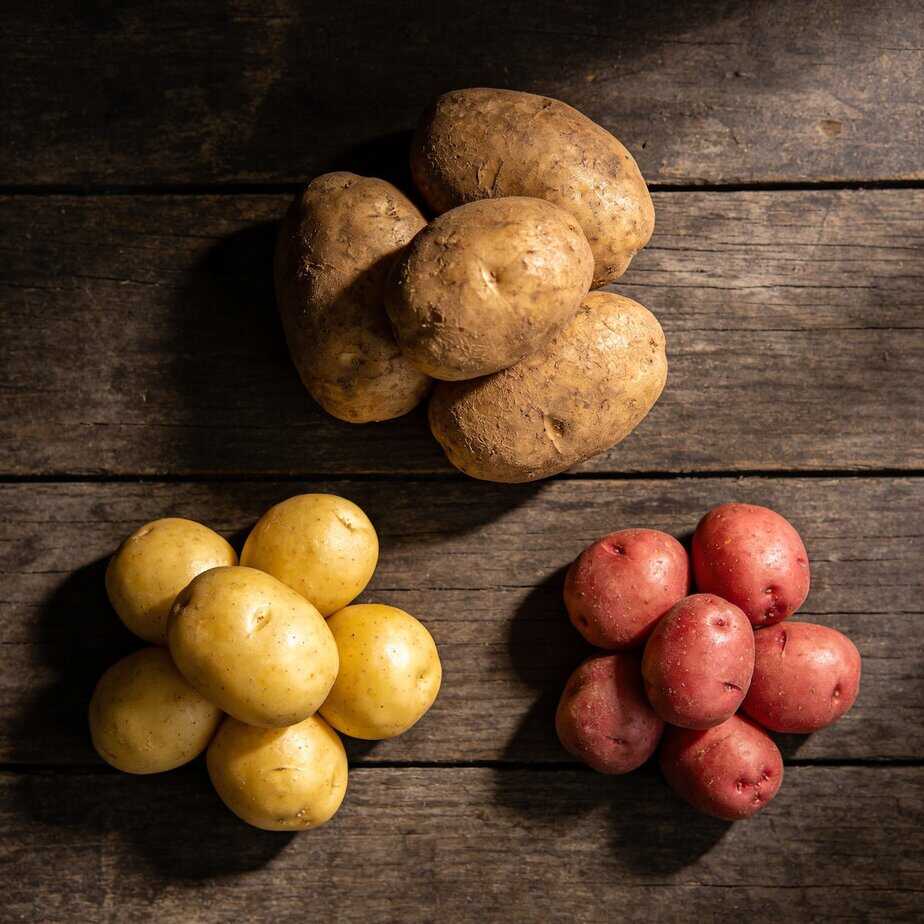
Yukon gold potatoes have higher starch content and creamier texture, which is ideal for this soup. Russet potatoes will work but may become mealy. Red potatoes will hold their shape better but won’t create as creamy a base. If you use russets, reduce cooking time slightly; if you use reds, you may need an extra minute or two.
Get in the Kitchen
You don’t have to just read about this soup—you can stand at your stove and experience it. This is the kind of recipe that quietly teaches you something about eating well: nourishment doesn’t have to look like what diet culture told you breakfast should be.
It can be savory, herb-forward, and deeply satisfying first thing in the morning. Make this for yourself on a quiet morning and notice how you feel by mid-morning—your energy, your hunger cues, your mental clarity. That’s what eating strategically, with your physiology in mind rather than against it, actually feels like.
And if you’re teaching someone else to cook, this is a beautiful recipe to pass along. It’s simple enough for a weeknight yet impressive enough for guests, honoring Persian culinary tradition while staying completely accessible. It’s the kind of dish that says, “I know how to feed people well”—which is exactly what a healthy household food culture is about.
So go ahead: scroll down to the recipe card, get your pot on the stove, and see how Persian breakfast soup feels in your own kitchen. And tell me—have you had soup for breakfast before, and what’s your favorite way to break the breakfast rules? I read every comment.
Want more anti-inflammatory recipes, weekly Scripture, and wellness tips delivered to your inbox?

Subscribe to Wednesday’s Wisdom & Wellness newsletter below.
No spam. Unsubscribe anytime.
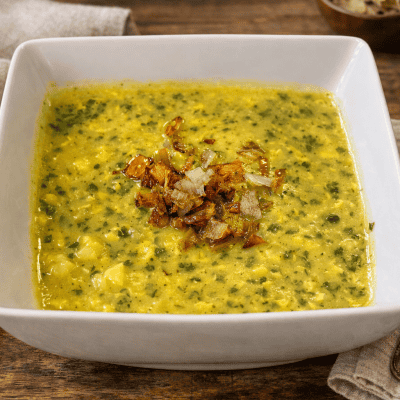
Easy Persian Soup with Potatoes, Eggs, and Ghormeh Sabzi Herbs
Ingredients
- 4 Yukon gold potatoes, peeled and diced into 1/2-inch pieces
- 3 cups filtered water
- 1/3 cup Sabzi Ghormeh herb mix
- 2 tablespoons collagen peptides
- 1 teaspoon sea salt
- 1 teaspoon ground turmeric
- 1/2 teaspoon ground black pepper
- 2 tablespoons rice flour
- 1/4 cup filtered water
- 1 tablespoon extra-virgin olive oil
- 1 leek, chopped (white part only or substitute 1/2 cup chopped onion)
- 3 1/2 cups cashew milk, (or other non-dairy milk)
- 2 teaspoons lemon juice
- 2 eggs, beaten
Instructions
- In a large saucepan over medium-high heat, boil the potatoes in the 3 cups of water with the Sabzi Ghormeh, collagen, salt, turmeric, and pepper. Bring to a gentle boil. In a small bowl or cup, whisk the rice flour into the 1/4 cup water to make a slurry. While stirring, slowly add the slurry to the potatoes and cook for 15 minutes, or until the potatoes are soft.
- Meanwhile, in a small skillet over medium heat, heat the oil until hot but not smoking. Add the leek and sauté while stirring until it starts to become translucent. Reduce the heat to medium low and cook for 15 minutes, stirring occasionally until caramelized.
- At this point, you can proceed or chill the potatoes and broth to boost resistant starch and reheat when you’re ready to finish it for serving, or finish without garnishing and chill.
- Stir the cashew milk into the saucepan. Add the lemon juice and return to a gentle boil.
- While stirring, slowly drizzle the eggs into the soup in a small stream.
- Serve garnished with the caramelized leek.