
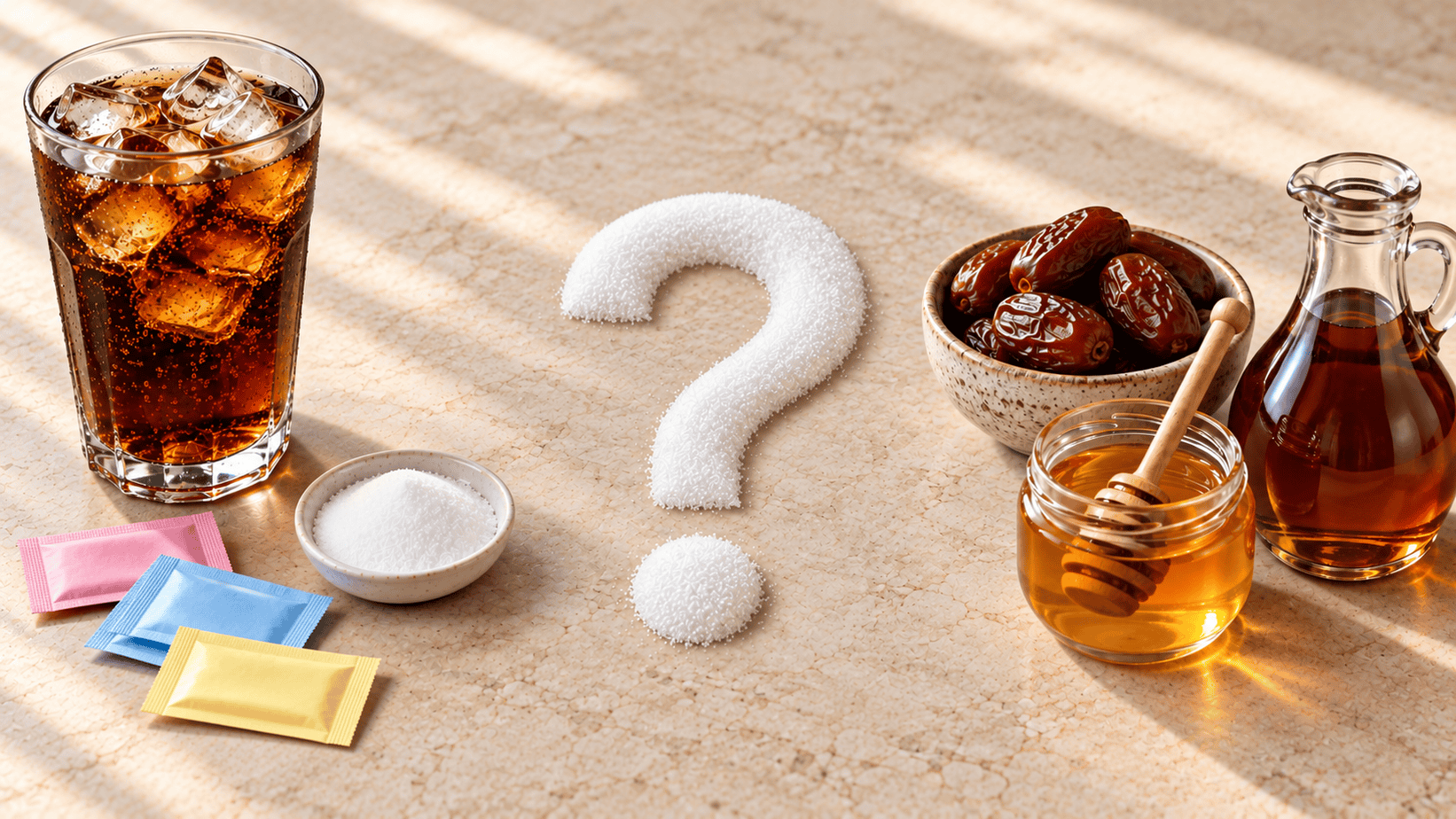
I drank diet soda for years, starting as a kid, though it’s been decades since I’ve had one. Sometimes I drank Tab, but I loved Fresca. By the time I got to college, the diet soda aisle had grown with more brands, more flavors, and more reasons to believe I was making the smart choice.
I had a theory that made sense at the time: The fizz kept me full, so I ate less. Every calorie I saved by choosing diet over regular soda was a calorie I could spend somewhere else.
When a college professor once asked our class why we drank diet soda, I said it plainly: “So I can eat more.”
I meant it as a clever answer, and the class laughed, but the professor didn’t because he realized how naive I actually was.
We’ve been taught to fear the grams of sugar on the label. But when manufacturers remove the sugar, is what replaces it actually better?
That question has become increasingly complicated. Today’s sugar-free foods may contain artificial sweeteners such as aspartame, sucralose, saccharin, or acesulfame potassium; sugar alcohols like erythritol, xylitol, sorbitol, and maltitol; or plant-derived high-intensity sweeteners such as stevia or monk fruit.
These aren’t interchangeable, and “sugar-free” tells us surprisingly little about what we’re eating.
Déjà vu: We’ve Made This Mistake Before
For decades, fat was the dietary villain.
Food manufacturers responded with an avalanche of fat-free and low-fat cookies, salad dressings, yogurts, frozen desserts, and more. I think I bought them all. To preserve the taste and texture consumers expected, manufacturers often replaced fat with sugar and other refined ingredients. And Americans got sicker and fatter.
Researchers call this kind of product reformulation “mal-substitution”: removing an ingredient perceived as unhealthy without making the food healthier.
Now sugar has taken fat’s former place in the crosshairs, and we’re repeating a familiar pattern. Take out the offending ingredient, formulate something else to mimic what it did, and put a reassuring sugar-free claim on the package.
Sweetness Comes in Different Packages

Picture a child in Hawaii chewing a freshly cut stalk of sugar cane. Now picture an American child unwrapping a piece of candy. Both contain sugar, but they’re very different foods with very different effects on the body.
People often say “sugar is sugar” because the body ultimately breaks carbohydrates down into simple sugars. But that ignores everything else that comes with them. Fiber, nutrients, phytochemicals, and other bioactive compounds can influence digestion, absorption, the gut microbiome, satiety, and other physiological responses.
The idea that “sugar is sugar” makes the same mistake as “a calorie is a calorie.” Both overlook how differently foods with the same calories or grams of sugar can affect the body.
For example, dates provide fiber, minerals, carotenoids, and other compounds with antioxidant activity. Raw honey contains enzymes, amino acids, organic acids, minerals, and compounds associated with antioxidant, antimicrobial, and anti-inflammatory activity. Both were valued in biblical times, and Scripture repeatedly praises honey while also warning against excess: “If you find honey, eat just enough—too much of it, and you will vomit” (Proverbs 25:16 NIV). It’s a remarkably sensible lesson in moderation.
Other natural sweeteners are more concentrated but still retain some components of their original food. Pure maple syrup is concentrated tree sap that contains minerals and plant compounds. Unrefined cane sugar, made by concentrating sugar-cane juice, retains some of its naturally occurring molasses. Producers make coconut sugar in one step by boiling sap directly into crystals.
These components affect how the body responds to the food, not just its sugar content. Fiber slows digestion, promotes satiety, and feeds the gut microbiome, while enzymes, minerals, phytochemicals, and other bioactive compounds have physiological actions of their own. Reducing all of these foods to their grams of sugar leaves those effects out of the equation.
Are Artificial Sweeteners a Caloric Freebie?

For years, I viewed artificial sweeteners as a caloric freebie. I recently remembered Tab and Fresca were sweetened with saccharin. In the 1970s, rat studies linked saccharin to bladder cancer, prompting warning labels on products containing it. Later research showed that the tumor-causing mechanism did not apply to humans, and regulators removed the warning.
Meanwhile, better-tasting artificial sweeteners offered sweetness without sugar or calories. Currently, six are approved in the United States: saccharin, aspartame, acesulfame potassium (Ace-K), sucralose, neotame, and advantame. These high-intensity sweeteners are 200 to 20,000 times sweeter than table sugar, so only tiny amounts are needed.
In 2023, cancer concerns resurfaced when the International Agency for Research on Cancer classified aspartame as “possibly carcinogenic to humans.” Unfortunately, cancer isn’t the only health concern. Researchers have investigated effects on neurology, hormone signaling, appetite, metabolism, and the gut microbiome.
A 2025 trial found sucralose, compared with sucrose, increased blood flow in the hypothalamus—a brain region involved in appetite regulation—and connectivity with regions involved in motivation and sensory processing. Participants also reported greater hunger.
In another trial, 120 people who didn’t regularly consume nonnutritive sweeteners received saccharin, sucralose, aspartame, or stevia for two weeks. Responses varied, but each sweetener changed participants’ gut bacteria and blood metabolites—the byproducts of digestion and metabolism—differently. Additionally, saccharin and sucralose affected glucose responses.
Long-term research raises additional concerns. A 2026 analysis involving more than 3.6 million people linked higher artificial-sweetener consumption with greater risks of several cardiometabolic conditions and death from all causes. While observational evidence can’t prove causation, it’s enough to give a cautious person pause.
With what I know now, that uncertainty—along with research on other artificial food-like substances—keeps me from swapping a food humans have eaten for generations for something invented in a lab.
The Trouble with Sugar Alcohols
Sugar alcohols, also called polyols, are a different class of sweeteners. They include erythritol, xylitol, sorbitol, maltitol, and others. Chemically derived from sugars, they contain about two to three calories per gram versus sugar’s four.They’re widely used in sugar-free candy, protein bars, baked goods, gum, and other products.
I don’t care for them due to their gastrointestinal effects, which are generally dose-dependent and can worsen when several are consumed together.
Many polyols are incompletely absorbed in the small intestine, varying by type and individual. Unabsorbed polyols can draw water into the intestine and undergo fermentation by gut bacteria, resulting in gas, bloating, cramping, and diarrhea. Fiber and resistant starch ferment in the large intestine, producing beneficial short-chain fatty acids. Polyols can ferment there too, but their incomplete absorption can contribute to more gas and discomfort.
Of particular concern, large observational studies published in 2023 and 2024 linked higher blood levels of erythritol and xylitol with cardiovascular events. These sugar alcohols can make platelets (the blood cells involved in clotting) more likely to clump together, potentially increasing clot risk. Small, controlled trials found increased platelet activity shortly after consumption.
A study presented at the European Society of Cardiology Congress in August 2026 adds weight to that concern. Researchers tracked more than 17,700 people across two long-term studies for up to three decades. Those with the highest blood levels of xylitol had a significantly greater risk of death, heart attack, or stroke than those with the lowest levels, and the pattern held regardless of age or sex.
Those studies don’t establish that eating erythritol or xylitol causes heart attacks or strokes, and because both substances can also be produced in the body, interpretation is complicated. But they’re another reminder that sugar-free should not be mistaken for biologically irrelevant.
What ‘Natural’ Really Means for Plant-Based Sweeteners
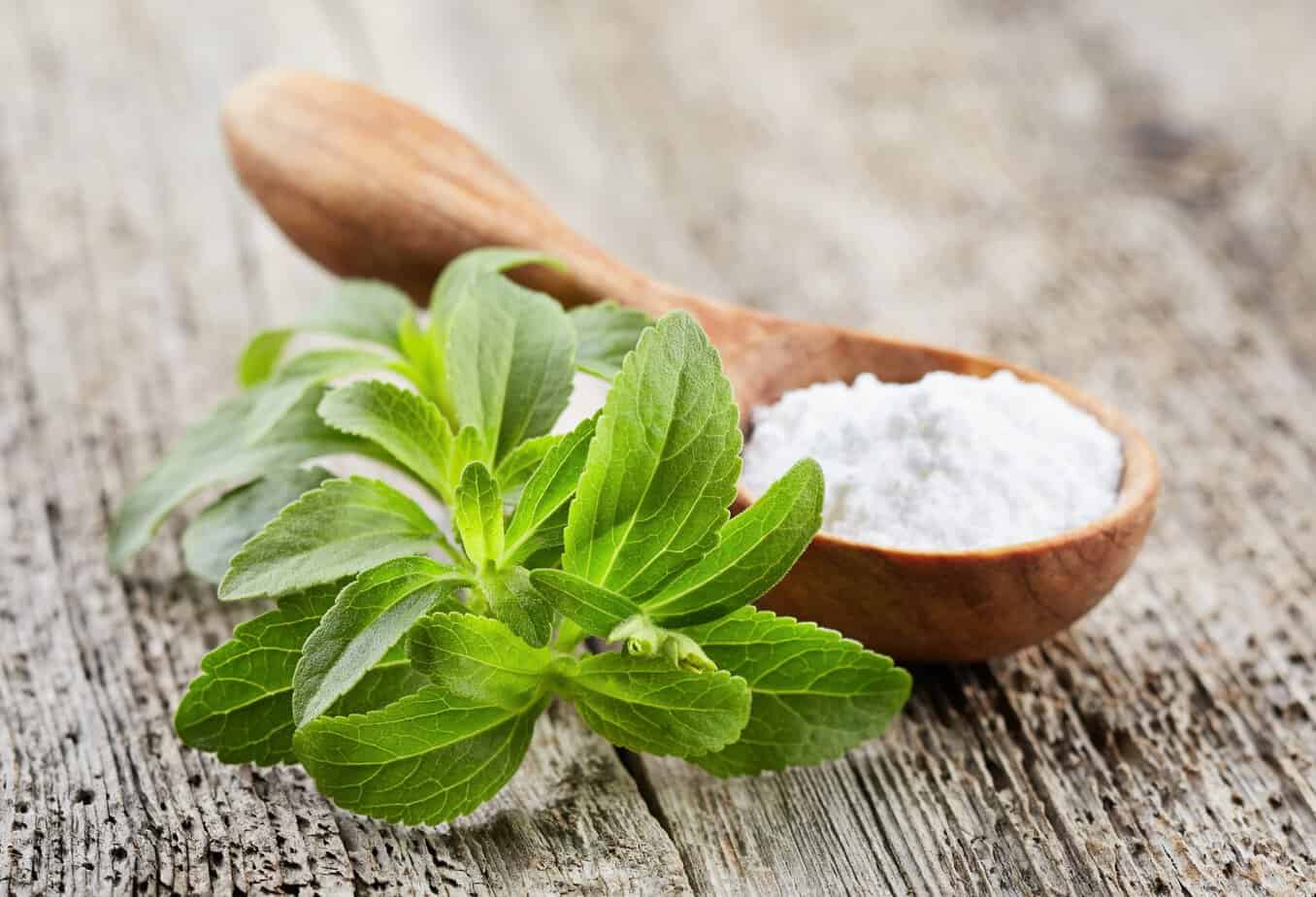
Stevia and monk fruit fall into another category because their sweet compounds come from plants. Steviol glycosides are extracted and purified from stevia leaves, while monk-fruit sweeteners derive their intense sweetness from compounds called mogrosides. Thus, they’re not artificial sweeteners, but they’re also not equivalent to eating an intact fruit or chewing a stevia leaf.
The words stevia or monk fruit on the front of a package may not tell you exactly what you’re buying. Stevia leaves are green, yet the stevia powder in many products is white because the intensely sweet steviol glycosides have been extracted and purified from the plant. Stevia can also have a distinctive bitter aftertaste. Because only tiny amounts are needed, manufacturers often blend stevia or monk fruit extracts with another ingredient, such as erythritol, to add bulk and improve the flavor. Consequently, it’s important to read the ingredients on the label.
Interestingly, the FDA has taken issue with whole stevia leaves and crude extracts for decades, citing insufficient safety data, while highly purified steviol glycosides—commercially developed by major food-industry companies— have received FDA “no questions” responses to generally regarded as safe (GRAS) notices.
Research has raised other questions about stevia. In a small human study, consuming whole stevia extract for one week significantly increased urinary and morning salivary cortisol, as well as the ratio of active cortisol to inactive cortisone. Cortisol is essential for the body’s stress response and helps regulate metabolism, blood pressure, inflammation, and sleep. However, chronically elevated levels can contribute to metabolic, cardiovascular, immune, and sleep problems.
White Sugar, Brown Sugar, and the Molasses Connection
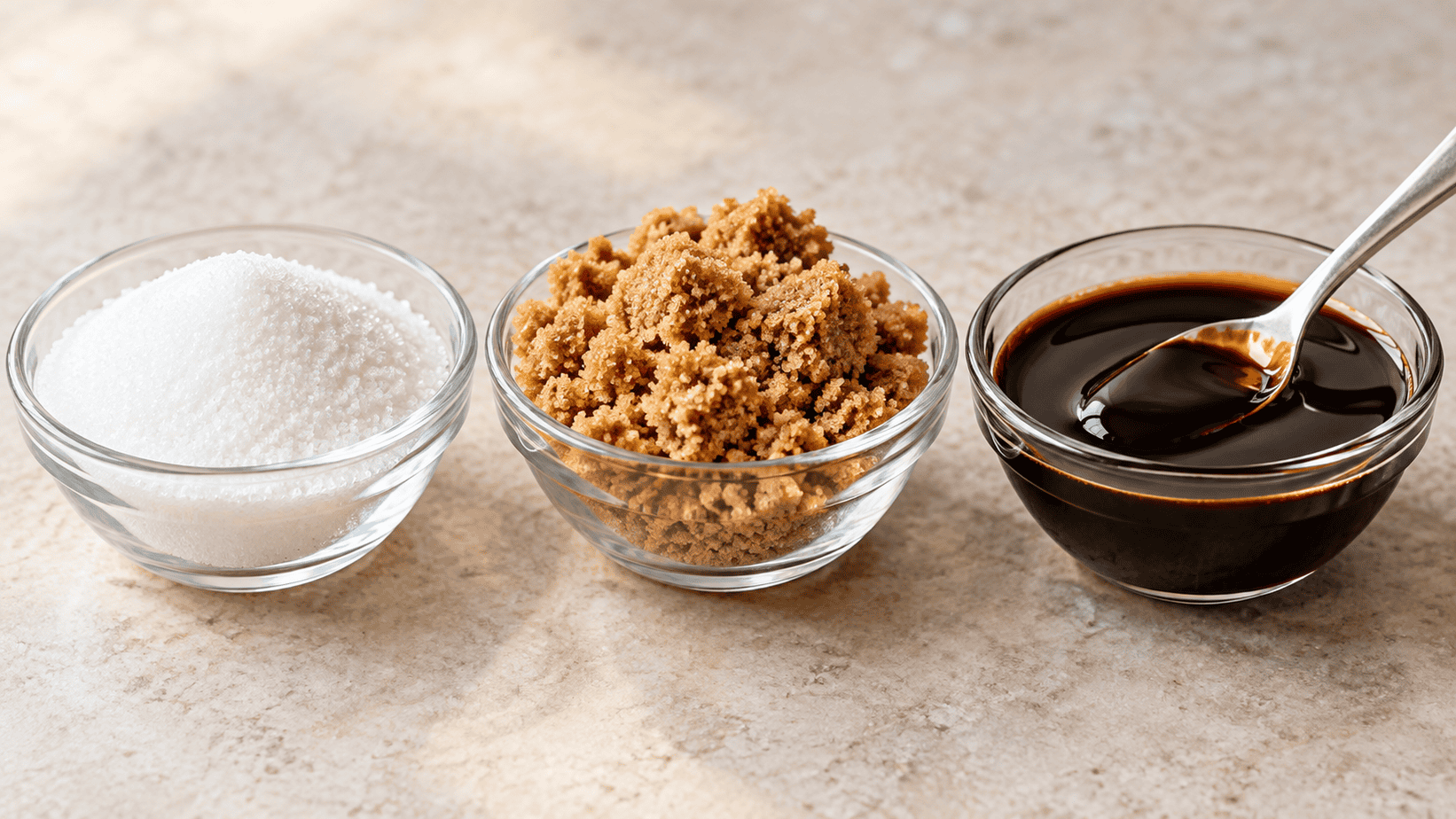
Even “real sugar” isn’t as simple as it sounds. In the U.S., white sugar comes from either sugar cane or sugar beets, chemically identical once refined, but grown, processed, and often regulated very differently.
Sugar cane sold in the U.S. is non-GMO, whereas nearly all U.S. sugar beets are genetically modified. Food manufacturers using cane sugar almost always say so on the label, since it’s a major selling point. Conversely, if a label simply says “sugar,” it’s very likely beet sugar or a blend because beet producers have no incentive to specify their source.
Molasses as a byproduct is interesting. It’s the syrup left behind after sugar crystals are extracted. While both cane and beet processing produce molasses, beet molasses is bitter and largely unpalatable, so it’s used for animal feed and industrial purposes rather than food. The molasses sold for cooking and baking, and the molasses naturally retained in unrefined or brown sugar, is virtually always from cane sugar. Other products called molasses, such as pomegranate molasses, are concentrated fruit syrups rather than byproducts of sugar refining.
Brown sugar adds another wrinkle. Most commercial brown sugar isn’t a less-refined sugar. It’s fully refined white sugar with molasses added back onto the crystals for color, moisture, and flavor.
Our Sweetness Expectations
God created us to enjoy sweetness. For most of human history, people enjoyed sweetness through fruit in season and honey found occasionally in the wild—foods that were whole, scarce, and worth savoring because they were not always available.
We’ve spent the last century trying to break that design, engineering sweetness that’s constant, intense, and stripped from anything the body would recognize as food. And every attempt, sugar, then artificial sweeteners, then sugar alcohols, then plant extracts processed into something the plant never was, keeps running into the same wall: a body that knows the difference.
My college-age equation was simple: fewer calories in my soda meant more calories available for something else. What I didn’t know was that those calories had different effects on my body.
Today I know that God’s design still works and His ways are always better. So, my sweeteners of choice are dates, honey, maple syrup, and occasionally, unrefined, organic cane sugar.

Want weekly Scripture, wellness tips, and anti-inflammatory recipes?
Subscribe to the newsletter below.
No spam. Unsubscribe anytime.