
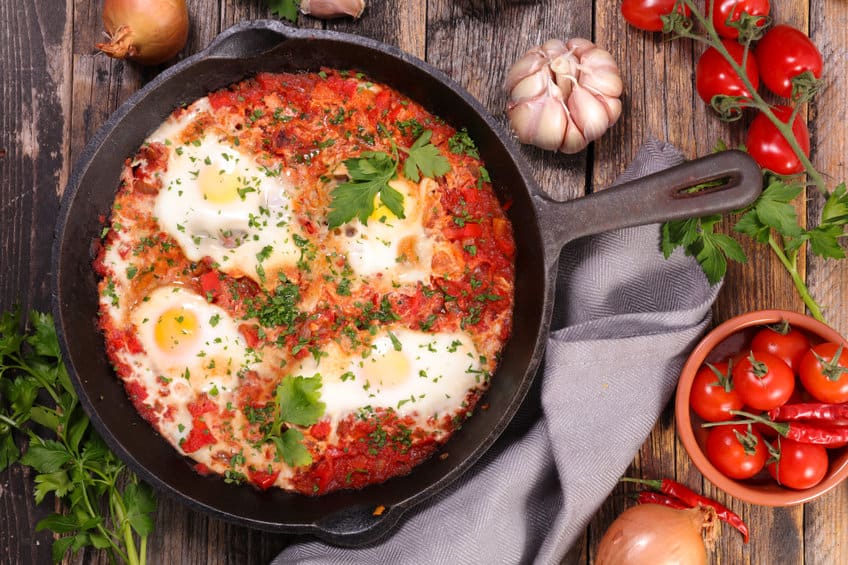
This Anti-Inflammatory Shakshuka is a satisfying, nutrient-dense meal packed with eggs, vegetables, healthy fats, and warming spices that help reduce inflammation.
In Israel, shakshuka literally means breakfast, and ‘breakfast’ means ‘breaking the fast. Whether you’ve fasted for 12 hours overnight or longer, how you break that fast matters.
When you haven’t eaten for several hours, your blood sugar is lower, and what you eat first matters. Starting with a combination of protein, healthy fats, and fiber-rich vegetables (rather than refined carbs or sugar) helps balance cortisol and blood sugar and prevents the spike-and-crash cycle that leaves you hungry and tired by mid-morning.
For more on how breakfast timing and protein affect cortisol and belly fat, read my full post on cortisol and weight gain.
How Persian Spices Make This Anti-Inflammatory Shakshuka Unique
If you ask my husband or me where our favorite place to eat is, we’d tell you: Justin’s house. Justin is our Persian friend who’s an excellent cook. He loves hosting dinners, and when his family comes, his aunts always bring delicious Persian food too.
When my husband wanted to make shakshuka, I knew it was Middle Eastern—not Persian, specifically—but close enough that I gave Justin a call to ask how he’d make it. His answer? “It’s all in the spices.” He walked me through his spice combination, and that’s what gives this shakshuka its distinctive Persian flair and incredible depth of flavor.
We continue to make shakshuka Justin’s way, and it’s become one of my weekend, holiday, or brunch breakfasts. It’s traditionally served with pita or challah, but we love it as-is for a lower-carb meal.
Health Benefits of Anti-Inflammatory Shakshuka Ingredients
This shakshuka supports healthy cortisol rhythm and metabolism through simple, whole-food ingredients:
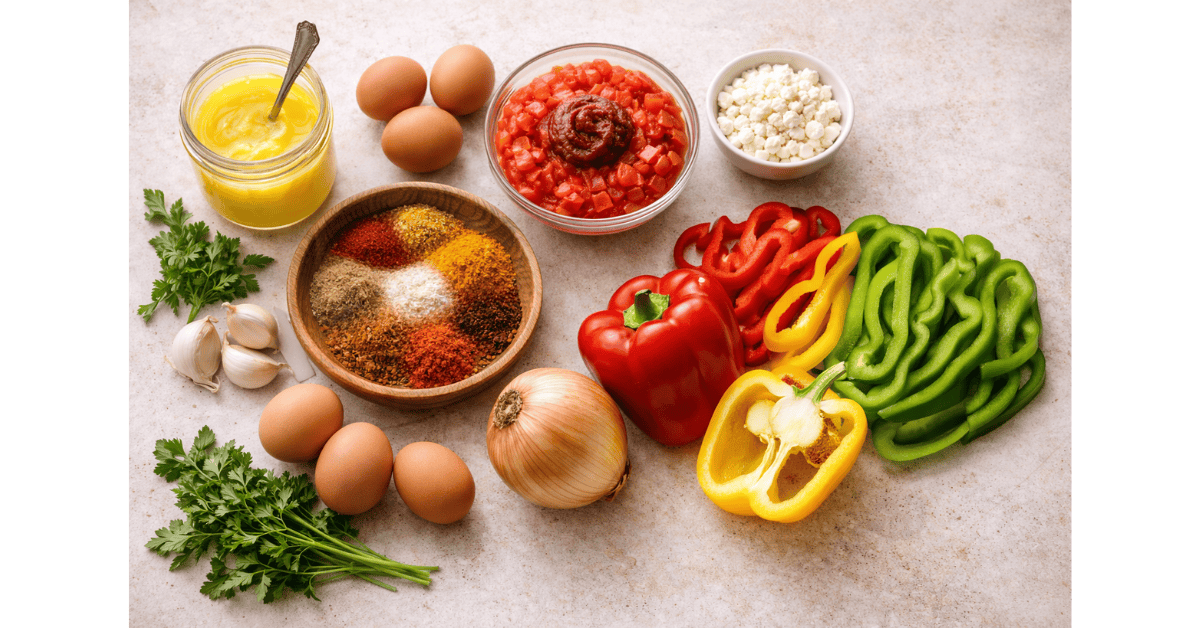
Eggs provide high‑quality protein (about 6 grams per egg) and choline, which supports your stress response and liver function. Starting your day with protein helps stabilize blood sugar and allows cortisol to taper naturally.
Ghee (clarified butter) provides stable, satisfying energy from healthy fats and is well suited to higher‑heat cooking. Unlike refined seed oils, ghee contains fat‑soluble vitamins and small amounts of butyrate, a short‑chain fatty acid that helps nourish cells in the gut lining and support a healthy intestinal barrier. Ghee also lacks milk proteins and lactose that can be problematic for some people with dairy sensitivity.
To learn more about ghee, check out my post How to Make Ghee at Home: Benefits & Butter Comparison.
Bell peppers are rich in vitamin C, which is concentrated in the adrenal glands and plays a role in adrenal hormone production, including cortisol. They also provide fiber to feed beneficial gut bacteria, help stabilize blood sugar, and deliver antioxidants that help counter oxidative stress that can damage cells.
Tomatoes provide lycopene, a powerful antioxidant with documented anti‑inflammatory effects, especially in synergy with other antioxidants like vitamin C. Notably, nightshades such as tomatoes and peppers can be inflammatory triggers for some individuals. However, for most people they are anti‑inflammatory foods that support overall metabolic and cardiovascular health.
Spices like cumin, paprika, and garam masala are not just for flavor—they’re functional. Cumin has a long history of use for digestion and can stimulate digestive enzymes and bile flow. Paprika is rich in carotenoid antioxidants that help protect cells from oxidative damage, and garam masala blends often include turmeric and cinnamon, which have been shown to reduce inflammatory markers and support healthy blood sugar and blood pressure.
How to Make Anti-Inflammatory Shakshuka
This recipe is simple and comes together in one skillet. It takes about 40 minutes from start to finish—a bit more time than you might have on a busy weekday morning—but you can prep the vegetable sauce ahead and refrigerate it. In the morning, just crack in the eggs and bake.
Key steps:
- Bloom the spices in hot ghee until fragrant (30 to 60 seconds) to release their flavor and anti-inflammatory compounds.
- Simmer the sauce for about 20 minutes to let the tomatoes break down and thicken.
- Create wells in the sauce for the eggs using the back of a spoon and crack the eggs into the wells.
- Bake at 375 degrees F for about 10 minutes just until the whites are set.
- Garnish with parsley and optional feta and serve.
Equipment note: Use an oven-safe skillet (cast iron works perfectly), or cook the eggs on the stovetop with a lid instead of baking.
Frequently Asked Questions
Is shakshuka keto-friendly?
This recipe is a great option for a low‑carb meal, but it’s not quite keto since about 19% of calories come from carbs. Strict keto is generally limited to 5 to 10% carbs.
With feta, each serving has approximately
-
- 24 g fat (about 68% of calories)
- 10 g protein (about 13%)
- 15 g total carbohydrates (about 19%), and roughly 11 g net carbs.
If you use 2 eggs per serving (8 eggs total), each serving goes to roughly
-
- 28 g fat (67%)
- 17 g protein (17%)
- 15 g total carbs (16%) and about 12 g net carbs.
That higher‑protein, higher‑fat version can fit into some keto plans that allow 20 to 50g total carbs per day, though it won’t meet the stricter 5-10% calorie threshold. It works well for those following moderately low‑carb approaches.
That higher‑protein, higher‑fat version can fit more comfortably into some keto or very low‑carb plans as long as the rest of the day stays very low in carbs.
Can I make shakshuka ahead of time?
Yes! Prepare the tomato-vegetable sauce completely, let it cool, and refrigerate for up to 3 days. When ready to serve, reheat the sauce in your skillet, then crack in fresh eggs and bake as directed.
What if I don't have all the spices?
The spices are what make this recipe special—both for flavor and for their anti‑inflammatory benefits. Garam masala and Middle Eastern curry powder are complex blends (often including turmeric, cinnamon, coriander, fennel, fenugreek, and more), so they’re hard to replicate with one or two substitutes. I have my own spice blend company and make many of my blends from scratch, but for these particular mixes I actually purchase ready‑made versions because they’re so well balanced.
If you don’t have them, I recommend purchasing them at a Middle Eastern market or online. We’ve used this curry powder and this one and this garam masala and this one. If you keep many individual spices on hand, you can also look up recipes for making your own blends.
Can I use a different type of pan?
Cast iron is ideal because it goes from stovetop to oven, but any oven-safe skillet works. If you don’t have an oven-safe pan, cook the eggs on the stovetop: reduce heat to low, cover with a lid, and cook 6 to 8 minutes until whites are set.
How do I keep the egg yolks from breaking?
Crack each egg into a small bowl or cup first, then gently slide it into the well you’ve made in the sauce. This gives you more control than cracking directly into the pan.
Get In the Kitchen
Ready to bring the flavors of the Middle East to your breakfast table? This shakshuka looks impressive, tastes incredible, and fills your kitchen with the most amazing aromas while it cooks.
Gather your spices, crack those eggs, and discover why this dish has been a beloved breakfast tradition for generations. Let’s get cooking.

Want weekly Scripture, wellness tips, and anti-inflammatory recipes?
Subscribe to the newsletter below.
No spam. Unsubscribe anytime.
Anti-Inflammatory Shakshuka
Ingredients
- 1/4 cup ghee
- 1/2 teaspoon ground cumin
- 1/2 teaspoon smoked paprika
- 1/2 teaspoon sweet paprika
- 1 1/2 teaspoon garam masala
- 1/2 teaspoon Middle Eastern curry powder
- 1 teaspoon Aleppo pepper
- 3 large cloves garlic, , minced
- 1 small yellow onion, , thinly sliced
- 1/2 red bell pepper, , thinly sliced
- 1/2 green bell pepper, , thinly sliced
- 1/2 yellow bell pepper, , thinly sliced
- 1 1/2 tablespoons tomato paste
- 2 14- ounce cans diced tomatoes
- 4 eggs, (or up to 6)
- Feta cheese, , for garnish (optional)
- Chopped parsley, , for garnish
Instructions
- Preheat the oven to 375 degrees F. If you don’t have an oven-proof skillet, you’ll need one with a lid so you can cook the eggs on the stove.
- Heat the ghee in a large cast iron skillet over medium high heat until hot, but not smoking. Bloom the spices by cooking them in the ghee until they are fragrant, being careful not to scorch the ghee (It can happen quickly). and using enough ghee so it’s not a thick paste.
- Add the onion, garlic, and bell peppers; cook stirring occasionally for about 5 minutes, until the vegetables are tender.
- Stir in the tomato paste and the tomatoes with their juices into the skillet. Reduce the heat to maintain a low simmer and cook, stirring occasionally, until the tomatoes break down and the sauce thickens slightly, about 20 minutes.
- Using the back of a spoon, make 4 wells in the vegetable sauce, 1 to 2 inches apart. Crack an egg into each well. If it helps, you can break them into a small bowl or cup first to keep the yolk from breaking.
- Put the skillet to the oven and bake until the egg whites are just set, about 10 minutes. Don’t overcook or they’ll be rubbery. If you need to cook the eggs on the stovetop, reduce the heat to simmer; cover the skillet and cook 6-8 minutes until the whites are set.
- Garnish with parsley and feta (if using). Serve immediately.