
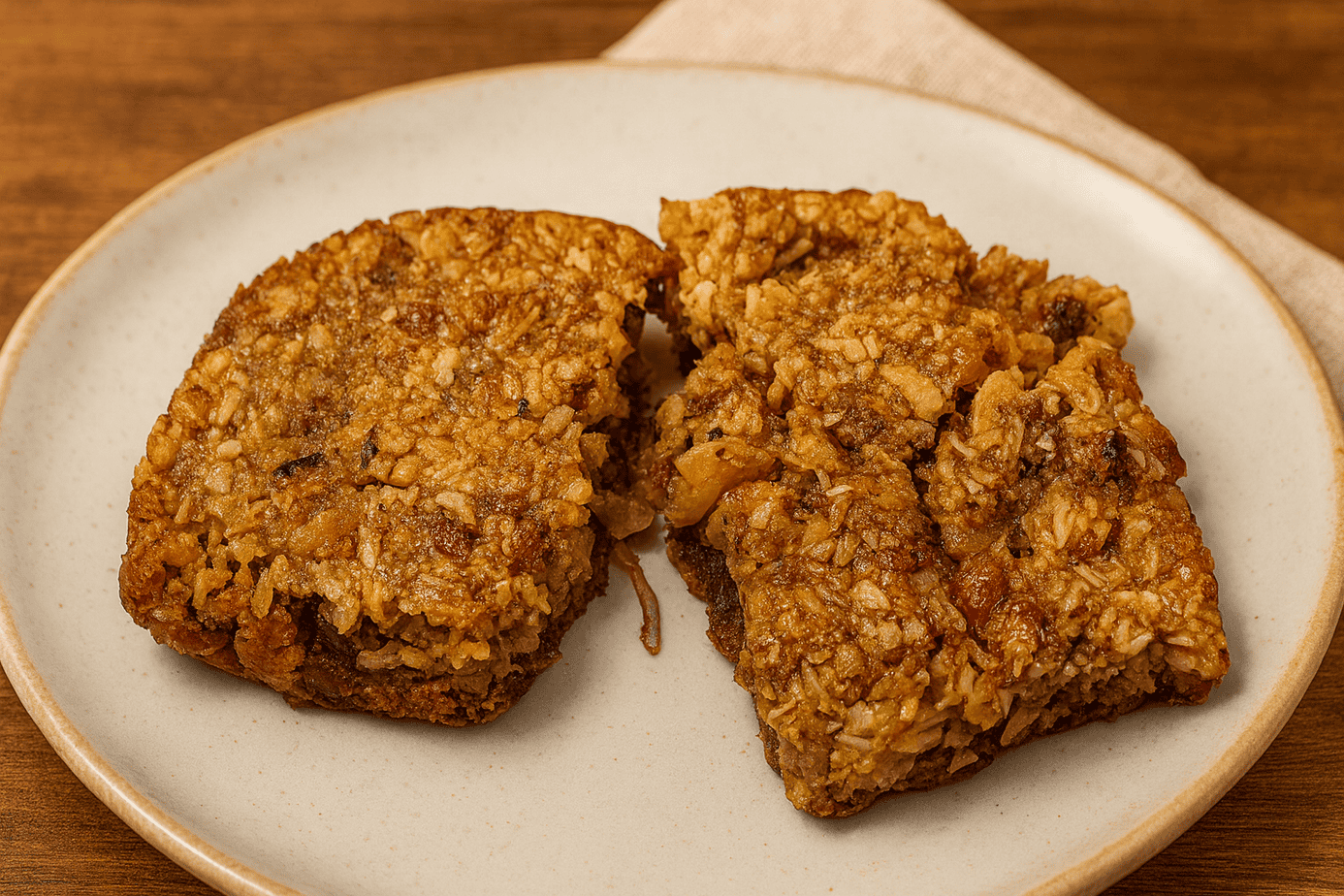
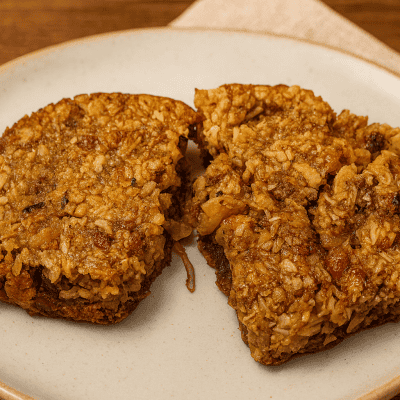
These chewy coconut hazelnut bars have a toffee-like, caramelized crust and a chewy coconut-nut topping—perfect for when you want something sweet without the guilt. They’re gluten-free, grain-free, and surprisingly easy to make.
I love anything caramel or toffee-flavored, but I generally can’t eat it due to the dairy content. So, I set out to “healthify” classic toffee bars—and ended up with something even better than I expected.
The intended shortbread-style crust transformed into a caramelized, crunchy toffee-like layer that could double as a topping for ice cream or yogurt when crumbled. When I pulled the baked crust from the oven, I honestly thought the recipe had flopped. It looked bubbly and weird! But when I tasted a piece, I knew I had stumbled onto something special.
I almost didn’t finish them as bars (I only had chicken eggs on hand instead of my usual duck eggs), but my husband encouraged me to keep going. I’m so glad I did! Everyone at his birthday dinner absolutely loved them. One guest asked his wife to get the recipe, and our kids were happy to take the leftovers home. The topping has a chewy texture similar to an oatmeal bar, but the whole recipe is grain-free, gluten-free, and Paleo-friendly.
I will definitely make them again with duck eggs (I’m sensitive to chicken eggs), but these bars were still a huge hit.
How I Healthified These Gluten-Free Coconut Hazelnut Bars
Classic toffee bars are loaded with butter, brown sugar, refined white flour, corn syrup, and often sweetened condensed milk—a perfect storm for blood sugar spikes, inflammation, and energy crashes. These Coconut Hazelnut Bars aren’t toffee bars, but you still get irresistible toffee flavor and chewy texture while cutting back on calories, refined carbs, and added sugar. I layered in healthier fats, fiber, and protein through a few simple swaps:
-
- Used coconut sugar and pure maple syrup in place of highly refined white or brown sugar (note: most white sugar comes from genetically engineered beets unless labeled cane sugar)
- Swapped almond flour for refined white flour to add fiber and healthy fats
- Added collagen peptides for extra protein that supports satiety and a healthy gut lining.
Together, these changes make these gluten-free coconut hazelnut bars a more blood-sugar-friendly and less inflammatory option than classic coconut-hazelnut bars, while still delivering the rich, buttery flavor and texture you crave.
Health Benefits of Gluten-Free Coconut Hazelnut Bar Ingredients
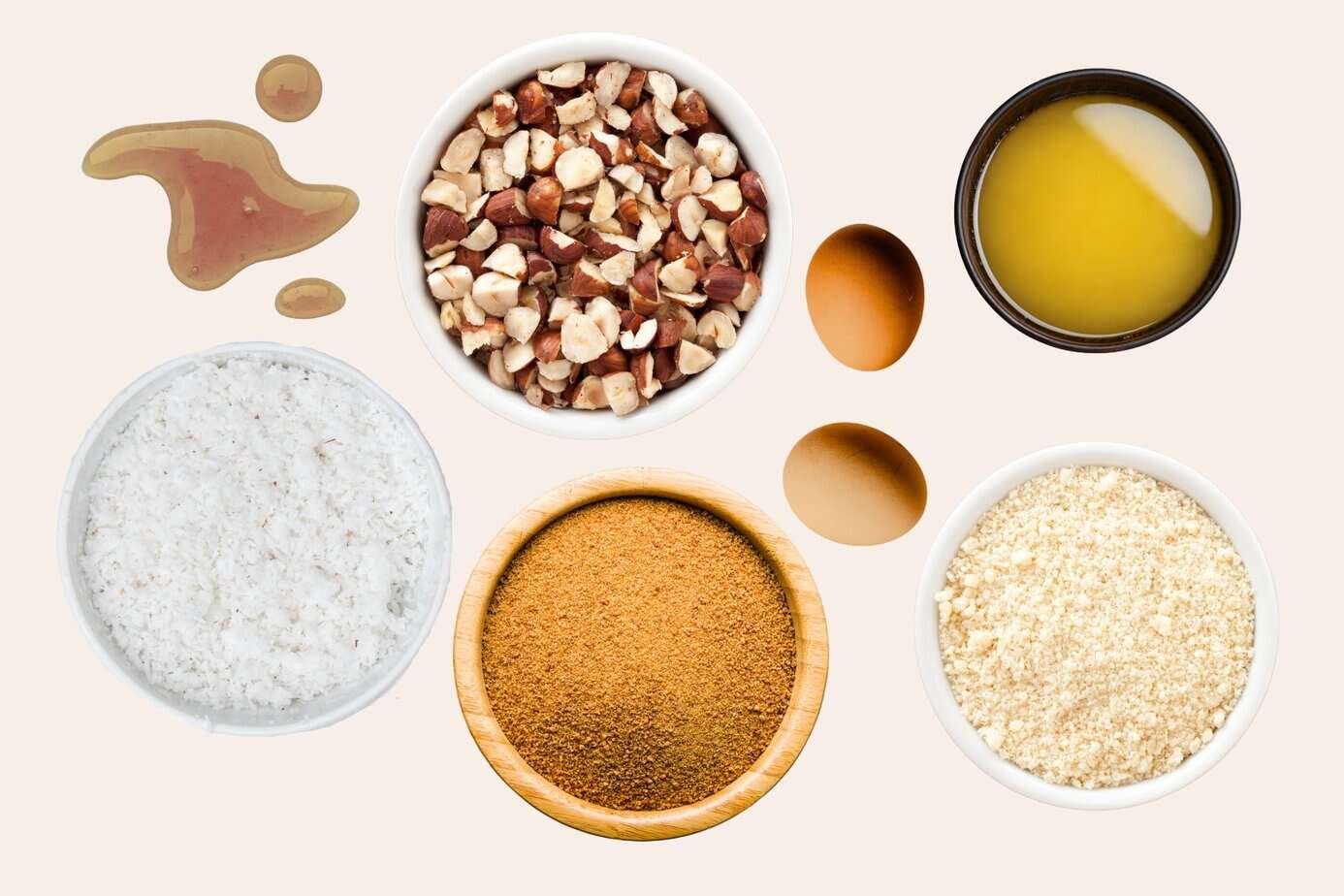
Almond Flour
Rich in vitamin E, magnesium, and healthy fats, almond flour supports heart health and provides steadier energy than refined white flour. It is naturally gluten-free and lower in carbohydrates, which can help reduce blood sugar spikes.
Ghee
Clarified butter that’s cooked a little longer for a richer, nutty flavor. The clarification process removes most milk solids, making ghee lower in casein and lactose than butter, so it’s often better tolerated by people sensitive to cow’s milk. It provides butyrate, a short-chain fatty acid that supports digestive health and may help reduce inflammation.
Learn more about ghee and how to make your own ghee HERE.
Coconut Sugar
A sugar from the coconut palm that offers a caramel-like flavor similar to brown sugar. It contains a small amount of inulin (a soluble fiber that can slow glucose absorption for a slightly lower glycemic impact) and trace amounts of minerals like iron, zinc, and potassium.
Maple Syrup
A natural sweetener that contains antioxidants and minerals like manganese and zinc. It adds depth of flavor while avoiding highly refined sugars.
Tapioca Starch or Flour
A grain-free starch that’s easy to digest and helps bind ingredients without gluten.
Collagen Peptides (Optional)
A protein boost that supports gut health, joint function, and skin elasticity —without affecting flavor or texture.
Unsweetened Flaked Coconut
A fiber-rich, naturally sweet ingredient that contains medium-chain triglycerides (MCTs) for quick energy.
Hazelnuts (Filberts)
Buttery nuts that add flavor, crunch, healthy fats, fiber, protein, and nutrients like vitamin E, magnesium, and manganese. They support heart and brain health with natural antioxidants and anti-inflammatory compounds—a great fit for the Anti-Inflammatory Rainbow Diet.
How to Make Gluten-Free Coconut Hazelnut Bars
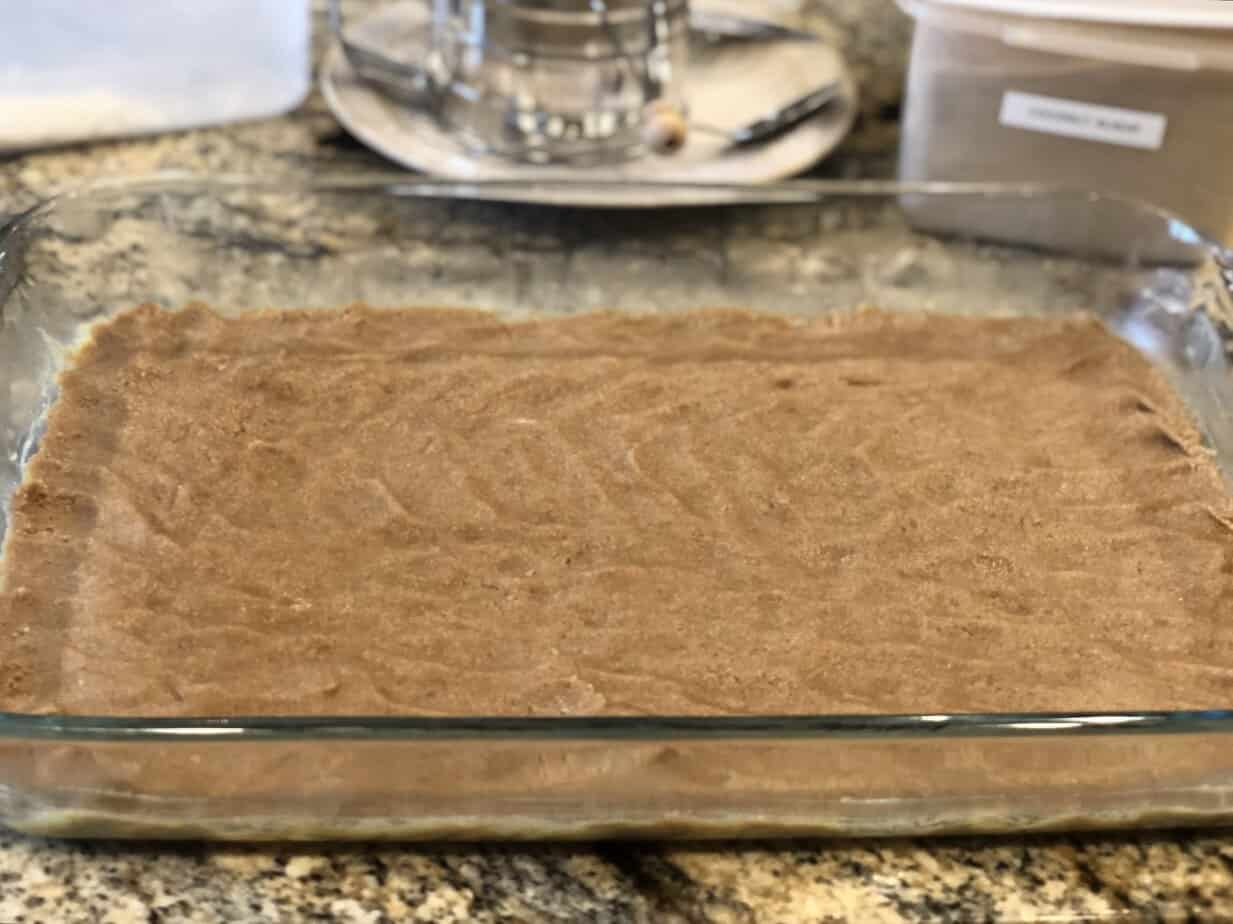
- Make the Crust: Mix the crust ingredients, press firmly into a greased 9×9-inch pan, and bake at 350°F for about 25 minutes. Let cool slightly.
- Prepare the Topping: Whisk the eggs with the coconut sugar, maple syrup, and vanilla. Stir in the dry ingredients, then fold in the unsweetened coconut flakes and chopped hazelnuts.
- Assemble and Bake: Spread the topping over the cooled crust and bake for about 25 minutes, until set and lightly golden.
- Serve: Cool completely (refrigerate for cleaner slices) before cutting into bars.
FAQs
Can I use butter instead of ghee?
What if I don't have collagen peptides?
It works fine without them. The texture stays the same, with just slightly less protein per bar.
Can I use other nuts?
Can I substitute the almond flour?
Can I use other sweeteners?
Honey swaps 1:1 for maple syrup but provides a slightly different flavor. Brown sugar works, but is more refined, higher glycemic, and likely more inflammatory.
Why did my crust look weird during/after baking?
How should I store these coconut hazelnut bars?
Can I add chocolate?
Yes! Melt 1/2 cup allergy-friendly chocolate chips (like Enjoy Life) with 1 teaspoon coconut oil and drizzle over cooled bars.
Get in the Kitchen
These healthified, gluten-free coconut hazelnut bars show you don’t have to sacrifice flavor to enjoy an occasional treat that’s kinder to your health. With simple swaps and nutrient-dense ingredients, you get indulgence that’s gentler on blood sugar and inflammation than its classic counterpart.
Whether you’re hosting a gathering, needing a family-friendly dessert, or craving lower-sugar, grain-free sweetness, these bars deliver. Bake a batch, slice, and freeze some for your next toffee craving.
Ready to try them? Scroll down for the full recipe and let me know in the comments how yours turn out!

Want weekly Scripture, wellness tips, and anti-inflammatory recipes?
Subscribe to the newsletter below.
No spam. Unsubscribe anytime.
Gluten-Free Coconut Hazelnut Bars
Ingredients
Crust
- 1/3 cup melted ghee, (plus more for greasing)
- 1/4 cup coconut sugar
- 1 1/2 tablespoons pure maple syrup
- 3/4 cup almond flour
- 3 tablespoons tapioca starch
- 1/4 teaspoon sea salt
Topping
- 2 tablespoons tapioca starch
- 2 tablespoons collagen peptides, (optional)
- 1/2 teaspoon sea salt
- 2 eggs
- 1/3 cup coconut sugar
- 3 tablespoons maple syrup
- 1 teaspoon vanilla
- 3/4 cup unsweetened flaked coconut
- 3/4 cup chopped hazelnuts, (filberts)
Instructions
- Preheat the oven to 350°F. Grease a 9-x9-inch pan and set it aside.
To make the crust:
- In a mixing bowl, combine the melted ghee, coconut sugar, and maple syrup. Stir until smooth. Add the almond flour, tapioca starch, and salt and mix into a dough.
- Press the mixture firmly and evenly into the prepared baking pan, using your fingers or the back of a spoon.
- Bake for 25 minutes, until set and golden. Cool slightly.
To make the topping:
- In a small bowl, combine the tapioca starch, collagen peptides (if using), and salt; set aside.
- In a mixing bowl, beat the eggs until frothy. Add the coconut sugar, maple syrup, and vanilla, and whisk until smooth. Stir in the tapioca starch mixture until fully incorporated. Fold in the coconut and nuts.
Assemble:
- Spread the topping evenly over the crust.
- Bake for 25 minutes, or until the center is set and the top is lightly golden. If the top is browning too quickly before the center is set, tent loosely with foil and continue baking until done.
Serve and Store:
- Cool completely before slicing (chill for cleaner cuts).
- Store at room temperature for 3 to 4 days (in airtight container), in the refrigerator for up to 10 days, or the freezer up to 3 months (sliced first).